
Ohio Metal Prototype Facility: A–Z Guide
What Is an Ohio Metal Prototype Facility and Who Leads the Industry?
An Ohio metal prototype facility is a specialized manufacturing shop that builds first-run metal parts — from a single prototype to small production batches — before full-scale manufacturing begins. Ohio is home to a strong network of manufacturing capabilities, concentrated in the Greater Cleveland, Akron, Canton, Columbus, and Dublin areas.
At Hidaka USA, Inc., based in Dublin, Ohio, we specialize in automotive prototypes and mass production, offering a comprehensive suite of services. Most established Ohio facilities offer laser cutting, CNC bending, welding, finishing, and assembly under one roof, with lead times as short as 2–5 days for basic prototypes. ISO 9001:2015 certification is common among top-tier shops.
Ohio's central location in the Midwest, its deep automotive supply chain, and its decades-long manufacturing heritage make it one of the best states in the country for metal prototyping. Whether you need a single proof-of-concept part or a bridge-to-production run, Ohio facilities are built to move fast without sacrificing accuracy.
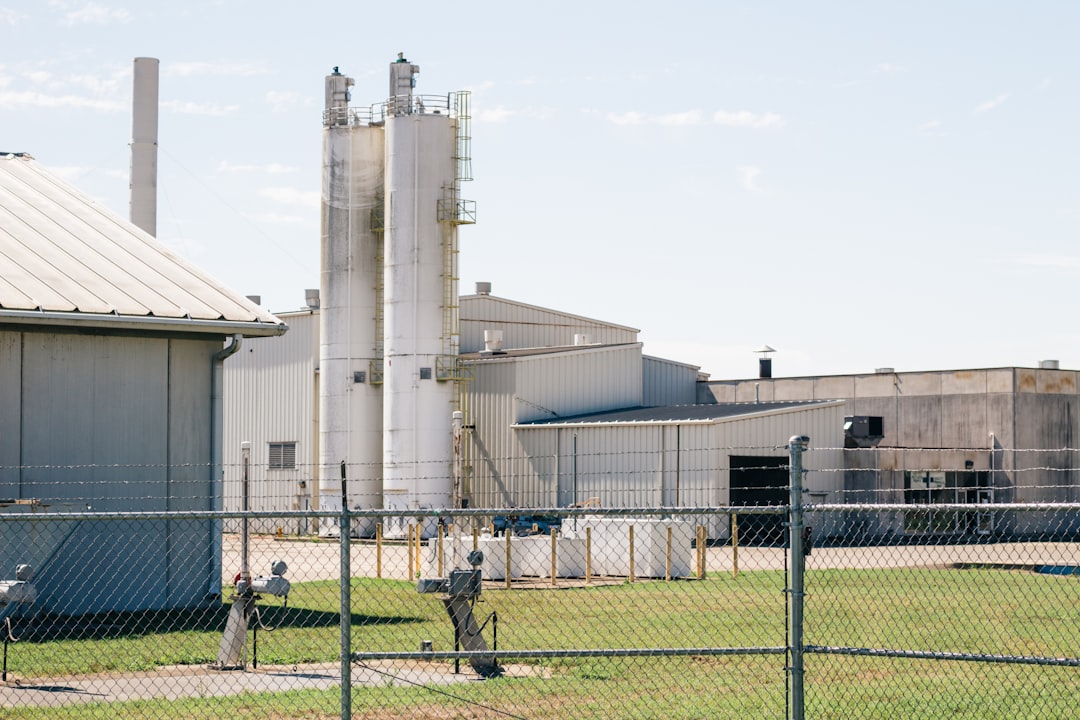
I'm Yoshihiro Hidaka — I founded Hidaka USA, Inc. in 1989 as a sheet metal fabrication company and built our Ohio metal prototype facility on 22 acres in Dublin, Ohio, starting with automotive prototypes before expanding into mass production and multiple industries. That hands-on journey from prototype shop to full-scale manufacturer gives me a ground-level view of what engineers and OEMs actually need from a facility like this.
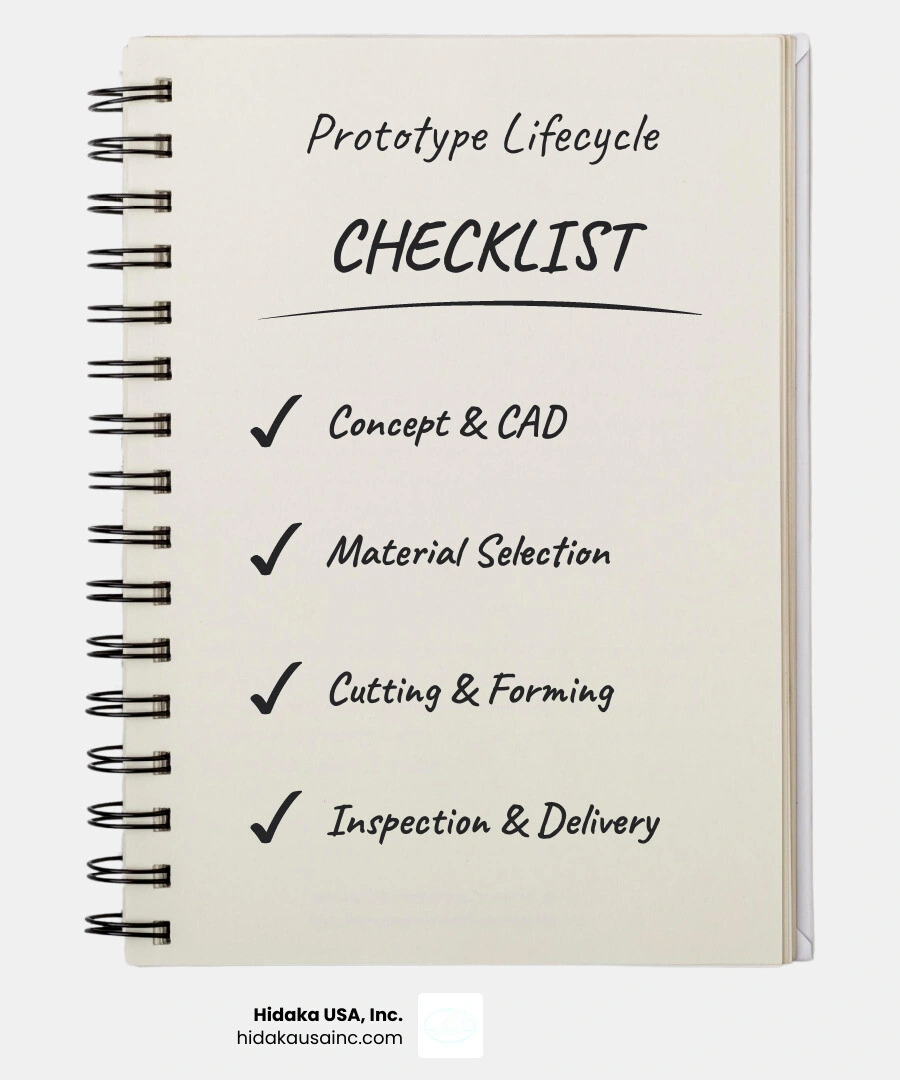
Ohio metal prototype facility terminology:
Core Capabilities of an Ohio Metal Prototype Facility
To transform a digital concept into a physical, functional component, a modern Ohio metal prototype facility must offer a comprehensive suite of in-house capabilities. When we handle everything under one roof—from raw material sourcing to final assembly—we eliminate the logistical headaches and communication gaps that often delay multi-vendor projects.
The baseline capabilities of a top-tier facility include:
- Advanced Laser Cutting: High-powered fiber lasers quickly slice through sheet metal with incredible precision, leaving burr-free edges and eliminating the need for expensive custom tooling.
- CNC Bending and Forming: Precision press brakes with multi-axis control allow us to achieve accurate, highly repeatable bends in complex geometries.
- MIG/TIG and Spot Welding: Skilled welding is critical for joining prototype components into functional structural assemblies.
- Hardware Insertion and Finishing: Installing fasteners, PEM nuts, studs, and applying protective surface treatments completes the prototype.
- Full Assembly Services: Moving beyond single parts to deliver complete, multi-component assemblies ready for real-world testing.

By integrating these processes, we help clients streamline their development cycles.
Prototype Sheet Metal Fabrication and Forming
Sheet metal fabrication is the backbone of metal prototyping. Unlike high-volume production where hard tooling (like massive steel dies) is justified, prototyping relies on flexible, soft-tooling methods. We use CNC turret presses, laser-press brake combinations, and hydraulic presses to manipulate metal sheets without forcing you to wait months for custom tool steel dies to be cut.
Our forming processes are engineered to replicate the physical characteristics of eventual mass-produced parts. This ensures that when you test a prototype bracket or enclosure, it behaves exactly like the final production piece. If you want to dive deeper into how these components are quickly shaped, read our comprehensive guide on Prototype Sheet Metal Fabrication.
Precision Machining and Tooling
While sheet metal handles thin-walled enclosures and brackets, precision machining is required for complex, solid, or thick-walled components. Our CNC milling, turning, and electrical discharge machining (EDM) capabilities allow us to carve highly intricate geometries out of solid metal billets.
Machining is also vital for creating the custom jigs, fixtures, and temporary tooling used in the forming and assembly of sheet metal prototypes. By combining machining and sheet metal fabrication under one roof, we ensure that mating parts fit together perfectly. Learn more about how subtractive manufacturing supports your design cycles in our guide to Prototype Machining.
Materials and Engineering Support for Metal Prototyping
A premier Ohio metal prototype facility is more than just a machine shop; it is an engineering partner. We do not just take your CAD file and press "go." Our engineering teams work alongside your designers to select the ideal materials and optimize your part geometries for manufacturing.
To help you decide which material is best suited for your functional testing, here is a quick comparison of the common metals we process:
| Material | Key Strengths | Common Prototype Applications |
|---|---|---|
| Mild Steel | Highly formable, cost-effective, easy to weld | Structural brackets, automotive frames, heavy equipment |
| Stainless Steel | Corrosion resistant, high strength, excellent finish | Medical devices, marine components, exhaust systems |
| Aluminum | Lightweight, high strength-to-weight ratio, thermal conductivity | Aerospace brackets, consumer electronics, heat sinks |
| Titanium | Extreme strength, ultra-lightweight, biocompatible | Aerospace structures, high-end motorsports, implants |
| Copper & Brass | Superior electrical and thermal conductivity | Busbars, electrical contacts, heat exchangers |
| Inconel & Exotic Alloys | High-temperature stability, oxidation resistance | Jet engine parts, exhaust manifolds, energy sector turbomachinery |
Design for Manufacturability (DFM) in an Ohio Metal Prototype Facility
Design for Manufacturability (DFM) is the practice of designing parts in a way that makes them easy and cost-effective to manufacture. When you upload your 3D CAD models (whether in SOLIDWORKS, Autodesk Inventor, STEP, or IGES formats), our engineering team conducts a thorough DFM analysis.
We look for common sheet metal design traps, such as:
- Improper Bend Radii: Designing a bend radius that is too tight for the chosen material thickness can cause the metal to crack.
- Holes Too Close to Bends: If a hole is placed too close to a bend line, it will deform into an oval shape during the forming process.
- Non-Uniform Thickness: Sheet metal parts must maintain a uniform wall thickness throughout the design to prevent structural failures.
By catching these issues early in the CAD stage, we save you from costly redesigns and manufacturing delays. For more insights on optimizing your designs, read about our Advanced Prototype Engineering Services.
Material Selection: From Steel to Exotic Alloys
Choosing the right material is a delicate balance of mechanical requirements, weight constraints, thermal properties, and budget. For example, while titanium offers an incredible strength-to-weight ratio, stainless steel or aluminum might be more practical for early-stage structural testing.
We process a massive range of metals, from everyday carbon steels to high-temperature superalloys like Inconel and Hastelloy. Our engineers help you navigate these choices, ensuring your prototype accurately reflects the performance of your final product. For a step-by-step breakdown of how to choose materials and navigate the fabrication process, check out our guide on How to Prototype Metal Parts.
Key Industries Served by Midwest Fabricators
Ohio's industrial landscape is incredibly diverse, and our prototyping services are designed to support the unique compliance and performance standards of several major sectors.

Automotive and Motorsports Prototyping
As a key supplier to major OEMs, we understand that the automotive and motorsports industries move at a breakneck pace. From structural chassis components to intricate mass-transit railcar brackets, automotive prototypes must withstand extreme stress and rigorous safety testing.
Our facility is built to deliver parts that meet strict OEM quality standards, enabling rapid physical testing and faster validation cycles. If you are developing components for the transportation sector, discover how we support automotive innovators by reading about our Automotive Metal Prototype Specialists.
Aerospace, Defense, and Energy Applications
Aerospace, defense, and power generation applications leave absolutely zero room for error. Components used in jet engines, military hardware, or energy-sector data centers require tight tolerances (sometimes as close as .002 inches) and robust documentation.
Whether we are fabricating heavy-duty structural weldments or complex internal brackets, we maintain strict quality controls and process traceability to meet these demanding requirements. Learn more about our precision capabilities in our dedicated article on Precision Bracket Manufacturing Ohio.
Selecting an Ohio Metal Prototype Facility for Your Project
Choosing the right prototyping partner can make or break your product launch timeline. While overseas manufacturers might promise low upfront costs, partnering with a local, Ohio-based facility offers distinct advantages in speed, communication, and quality control.
- Proximity to Midwest OEMs: Being located in Ohio means we are within a day's drive of major automotive, industrial, and aerospace hubs. This makes face-to-face collaboration, design reviews, and rapid shipping incredibly easy.
- Streamlined Communication: You can pick up the phone and speak directly to the engineer working on your project, eliminating timezone delays and language barriers.
- IP Protection: Keeping your designs within a highly secure, domestic facility ensures your valuable intellectual property remains fully protected.
Rapid Prototyping vs. Low-Volume Production
A common challenge for product developers is bridging the gap between a single prototype and full-scale mass production. Many dedicated prototype shops cannot scale up, and large contract manufacturers often find small, low-volume runs disruptive to their high-volume lines.
At our Dublin facility, we solve this problem by offering both rapid prototyping and low-volume production. We can quickly produce a quantity of one for physical validation, and then seamlessly transition to short-run stamping or assembly when you are ready to test the market or build pre-production units. Explore how we manage this transition in our guide to Precision Sheet Metal Prototyping.
Quality Standards and Certifications
When you are testing a prototype, you must be 100% confident that the part was built exactly to your CAD specifications. Otherwise, if a test fails, you won't know if the design was flawed or if the part was simply manufactured incorrectly.
That is why we maintain rigorous quality standards, backed by our ISO 9001 certification and American Welding Society (AWS) certification. We perform first-article inspections, in-process verifications, and final dimensional checks using advanced Coordinate Measuring Machines (CMM) to ensure absolute accuracy. For more on our commitment to precision, read about our role as a Precision Metal Stamping Manufacturer Ohio.
Frequently Asked Questions about Metal Prototyping
What is the typical lead time for metal prototypes in Ohio?
For basic sheet metal prototypes (such as flat brackets, simple covers, or laser-cut panels), standard lead times are typically 2 to 5 business days. If your design requires advanced features, complex forming, custom tooling, welding, or specialized surface finishing, the lead time generally ranges from 1 to 2 weeks. Expedited services are almost always available for time-sensitive projects.
Can startups get support for low-volume metal prototyping?
Absolutely! Many startups begin with a Minimum Order Quantity (MOQ) of just one part to validate their design before seeking funding or launching tooling. We specialize in helping startups navigate early-stage design-for-manufacturability challenges to keep costs low and development cycles fast. For a detailed roadmap on launching your new hardware product, read our guide on Metal Prototyping for Startups.
What finishing options are available for prototype parts?
To ensure your prototype is ready for functional testing or aesthetic presentation, we offer a wide range of secondary finishing options:
- Powder Coating: Provides a durable, corrosion-resistant, and visually appealing exterior finish in almost any color.
- Anodizing: Ideal for aluminum parts, offering increased corrosion resistance, surface hardness, and color options.
- Plating (Zinc, Nickel, etc.): Enhances wear resistance, electrical conductivity, and corrosion protection.
- Hardware Insertion: Pressing in PEM nuts, standoffs, and threaded studs to make assembly quick and easy.
- Silk Screening and Part Marking: Adding logos, instructional text, or part numbers directly to the metal surface.
Conclusion
Finding the right Ohio metal prototype facility is about finding a partner that can match your speed, understand your engineering challenges, and scale with your business as you grow.
At Hidaka USA, Inc., we have spent decades refining our prototyping and production workflows. From our state-of-the-art 95,000-square-foot facility in Dublin, Ohio, we combine cutting-edge technology with deep engineering expertise to bring your ideas to life. Whether you are a local startup or a global OEM, we are here to help you design, test, and manufacture your next breakthrough product.
To learn more about our capabilities or to discuss your upcoming project with our engineering team, check out our Prototype Manufacturing Dublin Ohio page, visit us at Hidaka USA, Inc., 5761 Shier Rings Rd, Dublin, OH 43016, US, or submit your CAD files directly through our Prototyping Services page for a comprehensive quote and DFM evaluation. Let's build the future together!


