Rapid Prototyping CNC Machining for Modern Makers

What Is Rapid Prototyping CNC Machining and How Do the Methods Compare?
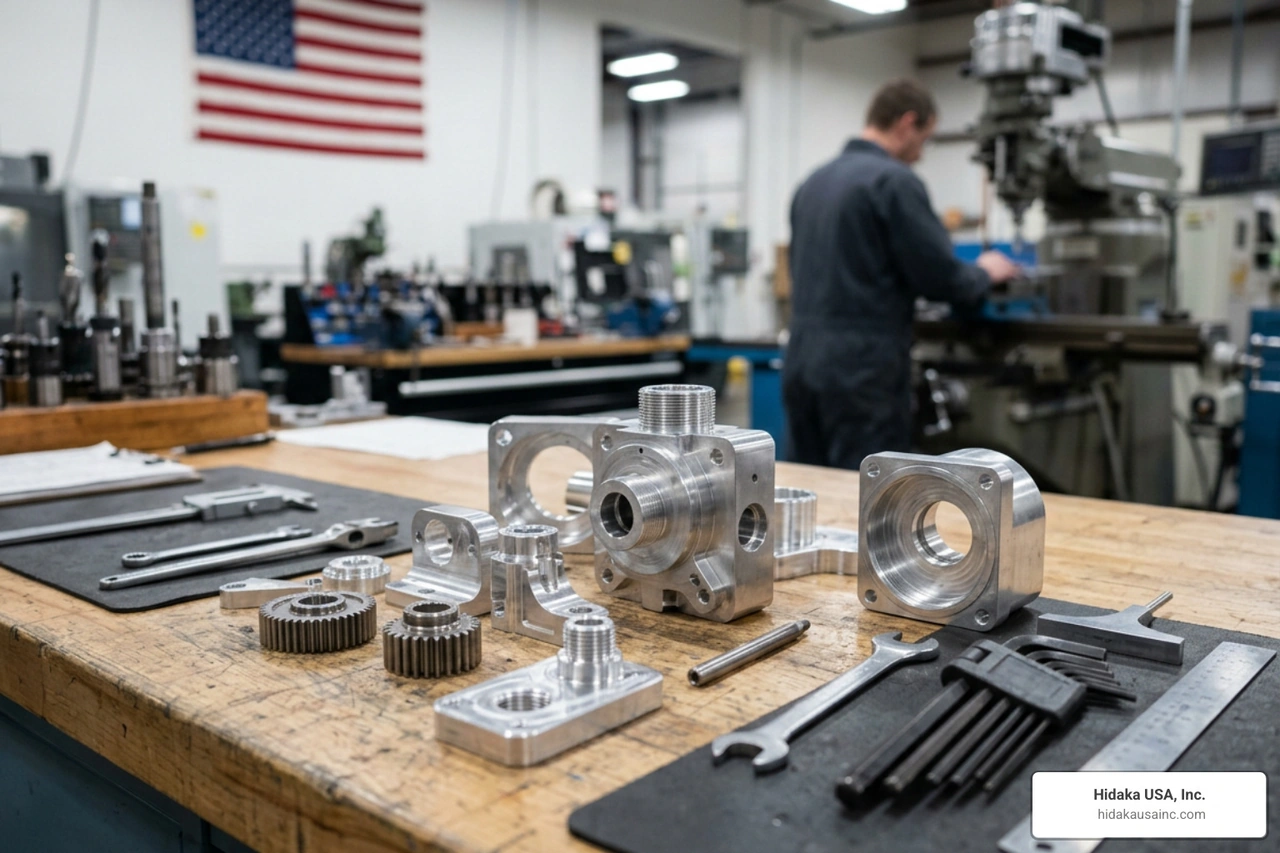
Rapid prototyping CNC machining is a subtractive manufacturing process that turns a digital CAD file into a precise, functional physical part — often in just one to five days.
Here is a quick comparison of the main CNC prototyping methods to help you choose the right one:
MethodBest ForTypical ToleranceLead Time3-Axis CNC MillingFlat and prismatic parts±0.13 mm1-5 days5-Axis CNC MillingComplex geometries, undercuts±0.01 mm3-7 daysCNC TurningCylindrical and round parts±0.01 mm1-3 daysEDMDelicate features, hard metals±0.0005–0.002 in3-7 days
Key takeaway: 5-axis milling handles the most complex shapes in a single setup. CNC turning is fastest for round parts. EDM achieves the tightest tolerances for hard-to-machine features.
Historically, getting a functional prototype meant weeks of waiting — sand casting, clay modeling, or ordering custom tooling that could take up to a month. Today, CNC machining has changed that completely.
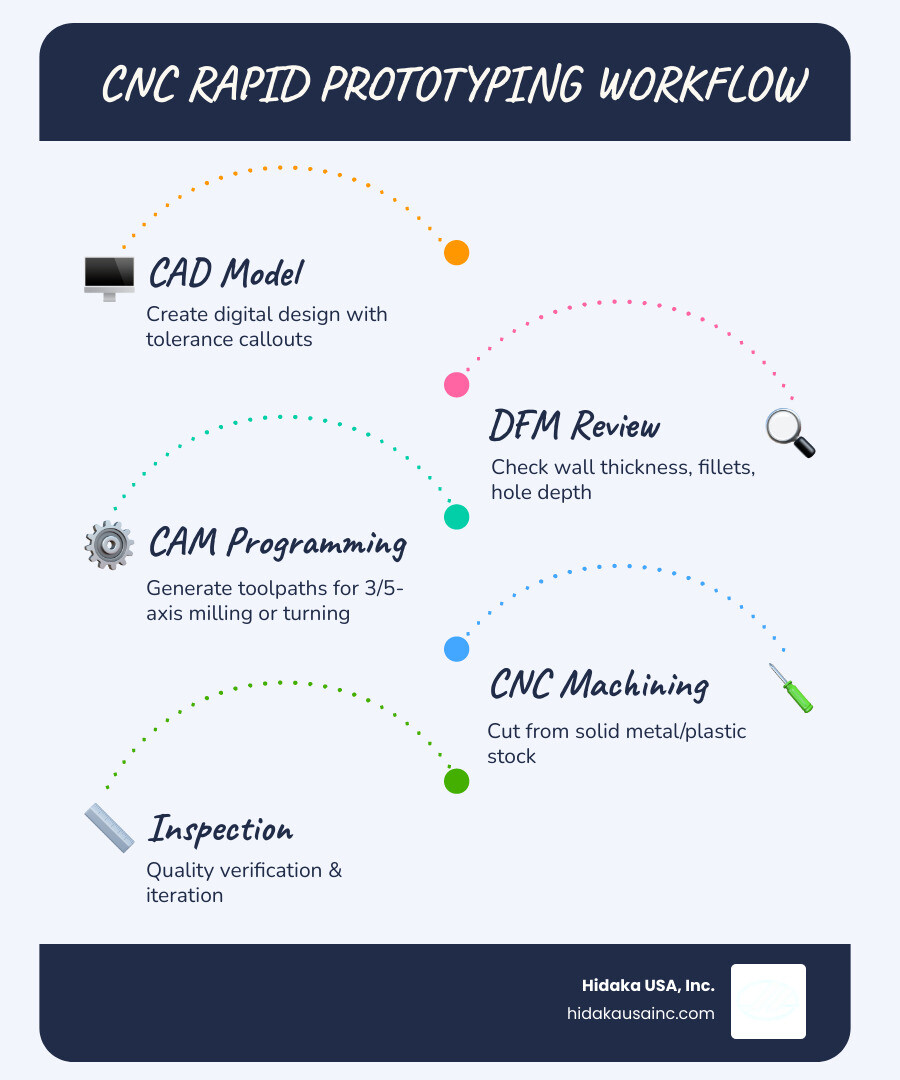
Modern CNC machines cut parts directly from solid metal or plastic stock. No molds. No dies. No long setup delays. A design change in your CAD file becomes a new physical part in hours, not weeks.
This matters most when you need a prototype that actually behaves like a production part — same material, same strength, same tolerances. Unlike 3D printing, which builds parts layer by layer and can introduce voids or weak points, CNC machining carves from a single homogenous block. The result is a part with mechanical properties far closer to what rolls off a full production line.
According to industry data, CNC machining can hold tolerances as tight as ±0.0001 inches — roughly an order of magnitude tighter than most 3D printing methods. And with digital manufacturing platforms, quotes and DFM feedback can arrive within hours, with parts following in as few as three days.
For automotive manufacturers balancing tight deadlines, strict accuracy requirements, and the pressure to move fast without sacrificing quality, understanding which CNC prototyping method fits each stage of development is essential.
I'm Yoshihiro Hidaka, founder of Hidaka USA, Inc., and I've spent over three decades supplying precision prototype and production parts to the automotive industry — experience that has given me a front-row view of how rapid prototyping CNC machining has transformed modern product development. In this guide, I'll walk you through the methods, the tradeoffs, and the practical steps to get the most out of CNC prototyping at every stage of your product cycle.
Understanding Rapid Prototyping CNC Machining vs. 3D Printing
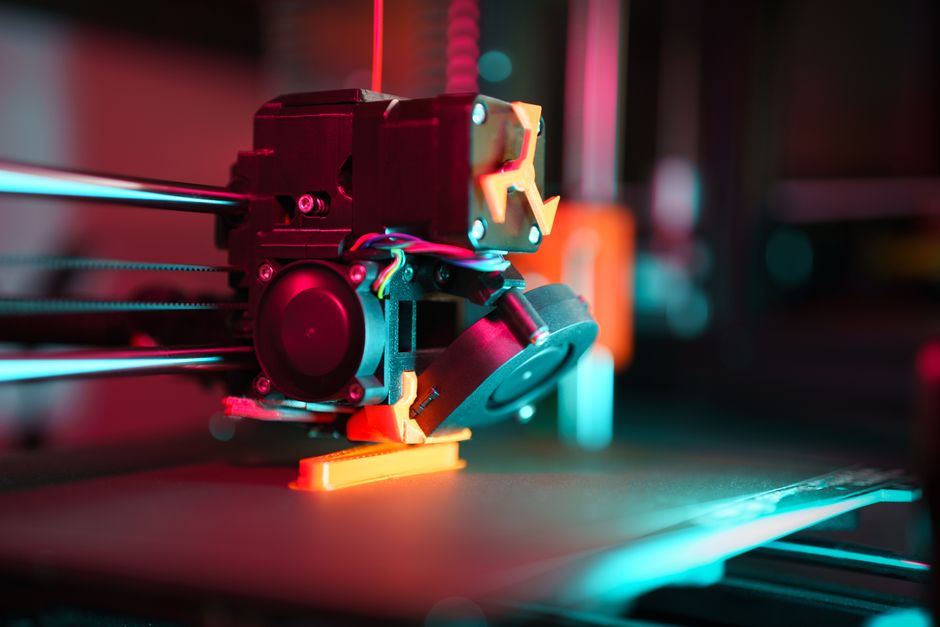
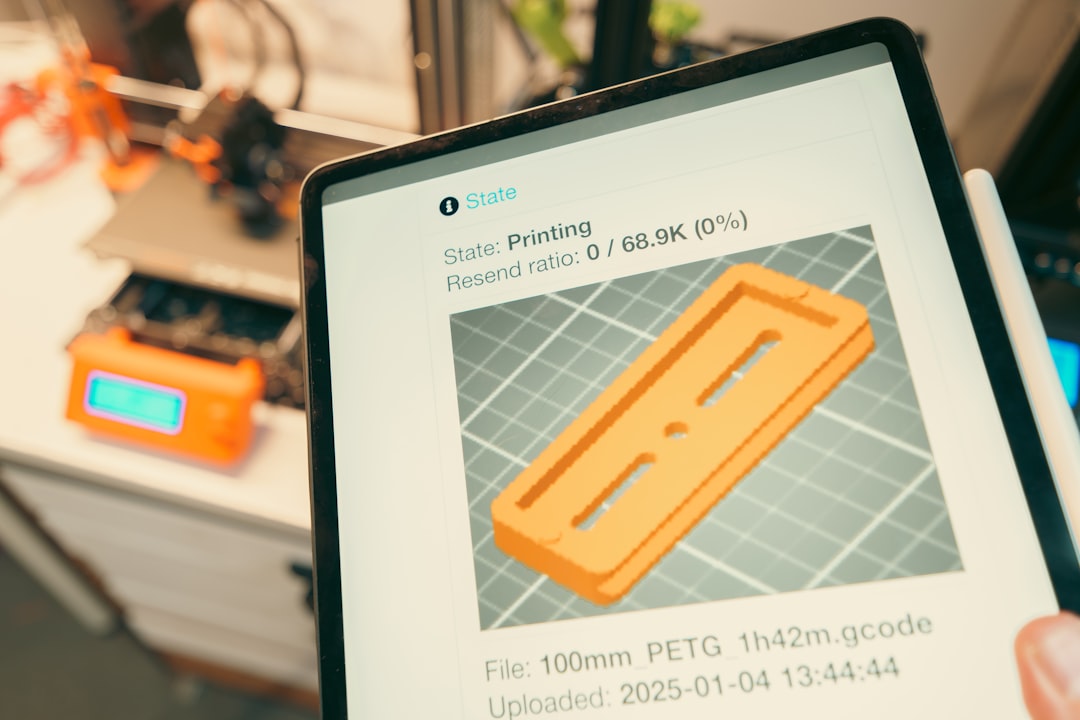
When we talk about rapid prototyping, many people immediately think of 3D printing. While additive manufacturing is fantastic for visual models, rapid prototyping CNC machining is often the superior choice for functional engineering. The primary reason comes down to physics.
Structural Integrity and Material Density
In 3D printing, parts are built layer by layer. This often results in voids, porosity, or layer shifting. These microscopic gaps act as stress concentrators, meaning a 3D-printed part might snap under loads that a machined part would handle with ease. CNC machining carves your part from a solid, homogenous block of material. This ensures 100% density and predictable mechanical properties.
Precision and Dimensional Accuracy
If you need a part to fit into a complex assembly, precision is non-negotiable. CNC machining can maintain tolerances as tight as one-ten-thousandth of an inch (0.0001 inches). In contrast, most 3D printing methods can only hold a few thousandths of an inch. That is an order of magnitude difference! If your prototype requires a press-fit bearing or a high-pressure seal, CNC is the only way to go.
Material Selection and Surface Finish
While 3D printing is often limited to specific resins or filaments, CNC machining works with almost anything. We can machine everything from soft plastics like POM and ABS to aerospace-grade titanium and stainless steel. Furthermore, 3D printing usually utilizes limited materials that may not support the heat or stress testing required in the real world. CNC parts come off the machine with a superior surface finish (often Ra 0.8 µm or better), which is critical for airflow, fluid dynamics, or aesthetic consumer electronics.
FeatureCNC Machining3D PrintingTolerancesUp to ±0.0001"±0.005" to ±0.020"Material ChoiceMetals, Plastics, CompositesLimited Resins/FilamentsStrengthHigh (Homogenous)Lower (Layer Voids)Surface FinishSmooth (As-milled)Layer lines visible
Core Processes in Rapid Prototyping CNC Machining
To get the most out of rapid prototyping CNC machining, you need to understand the "tools in the shed." Different geometries require different approaches.
3-Axis and 5-Axis Milling
Milling is the most common process. A 3-axis mill moves the cutting tool along the X, Y, and Z axes. It’s perfect for simpler, prismatic parts. However, for complex automotive or aerospace components, we often use 5-axis milling.
By adding two rotational axes, 5-axis machines can approach a part from any angle. This eliminates the need for multiple setups, which reduces human error and speeds up production. In fact, using 5-axis adaptive clearing has been shown to reduce roughing operations by 30% in complex case studies.
CNC Turning
If your part is cylindrical—think shafts, pulleys, or bushings—CNC turning is the answer. The workpiece rotates at high speeds while a stationary cutting tool removes material. Modern "Live Tooling" lathes can even perform milling operations on the turned part, allowing us to create a finished prototype in a single operation.
Advanced Techniques: EDM and Adaptive Clearing
For extremely hard metals or delicate internal features that a physical drill can't reach, Electrical Discharge Machining (EDM) uses sparks to erode material. While slower, it offers unmatched precision. On the software side, we use adaptive clearing to optimize toolpaths, ensuring the machine removes material as efficiently as possible to meet those tight 3-day deadlines.
How to Optimize Your Design for Rapid Prototyping CNC Machining
Designing for manufacturability (DFM) is the secret to getting high-quality prototypes quickly and affordably. A single DFM adjustment can reduce machining time by 30–50%. Here are the "Golden Rules" we recommend at Hidaka USA, Inc.:
- Watch Your Wall Thickness: For metals, try to keep walls at least 0.8mm thick. For plastics, 1.2mm is a safer minimum to prevent warping during the machining process.
- Embrace the Fillet: CNC tools are round. If you design a sharp internal 90-degree corner, the machine can't cut it without expensive EDM. Adding internal fillets that match standard tool diameters (like a 3mm or 6mm radius) makes the part much cheaper to produce.
- Hole Depth and Chip Evacuation: Avoid deep, narrow holes. A good rule of thumb is to keep hole depth no more than 5-6 times the drill diameter. This allows "chips" (the waste material) to escape, preventing tool breakage.
- Simplify Setups: Every time a machinist has to stop the machine and flip your part, the cost goes up and the lead time increases. Design your part so it can be machined from as few directions as possible.
- Smart Material Selection: Choosing the right material can save you a fortune. For instance, switching from 7075 aluminum to 6061 aluminum for an early-stage prototype can reduce total costs by 40% without sacrificing the validity of your test.
Transitioning from Prototype to Production
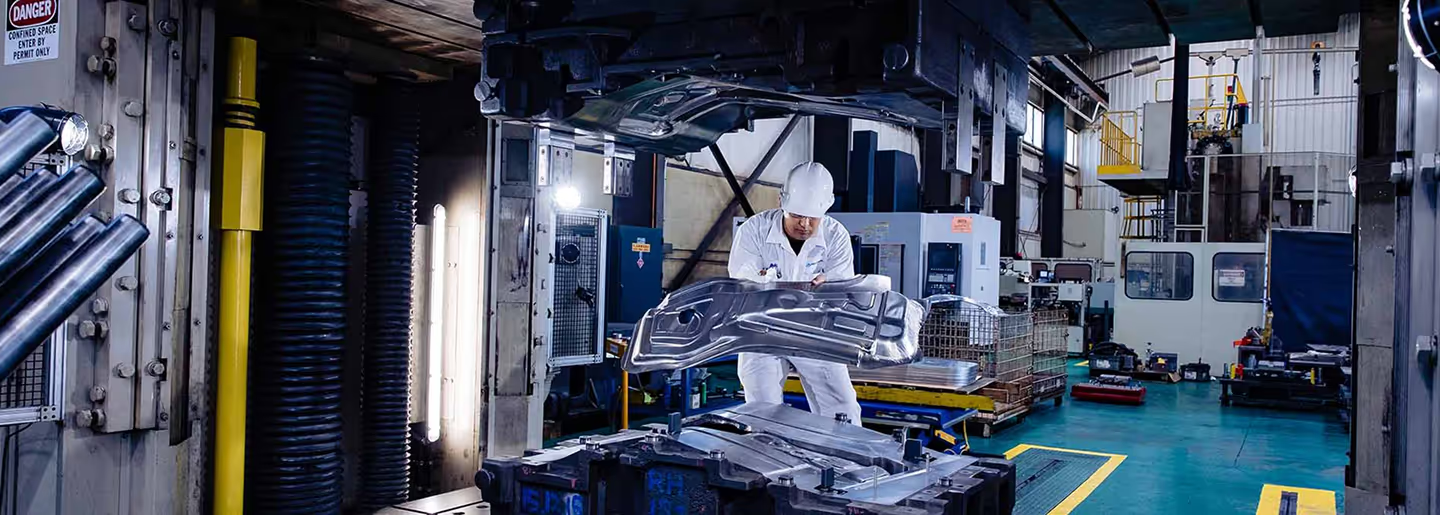
The ultimate goal of a prototype is to prove a concept so you can move into production. This is where the choice of a prototyping partner becomes critical. If you prototype with a service that only does 3D printing, you may face a "rude awakening" when you switch to metal production and find your design is impossible to manufacture at scale.
At Hidaka USA, Inc., we bridge that gap. Based in Dublin, Ohio, we specialize in taking parts from the initial "Modern Maker" concept all the way to mass production. Because we use the same CNC technology for both prototyping and production, the transition is seamless.
From 1 to 1,000+
In the early stages, you might only need one or two units. However, producing 10 units instead of one often halves the unit cost because the programming and setup time are shared across the batch. As your project scales, we can transition your design into low-volume production or even full mass production using our 95,000 square feet of manufacturing space.
Quality You Can Trust
Whether it’s a single prototype or a 5,000-unit run for a mass-transit railcar, quality control is paramount. We hold ISO 9001 and AWS certifications, ensuring that every part meets strict automotive and industrial standards. We use advanced inspection tools, including Coordinate Measuring Machines (CMM), to verify that your "rapid" part is also an "accurate" part.
Frequently Asked Questions about CNC Prototyping
How fast is rapid prototyping cnc machining?
In today's market, speed is a competitive advantage. Simple CNC prototypes can be produced in as little as 24 to 48 hours. For more complex 5-axis parts, a 3-to-7-day turnaround is standard. By using digital platforms for instant quotes and DFM feedback, we eliminate the "back-and-forth" that used to add weeks to a project.
What materials are best for rapid prototyping cnc machining?
The "Big Three" for prototyping are:
- Aluminum 6061: The gold standard. It’s affordable, machines beautifully, and is strong enough for most functional tests.
- POM (Delrin): An engineering plastic that is incredibly stable and mimics the feel of many molded parts.
- Stainless Steel 304: Best for parts that need to survive harsh environments or high-heat testing.We also work with exotic alloys and high-performance engineering plastics like PEEK for specialized medical or aerospace applications.
Why choose CNC over 3D printing for functional parts?
It comes down to Real Material Properties. If you are testing a suspension component for a motorsports vehicle, you need to know it won't fail under stress. A 3D-printed part might look the same, but it won't have the same fatigue resistance or heat deflection temperature as a part machined from a solid block of 6061-T6 aluminum. CNC is the choice for parts that need to work, not just look good.
Conclusion
In modern manufacturing, the gap between an idea and a physical product is narrower than ever. Rapid prototyping CNC machining provides the precision, material variety, and structural integrity that 3D printing simply cannot match for functional parts.
By following DFM principles—like managing wall thickness and simplifying setups—you can slash your development costs and get your product to market months ahead of the competition. Whether you are a startup in the consumer electronics space or an established automotive tier-one supplier, the ability to iterate quickly with production-grade materials is your greatest asset.
Ready to see your design take shape? At Hidaka USA, Inc., we combine decades of Ohio-made craftsmanship with the latest in CNC technology to help you build better products faster.
Start your prototyping project today and let’s turn your CAD files into reality.