Welding at Scale: How to Automate Your Assembly Line
What Is High Volume Welding Assembly?
High volume welding assembly is the process of joining metal parts through welding at mass production scale — typically thousands to hundreds of thousands of units per year — using automated, robotic, or highly systematized workflows.
Key facts at a glance:
| Factor | High Volume Welding Assembly |
|---|---|
| Scale | Thousands to 100,000+ units per year |
| Primary methods | MIG, robotic, laser, spot, resistance welding |
| Key enablers | Robotic cells, custom fixtures, automated material handling |
| Industries | Automotive, aerospace, HVAC, energy, railcar |
| Core goals | Repeatability, speed, low cost per unit, consistent quality |
| Key certifications | ISO 9001, AWS D1.1, AS9100, IATF 16949 |
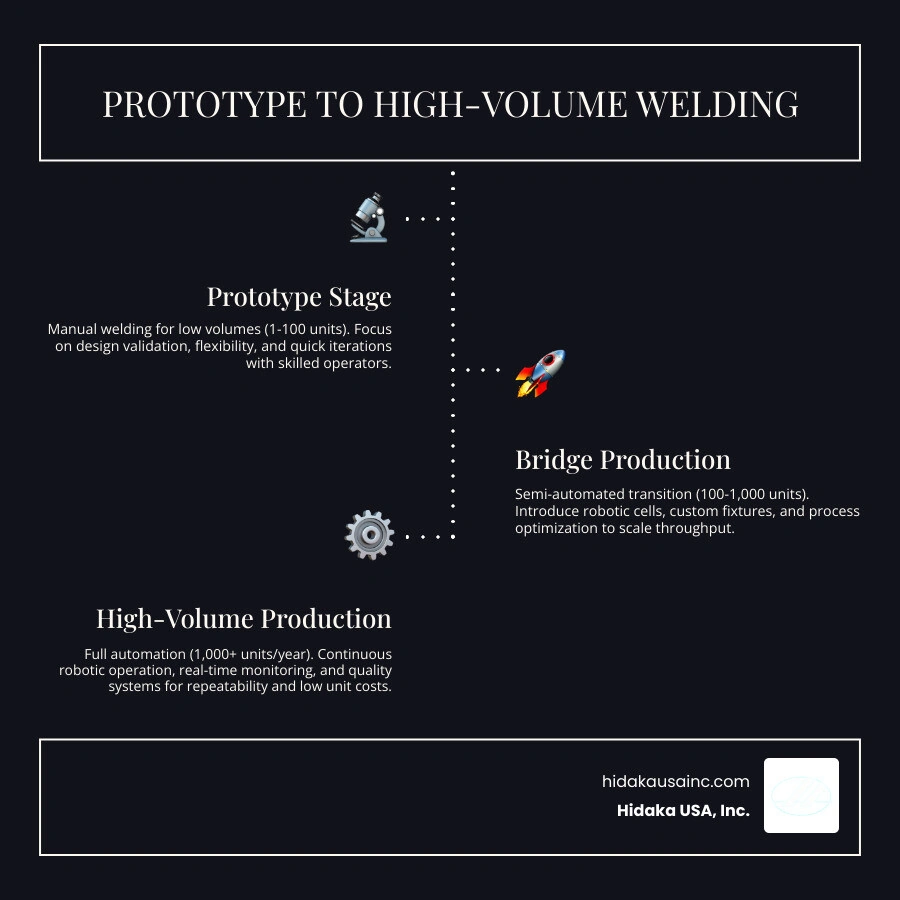
For most mid-sized manufacturers, the jump from prototype welding to full-scale production is the hardest step. Manual welding that works fine for a dozen parts quickly becomes a bottleneck when orders reach the thousands. Operator fatigue, inconsistent weld quality, and slow cycle times all compound at scale.
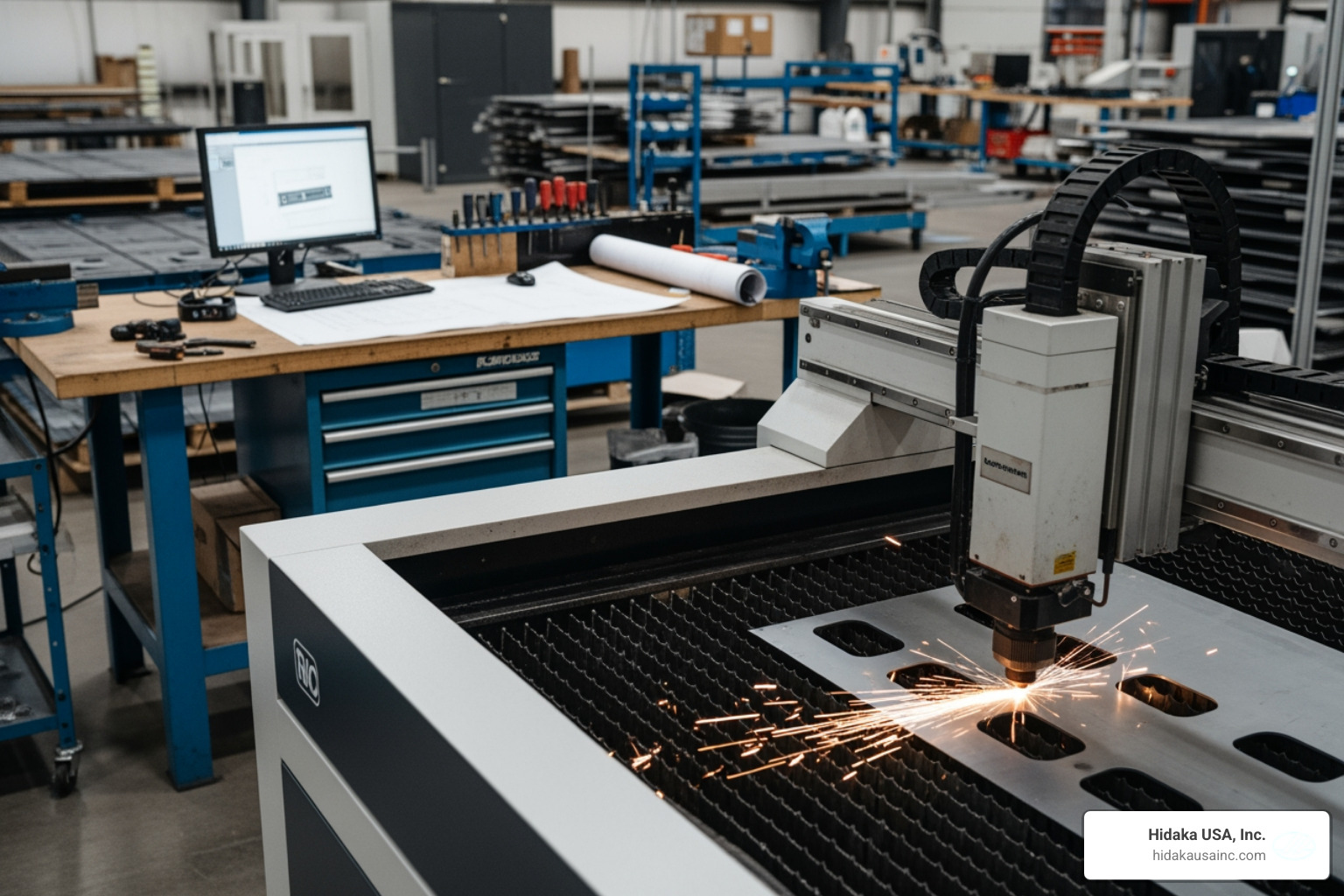
Automation is the primary solution. Robotic welding cells can run continuously without fatigue, holding tolerances that manual welders cannot consistently match across large production runs. When paired with the right fixtures, processes, and quality systems, automated welding transforms a slow manual operation into a reliable, high-throughput assembly line.
I'm Yoshihiro Hidaka, founder of Hidaka USA, Inc., with over three decades of experience scaling sheet metal fabrication from automotive prototypes to full high volume welding assembly production. In this guide, I'll walk you through exactly how to make that transition work.
Must-know High volume welding assembly terms:
Challenges of High Volume Welding Assembly

When we move from the prototype lab to the factory floor, the rules of the game change entirely. In low-volume prototyping, a skilled welder can spend an hour "massaging" a single joint to perfection. In high volume welding assembly, you don't have that luxury. If a cycle takes five minutes when it should take three, you aren't just losing time—you’re losing the ability to meet your contract.
One of the biggest hurdles we see is operator fatigue. Welding is physically demanding. Expecting a human to maintain the exact same torch angle and travel speed for eight hours a day, five days a week, is a recipe for quality drift. This is why high precision metal assemblies often struggle to maintain consistency without mechanical intervention.
Then there is the issue of thermal distortion. Every time you strike an arc, you’re pumping heat into the metal. In mass production, parts move through the line quickly. If the heat isn't managed through proper sequencing or specialized fixtures, the parts will warp, leading to assemblies that don't fit into their final housings.
Finally, the global shortage of skilled manual welders has turned labor into a massive bottleneck. Automation isn't just about speed anymore; it’s about survival. By automating the repetitive "grunt work" of long seams and multi-pass welds, we free up our AWS-certified experts to focus on complex setups and quality oversight.
Scaling Through High Volume Welding Assembly Automation
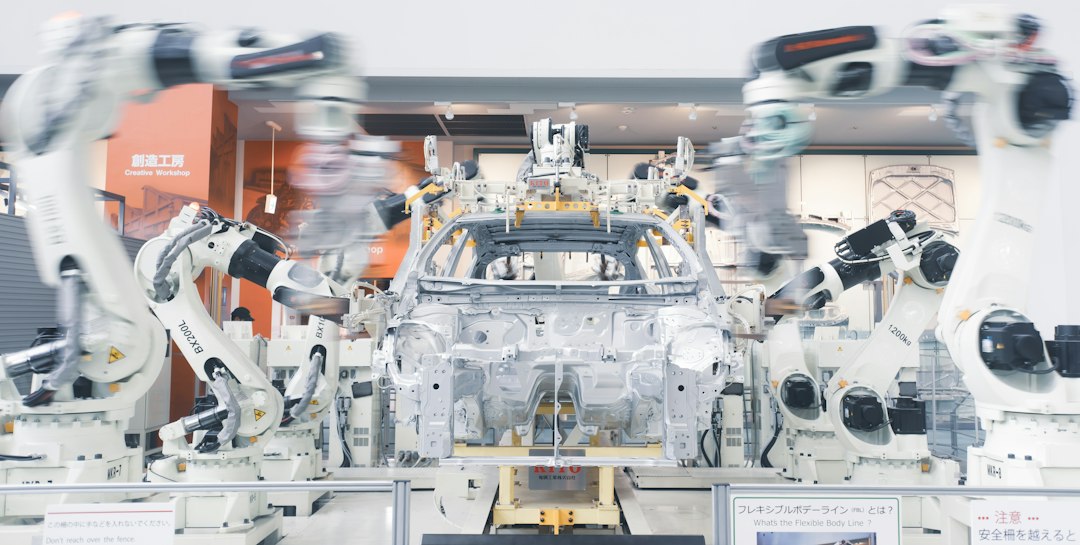
The transition often starts with what we call bridge production. This is the middle ground between a dozen prototypes and a million-unit OEM run. Bridge production usually involves volumes in the thousands or tens of thousands. To handle this, we utilize multi-axis robotic cells that can operate continuously.
Unlike manual stations, these robotic systems can execute complex, multi-pass welds without a break. For specialized applications like large-scale piping or pressure vessels, systems like the Rotoweld XL for pipes and pressure vessels allow for automated root and fill passes, drastically increasing throughput. In our Dublin, Ohio facility, we find that maximizing "arc-on" time is the single most effective way to scale capacity without adding massive overhead.
Overcoming Material and Geometry Constraints
High-volume production often involves challenging materials like aluminum or high-strength steels. Aluminum, for instance, has a low-viscosity melt pool and high thermal conductivity, making it prone to "burn-through" if the speed isn't perfect.
We also have to consider the heat-affected zone (HAZ). In sheet metal fabrication, excessive heat can ruin the metallurgical properties of the steel. Automation allows us to use techniques like "stitch welding" (intermittent welds) to manage heat while maintaining structural integrity. Modern robotic arms can reach into tight geometries that would be impossible for a human hand to access consistently, ensuring that every joint—no matter how buried—is fused correctly.
Optimized Processes and Automation Systems
Choosing the right welding process is the foundation of any high volume welding assembly strategy. You wouldn't use a sledgehammer to hang a picture frame, and you shouldn't use TIG welding for a 50,000-unit run of heavy truck frames.
| Process | Best For | High-Volume Advantage |
|---|---|---|
| MIG (GMAW) | Structural steel, thick gauges | High deposition rate, very fast |
| TIG (GTAW) | Thin aluminum, aesthetic parts | Extremely clean, high precision |
| Laser Welding | Dissimilar metals, high speed | Minimal distortion, deep penetration |
| Spot Welding | Sheet metal overlaps | Fastest cycle times, no filler needed |
For those looking for Precision Production Welding Services - Dayton, Ohio, the integration of these processes into robotic cells is what separates the leaders from the laggards. We often combine these with cobots (collaborative robots) for lighter assembly tasks, allowing humans and machines to work side-by-side safely.
Advanced Vision and Monitoring Tech
The "brain" of a modern welding cell is its vision system. Technologies like PerfectPass-iQ use algorithms to adapt welding parameters in real-time. If a part is slightly misaligned or a bevel angle is off by a fraction of a millimeter, the vision system detects it and adjusts the voltage or travel speed instantly.
This level of high precision stamping services and assembly ensures that even with slight variations in raw materials, the final weld remains within tolerance. IoT monitoring also allows us to track every weld's data—current, gas flow, and temperature—to create a digital "birth certificate" for every assembly.
High-Speed Laser and Resistance Welding
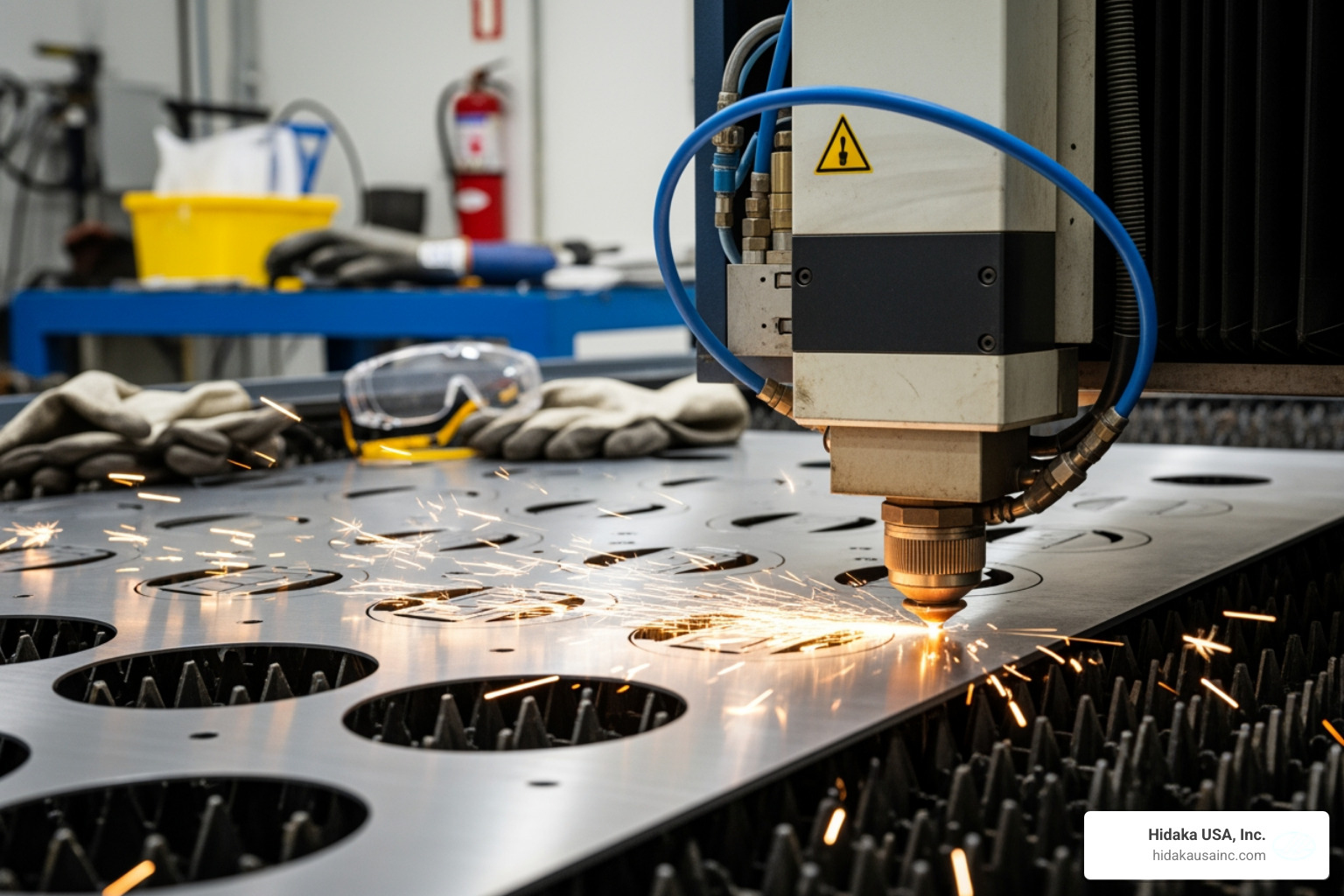
Laser welding is a game-changer for high-volume work. Using solid-state disk lasers or high-power fiber lasers, we can achieve deep penetration with a very narrow heat-affected zone. This means less warping and almost no spatter, which eliminates the need for post-weld grinding.
For stamped assemblies, projection welding is our go-to. By using small "projections" or dimples on the metal, we can weld nuts, studs, or brackets to a frame in a fraction of a second. It is the gold standard for efficiency in automotive sub-assemblies.
Fixturing and Design for Scalability

If the robot is the "muscle," the fixture is the "skeleton." In high volume welding assembly, you can't rely on magnets and C-clamps. You need custom-engineered fixtures that ensure every part is held in the exact same position every single time.
We utilize pneumatic clamping systems because they are fast. A human might take 30 seconds to clamp a part manually; a pneumatic system does it in two. This adds up to thousands of hours saved over a production run. Many of our fixtures also incorporate 3D-printed components for rapid prototyping of the fixture itself, ensuring we have the perfect "fit-up" before we cut steel for the final tool.
Using six-axis trunnions and automated turnover positioners allows the robot to access all sides of a part without the operator having to touch it. This keeps the "arc-on" time high and the labor cost low. For more on this, check out our insights on being a precision metal stamping manufacturer Ohio.
Design for High Volume Welding Assembly Success
Successful scaling starts on the drafting board. Design for Manufacturing (DFM) is critical. We look for ways to consolidate parts—can three welded brackets be replaced by one complex stamping?
We also recommend knock-down designs. For example, one HVAC company we studied saved massive amounts of warehouse space by designing their assemblies to be shipped flat and welded in a "knock-down" configuration. This improved storage efficiency by 5x! Other strategies include:
- Joint Optimization: Moving joints to areas with easy robotic access.
- Stitch Welding: Using intermittent welds to prevent thermal distortion on long seams.
- Material Selection: Choosing alloys that are "weld-friendly" to reduce scrap rates.
Smart Fixturing and Industry 4.0
The latest fixtures are "smart." They include IoT sensors that verify a part is present and correctly seated before the robot even starts. If a clamp fails or a part is missing, the system stops immediately, preventing a "bad" weld. In high-volume environments, catching an error at the fixture stage is 100 times cheaper than catching it during final inspection.
Quality Control and Economic ROI
In mass production, a single mistake can be multiplied by 10,000 before you even notice it. That’s why our quality control systems are so rigorous. At Hidaka USA, Inc., we adhere to ISO 9001 and AWS standards to ensure every joint meets the required strength and safety profiles.
For critical industries like automotive and railcar, we use ultrasonic testing and destructive testing (where we literally pull a sample part apart to check the internal weld fusion). This ensures that the "invisible" part of the weld is just as strong as the surface.
Calculating ROI on Automated Systems
The "sticker shock" of a robotic welding cell can be high, but the ROI is usually undeniable.
- Labor Savings: One robot can often do the work of three manual welders.
- Unit Cost Reduction: We’ve seen cases where moving to hard-tooling reduced the per-unit cost from $22 to $14.
- Scrap Reduction: Automation typically reduces scrap rates by 50-80% compared to manual welding.
- Hard-Tooling Recoupment: In many high-volume scenarios, the upfront cost of specialized fixtures is recouped in as little as 3.5 months through labor and material savings.
Compliance and Flow-Down Requirements
When you partner with a high-volume manufacturer, you aren't just buying parts; you're buying their compliance system. We manage flow-down requirements from major OEMs, ensuring that every sub-supplier we use meets the same high standards we do. This includes keeping manufacturing records for a minimum of seven years and providing full traceability—from the raw coil of steel to the final welded assembly.
Frequently Asked Questions about High Volume Welding
What is the difference between bridge production and mass production?
Bridge production is the "middle ground," typically involving volumes from 1,000 to 20,000 units. It uses many of the same automated tools as mass production but allows for more design flexibility before the final "hard-tooling" for million-unit runs is locked in.
How does robotic welding improve worker safety in high-volume environments?
Robots take the "3 Ds" out of the equation: tasks that are Dull, Dirty, or Dangerous. Automation removes operators from direct exposure to heat, sparks, and toxic fumes, while safety sensors and light curtains prevent accidents on the shop floor.
Which welding process is most cost-effective for high-volume sheet metal?
For most sheet metal applications, Resistance Spot Welding is the most cost-effective because it is incredibly fast and requires no expensive filler wire or shielding gas. However, if the assembly requires a continuous seal, Robotic MIG or Laser Welding are the preferred choices.
Conclusion
At Hidaka USA, Inc., we’ve spent decades perfecting the art of high volume welding assembly. From our 95,000-square-foot facility in Dublin, Ohio, we help companies in the automotive, mass-transit, and motorsports industries scale their production from the first prototype to the millionth part.
Whether you need AWS-certified manual craftsmanship or a fully automated robotic line, we have the engineering expertise to make your assembly process faster, safer, and more cost-effective.
Scale your production with high-volume welded assemblies or contact us today to see how our ISO 9001-certified team can optimize your next project.