Why You Need Automotive Metal Prototype Specialists for Your Next Build
Core Manufacturing Services and Capabilities
What do automotive metal prototype specialists offer?
- Rapid creation of physical models for testing and design validation.
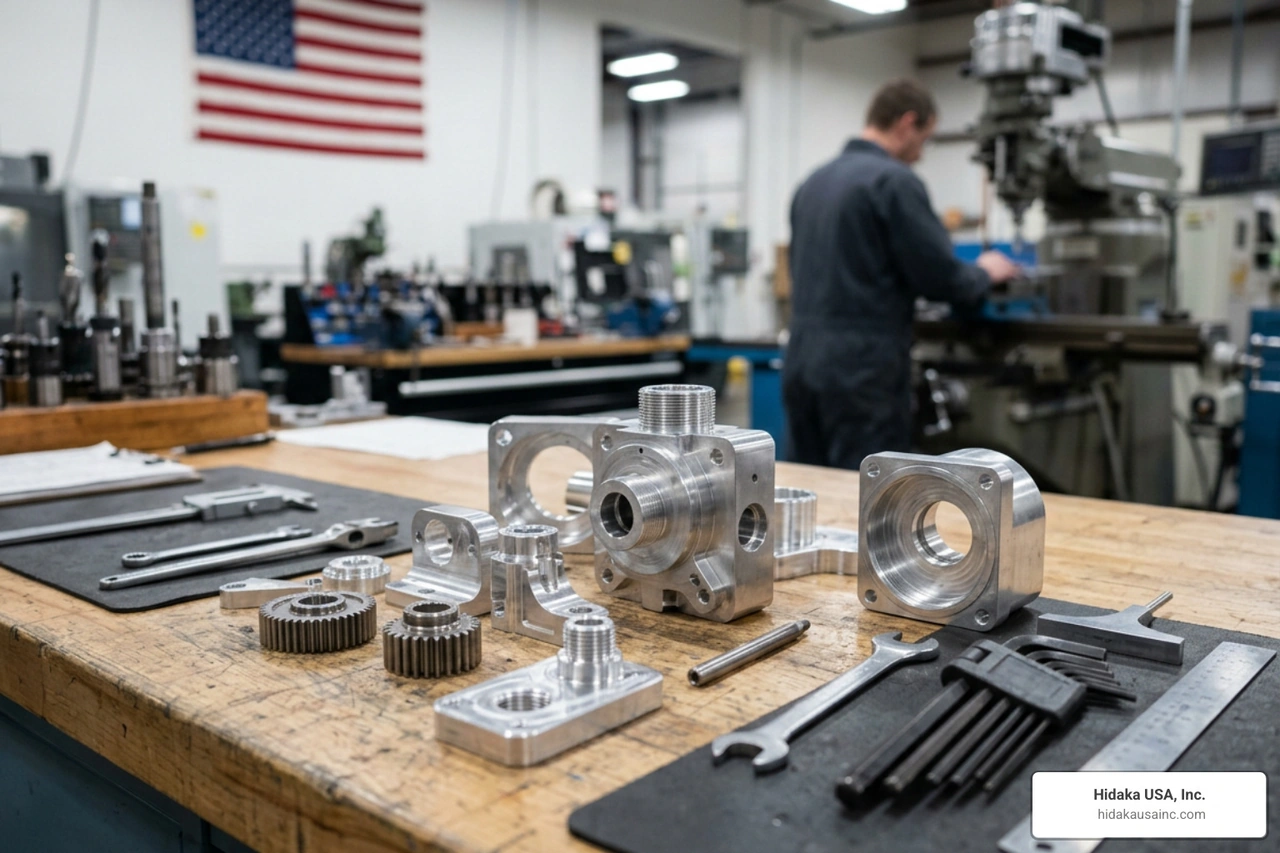
- Expertise in manufacturing techniques like CNC machining, metal stamping, and 3D printing.
- Use of various materials, including aluminum, steel, and titanium.
- Fast turnaround times to accelerate product development.
- Support for low-volume production and critical bridge tooling.
- Ensures high precision and tight tolerances for complex automotive parts.
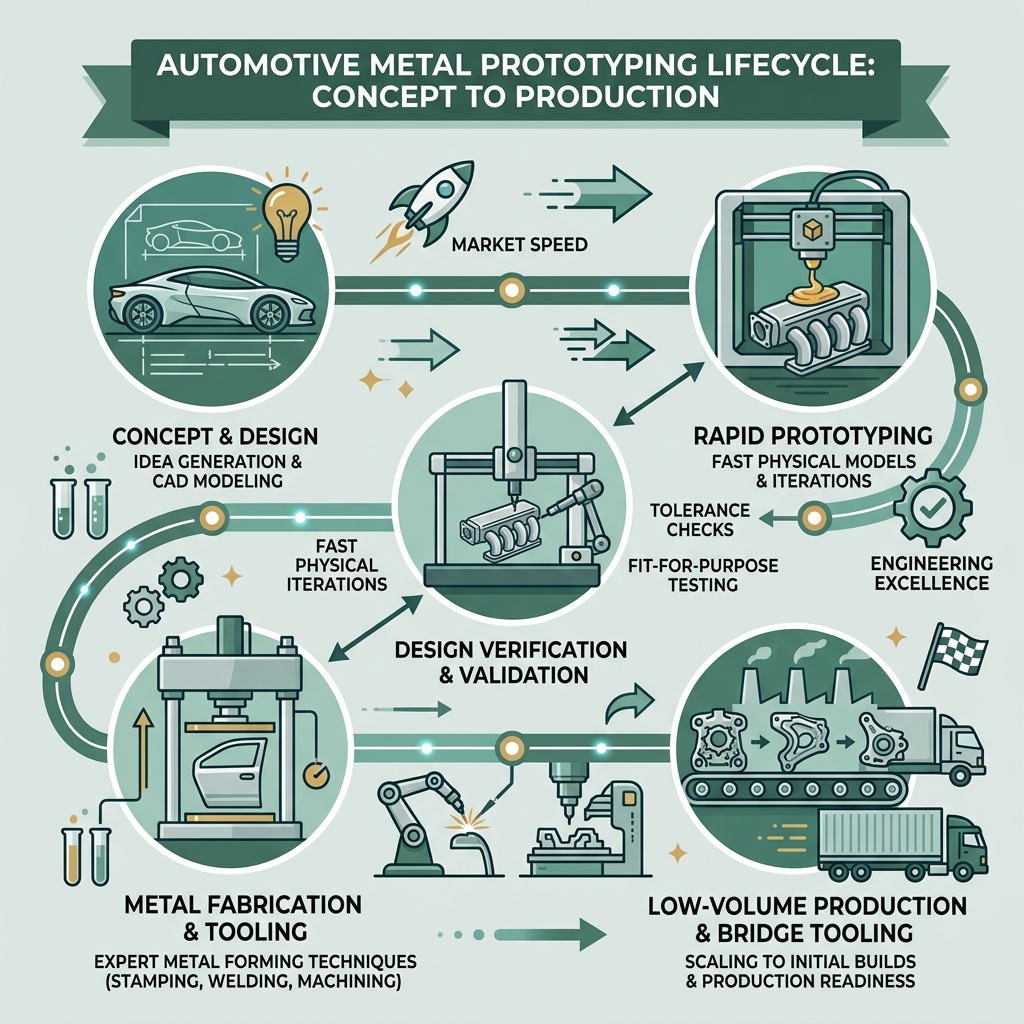
In the world of vehicle development, automotive metal prototype specialists are vital for bringing new designs to life. These experts bridge the gap between an initial concept and a final, production-ready vehicle component. They handle the complex journey from an idea to a tangible part, critical for rigorous testing and market speed.
Every new car part, from engine components to body panels, requires careful prototyping. This ensures that designs are sound, materials perform as expected, and manufacturing processes are efficient before mass production begins. These specialists help automotive manufacturers confirm designs, validate performance, and speed up their research and development cycles.
I am Yoshihiro Hidaka, founder of Hidaka USA, Inc. My 18 years at a global automotive product supplier, followed by founding Hidaka USA, Inc. in 1989, have given me deep expertise in the field of automotive metal prototype specialists and sheet metal fabrication for the automotive industry. This guide explores the essential role these specialists play.
Automotive metal prototype specialists word list:
- Hydraulic Prototype Forming Guide
- Prototype Hydraulic Press Capabilities
- Prototype Sheet Metal Fabrication
When you partner with automotive metal prototype specialists, you aren't just hiring a machine shop; you are gaining access to a suite of advanced manufacturing technologies designed to simulate mass production environments. At Hidaka USA, Inc., we understand that a prototype is only as good as its ability to reflect the final product's performance.
Our core capabilities center around several key pillars:
- Metal Stamping and Hydraulic Forming: We utilize Prototype Hydraulic Press Capabilities to shape complex panels and structural components. This process allows us to create parts that mimic the grain structure and strength of production-stamped parts, which is essential for crash testing and durability validation.
- 2D and 3D Laser Cutting: Precision is non-negotiable. Our 3D laser cutting technology allows us to trim formed parts with extreme accuracy, ensuring that every flange and hole location matches the CAD data perfectly.
- Welding and Assembly: A single bracket is rarely the end goal. We provide comprehensive assembly services, including AWS-certified welding (MIG, TIG, and spot welding), to deliver complete sub-assemblies.
- CNC Machining: For powertrain components or thick-gauge structural mounts, CNC machining provides the subtractive precision needed for functional testing.
Material Diversity in Prototyping
Choosing the right material is the first step in successful prototyping. We work with a wide range of high-performance metals to ensure your build meets weight and strength requirements. Common materials include:
- Aluminum Alloys (6061, 7075): Increasingly popular for lightweighting.
- Stainless Steel: Used for exhaust components and corrosion-resistant parts.
- High-Strength Steel (HSS): Vital for modern safety cages and chassis components.
- Specialty Alloys: Including titanium for high-performance motorsports applications.
For more details on how we apply these tools, you can explore our Prototype Sheet Metal Fabrication services.
How Automotive Metal Prototype Specialists Handle Complex Geometries
Modern automotive design is pushing the boundaries of what metal can do. From the intricate cooling channels in EV battery housings to the organic, aerodynamic curves of body-in-white (BIW) components, automotive metal prototype specialists must manage incredibly complex geometries.
We achieve this through Advanced Engineering Analysis. Before a single piece of metal is cut, we use simulation software to perform finite element analysis (FEA) and die-flow simulation. This helps us identify potential "thinning" or "tearing" in the metal during the forming process. By providing early Design for Manufacturability (DFM) feedback, we help our clients adjust their designs to avoid costly failures later in the development cycle.
To meet the industry's demand for precision, we maintain tight tolerances, often reaching ±0.01mm. This level of accuracy is essential for "fit-and-finish" prototypes where even a hair's width of deviation can cause a misalignment in a vehicle's assembly.
Critical Quality Standards and Certifications
In the automotive world, quality isn't just a goal—it’s a legal and safety requirement. Automotive metal prototype specialists must adhere to rigorous standards to ensure that every part is safe for testing.
At Hidaka USA, Inc., we maintain ISO 9001 certification, which serves as the foundation of our quality management system. Furthermore, our welding team is AWS certified, ensuring that every joint and seam meets structural integrity benchmarks.
Key quality processes include:
- CMM Verification: Our Coordinate Measuring Machines (CMM) are large enough to measure full vehicle sub-frames, ensuring every dimension is verified against the digital master.
- PPAP (Production Part Approval Process): We support various PPAP levels (1-3) to provide the documentation necessary for OEM approval.
- In-House Material Testing: We verify material hardness and thickness to ensure the "as-built" prototype matches the "as-designed" specifications.
The Role of Material Innovation
Statistics from The Aluminum Association highlight a major trend: aluminum usage in cars averaged 8.6% by weight in 2009, up from 5.1% in 1990. This shift toward lightweighting means specialists must be experts in handling non-ferrous metals that behave differently under pressure than traditional steel.
Security is also a major factor. Prototype projects often involve "top-secret" designs for future vehicle models. We implement strict confidentiality measures, including secured build areas and key-card access, to protect our clients' intellectual property.
The Strategic Advantage of Vertically Integrated Automotive Metal Prototype Specialists
One of the biggest hurdles in product development is "fragmented fabrication"—the practice of using one vendor for design, another for tooling, and a third for assembly. This leads to communication breakdowns and delays. The most successful programs utilize vertically integrated automotive metal prototype specialists.
Vertical integration means we handle everything under one roof: from initial engineering and Hydraulic Prototype Forming Guide to final inspection.
| Feature | Prototype Tooling | Production Tooling |
|---|---|---|
| Material | Kirksite or Soft Steel | Hardened Tool Steel |
| Lead Time | 1–4 Weeks | 3–6 Months |
| Cost | Lower Initial Investment | High Capital Investment |
| Volume | 1–500 parts | 10,000+ parts |
| Flexibility | High (Easy to modify) | Low (Difficult to change) |
Bridge Tooling and Low-Volume Manufacturing
Sometimes, a project isn't ready for a million-part run, but it needs more than just ten prototypes. This is where bridge tooling comes in. We provide low-volume manufacturing solutions that allow you to enter the market or conduct fleet testing while your permanent mass-production tools are still being built. This agility is a massive competitive advantage. For those ready to scale, we also offer a seamless transition to mass production.
Rapid Turnaround and Material Innovation
In the automotive industry, time is money. A delay in a prototype can push back a vehicle launch by months, costing millions in lost revenue. Automotive metal prototype specialists use "engineered speed" to meet these deadlines. This includes 24-hour quoting and the ability to deliver T1 (first-off tool) samples in just days.
Metal vs. Plastic Prototypes
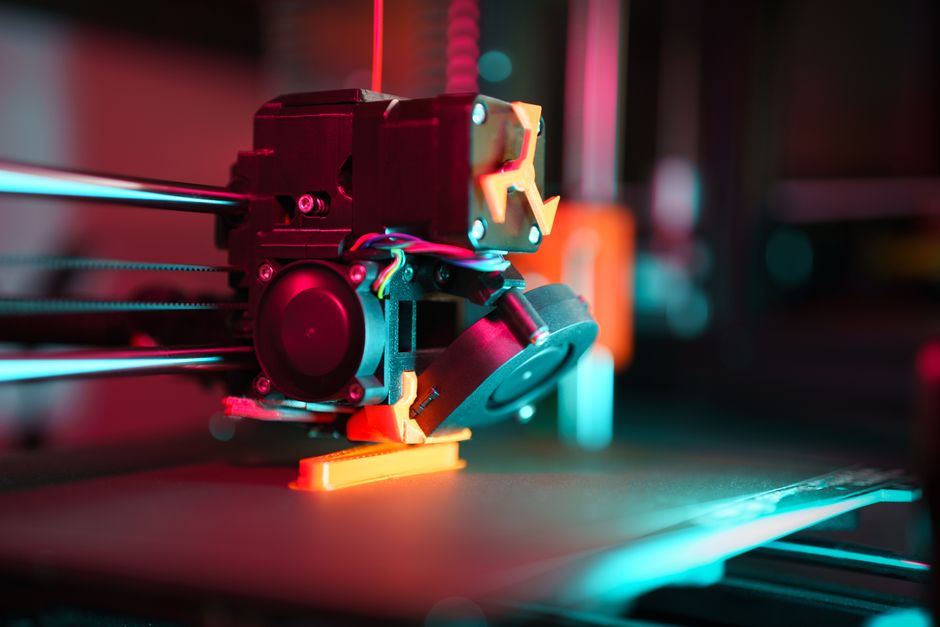
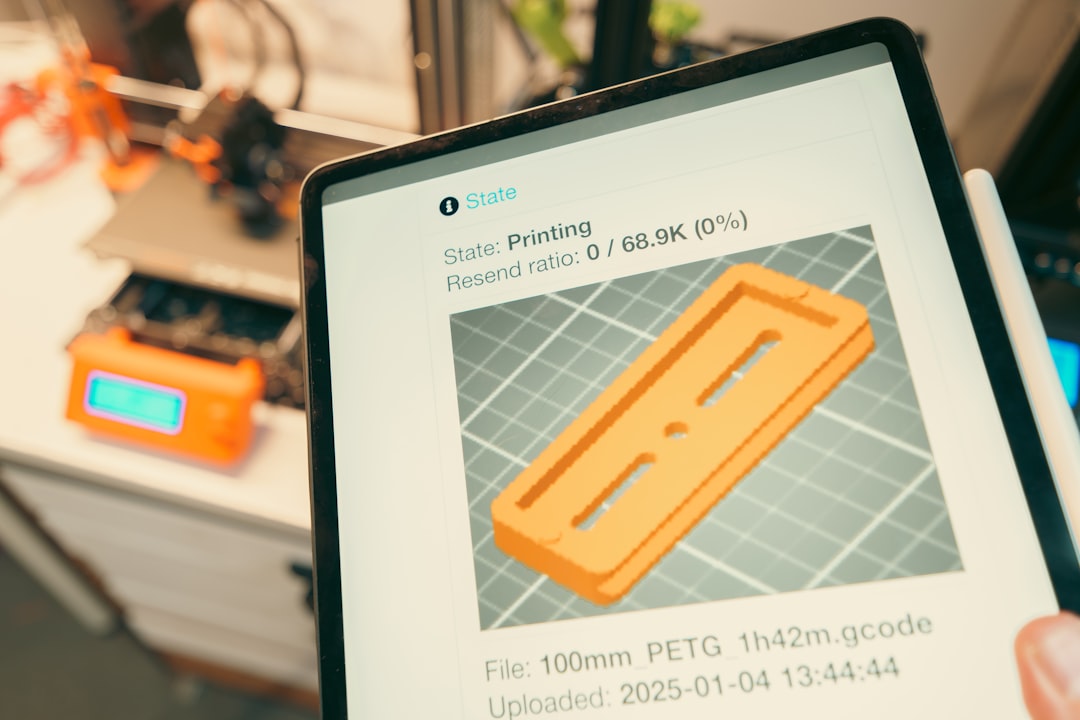
While 3D-printed plastic prototypes are great for visual mock-ups, they cannot replace metal when it comes to functional testing. Metal prototypes offer:
- Thermal Conductivity: Essential for testing engine and EV battery components.
- Structural Representation: Plastic cannot simulate how a steel chassis will crumple in a crash.
- Durability: Metal parts can withstand thousands of cycles in a test rig.
By using collaborative DFM, we help engineers choose the most cost-effective path, whether that involves high-strength steel for safety or aluminum for weight reduction.
Why US-Based Automotive Metal Prototype Specialists Lead the Market
While global sourcing is common, there is a distinct advantage to working with specialists based in the American manufacturing heartland. Our facility in Dublin, Ohio, places us in a strategic corridor of engineering excellence.
Being a US-based specialist allows for:
- Rapid Iteration: You can visit our facility, see the part, and make design changes on the fly.
- Domestic Supply Chain: No waiting for parts to clear customs or survive trans-oceanic shipping.
- Technical Support: Real-time communication with engineers who understand the specific requirements of North American OEMs.
- Local Quality Control: Direct oversight of the manufacturing process ensures that the "American-made" label stands for quality and reliability.
Beyond the Road: Diverse Industry Applications
While "automotive" is in the name, the skills of automotive metal prototype specialists are highly transferable. The same precision required for a car door is needed for an airplane bulkhead or a train's structural frame.
At Hidaka USA, Inc., we serve several high-stakes industries:
- Mass-Transit Railcar: Creating durable interior and structural components for public transit systems.
- Motorsports: Delivering high-performance, lightweight assemblies for racing teams where every gram counts.
- Aerospace and Defense: Utilizing our AS9100-compliant mindsets to build components that must perform in extreme environments.
- Heavy Equipment and Agriculture: Fabricating robust chassis parts and engine enclosures for machinery that operates in the toughest conditions.
Our 95,000-square-foot facility is equipped to handle everything from small bracketry to full-scale vehicle mock-ups, making us a versatile partner for any industry requiring complex metal forming.
Frequently Asked Questions about Automotive Metal Prototype Specialists
What is the typical lead time for a metal prototype?
Lead times vary based on complexity, but simple sheet metal parts can often be delivered in as little as 3 to 5 days. More complex assemblies involving custom tooling typically take 2 to 4 weeks. Our goal is always to match the speed of your R&D cycle.
How do specialists ensure a prototype is production-ready?
We use "production-intent" processes. By using hydraulic presses and laser cutting rather than just manual fabrication, we ensure the prototype behaves exactly like the final part will. We also provide DFM feedback to ensure the design can be mass-produced efficiently.
What are the cost advantages of metal prototypes over plastic?
While the initial cost of a metal prototype may be higher, it provides much higher value in functional testing. A metal prototype can be used for crash testing, heat shielding validation, and long-term durability runs—tests that plastic prototypes would fail. This prevents incredibly expensive design changes after production tooling has already been cut.
Conclusion
Building the vehicles of tomorrow requires more than just a good design; it requires a manufacturing partner who can turn that design into a reality. Automotive metal prototype specialists provide the technical expertise, advanced machinery, and quality assurance necessary to navigate the complex journey from concept to the assembly line.
At Hidaka USA, Inc., we pride ourselves on our end-to-end solutions. From our home in Dublin, Ohio, we provide American-made excellence that helps our clients lead their respective markets. Whether you need a single complex component or a low-volume production run, we have the tools and the talent to deliver.
Are you ready to bring your next build to life? Contact us for your next project and let's start building together.