Rapid Prototyping Advantages and Disadvantages Compared

What is Rapid Prototyping and How Does It Work?
Understanding the rapid prototyping advantages and disadvantages is essential before committing time and budget to any product development process. Here is a quick overview:
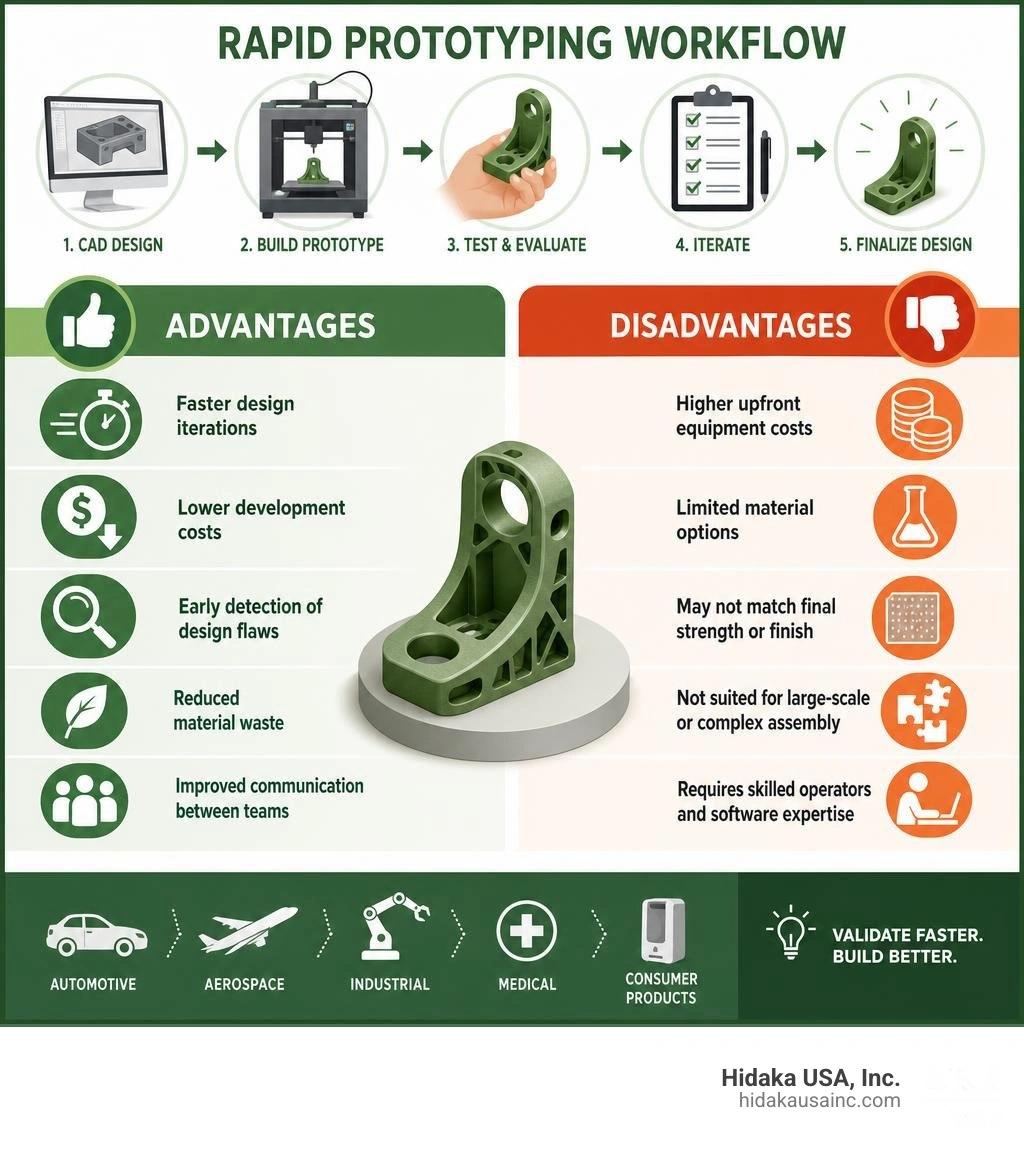
Rapid Prototyping Advantages:
- Faster design iterations (days vs. weeks)
- Lower development costs compared to traditional tooling
- Early detection of design flaws before mass production
- Reduced material waste
- Improved communication between design, engineering, and stakeholders
Rapid Prototyping Disadvantages:
- Higher upfront equipment and setup costs
- Limited material options compared to final production methods
- Prototypes may not match final product strength or surface finish
- Not suited for large-scale or complex assembly production
- Requires skilled operators and software expertise
Rapid prototyping is used across industries — from automotive to aerospace — to build physical models directly from CAD data, using methods like 3D printing, CNC machining, and sheet metal fabrication. It can cut product development time by up to 60% and reduce prototyping costs significantly compared to traditional methods.
However, it is not a perfect solution for every situation. Material performance gaps, surface finish limitations, and scalability constraints mean that knowing when and how to use rapid prototyping is just as important as using it at all.
My name is Yoshihiro Hidaka. Since founding Hidaka USA, Inc. in 1989 as a sheet metal fabrication and prototype supplier to the automotive industry, I have seen how weighing rapid prototyping advantages and disadvantages directly affects product quality, delivery timelines, and production costs. In this guide, I will walk you through what you need to know to make informed prototyping decisions.
Key terms for rapid prototyping advantages and disadvantages:
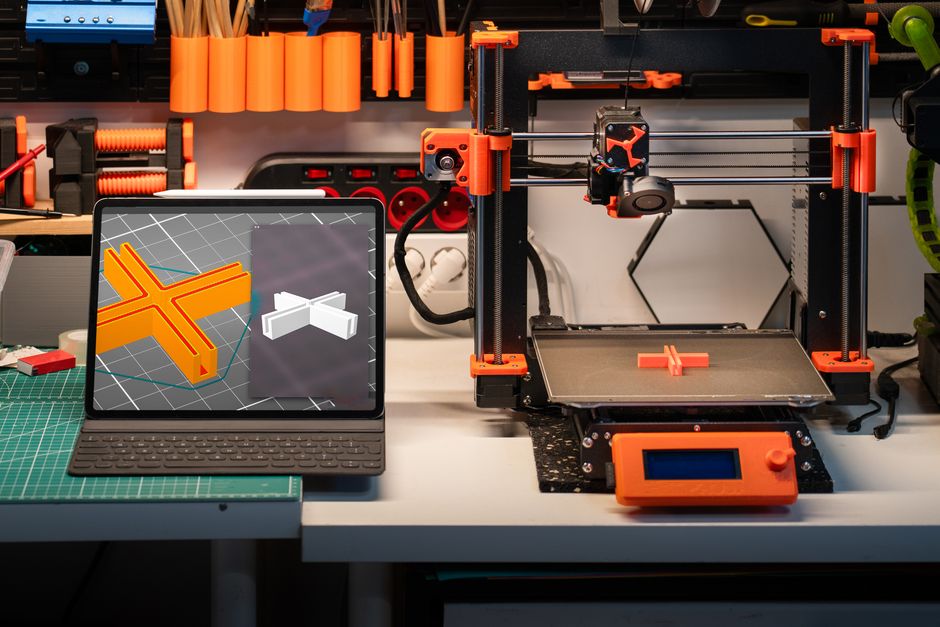
At its core, rapid prototyping is a group of manufacturing techniques used to quickly fabricate a physical, three-dimensional scale model of a part or assembly. The process begins in the digital realm with computer-aided design (CAD) software. Once we have a completed 3D CAD model, specialized slicing software prepares the file, translating digital geometries into physical instructions for fabrication machinery.
Unlike traditional manufacturing, which often requires custom-built molds or complex cutting paths, rapid prototyping equipment operates automatically to build the physical part directly from the digital data. Depending on the design priorities, engineers can choose between different "fidelity levels" for their prototypes:
- Low-Fidelity Prototypes: These are quick, inexpensive models (often made of basic plastics or paper) used in the early stages of product development. They help us visualize the basic shape, scale, and form of a design.
- High-Fidelity Prototypes: These are highly detailed, functional models built with materials and tolerances that closely mimic the final product. They are used for mechanical testing, ergonomic evaluations, and assembly fit checks.
By matching the right fidelity level to your design phase, we can systematically validate concepts, test mechanical features, and optimize product geometry before committing to expensive tooling.
Rapid Prototyping vs. Traditional Prototyping
To truly appreciate the value of rapid prototyping, we must look at how it compares to traditional prototyping methods. Historically, creating a prototype meant relying on skilled machinists to manually carve, mill, or cast parts. If a design required injection molding, engineers had to wait weeks or even months for steel molds to be fabricated before they could test a single part.
The difference in lead times and iteration speed is staggering. Traditional prototyping methods can take several weeks to deliver a single iteration. If an error is found, the cycle starts over, dragging out the product development timeline. Rapid prototyping, by contrast, compress delivery cycles down to hours or days. This speed allows design teams to complete multiple iteration cycles in the time it would take to receive a single traditional prototype.
| Feature | Rapid Prototyping | Traditional Prototyping |
|---|---|---|
| Lead Time | 1 to 5 days | 4 to 12 weeks |
| Tooling Cost | Extremely low (often zero mold cost) | High (requires custom molds or fixtures) |
| Iteration Speed | Hours to days | Weeks to months |
| Design Flexibility | High (easy to modify CAD and reprint) | Low (molds are difficult/costly to alter) |
| Material Properties | Can differ from final production grade | Identical to final production grade |
| Best Suited For | Concept design, fit testing, low volume | Mass production prep, structural validation |
By eliminating the need for expensive, custom-made tooling during the design phase, rapid prototyping gives engineering teams the freedom to fail quickly and cheaply, ultimately leading to a more refined and reliable end product.
Evaluating Rapid Prototyping Advantages and Disadvantages
When choosing a manufacturing strategy, we must carefully balance the rapid prototyping advantages and disadvantages to ensure we are using the right tool for the job.
The primary advantage of rapid prototyping is early design verification and risk mitigation. In the past, design oversight often remained hidden until full production began. Discovering a geometric error or an assembly interference during mass production is a financial catastrophe that can delay a product launch by months. Rapid prototyping acts as an insurance policy, allowing engineers to hold a physical part, test its ergonomics, and verify its assembly fit early in the R&D cycle.
However, we must also understand the limitations of rapid prototyping. While these processes excel at speed and flexibility, they often fall short when it comes to material properties and production scalability. Many additive manufacturing processes yield parts with anisotropic properties—meaning they are weaker along the layer lines. This makes them unsuitable for high-stress structural testing. Additionally, surface finishes can be rough or require extensive post-processing, and the per-unit cost remains flat, meaning it does not offer the economies of scale found in mass production methods like high-volume stamping or injection molding.
How Rapid Prototyping Advantages and Disadvantages Affect Product Development Costs
From a financial perspective, the impact of rapid prototyping on product development costs is profound, but it requires a nuanced understanding of short-term savings versus long-term production realities.
In the early stages of R&D, rapid prototyping is incredibly cost-effective. Traditional injection molding prototypes can easily cost tens of thousands of dollars due to mold fabrication expenses. If you need three design iterations, that cost multiplies quickly. Rapid prototyping bypasses mold costs entirely. By utilizing digital manufacturing, we can print or machine parts directly, drastically reducing the cost of multiple design iterations. Furthermore, additive manufacturing minimizes material waste by up to 90% compared to subtractive manufacturing, as it only uses the material required to build the part layer-by-layer.
However, there is a crossover point where the financial benefits shift. While rapid prototyping has nearly zero setup costs, its per-unit processing cost is relatively high. For mass production, traditional tooling is far more cost-effective because the high initial mold expense is amortized over hundreds of thousands of units, driving the per-part cost down to pennies.
To bridge this gap, smart engineering teams use hybrid approaches like rapid prototyping cnc machining to test design variations before committing to hard tooling. To learn more about the benefits of rapid prototyping and how it optimizes R&D budgets, businesses must look at the total cost of development rather than just the unit price of the prototype.
Balancing Rapid Prototyping Advantages and Disadvantages for Complex Assemblies
Prototyping a single, standalone component is relatively straightforward. However, when you are developing complex assemblies—such as automotive chassis components, medical devices, or consumer electronics with multiple moving parts—balancing the pros and cons of rapid prototyping becomes highly challenging.
For complex assemblies, rapid prototyping is indispensable for:
- Fit Testing: Ensuring that mating parts align correctly and that tolerances do not stack up to prevent assembly.
- Functional Validation: Testing how moving parts interact, checking clearances, and evaluating ergonomics.
The challenge lies in dimensional accuracy and assembly tolerance. Some rapid prototyping methods, particularly basic 3D printing (like FDM), have wider tolerances (typically ±0.1 mm to ±0.3 mm) compared to precision CNC machining (which can achieve ±0.01 mm to ±0.05 mm). If your assembly relies on tight, snap-fit connections or precise mechanical alignments, a low-fidelity prototype may fail to assemble simply because of the manufacturing process's tolerance limits, not because of a design flaw.
To overcome this, engineers must understand how to prototype metal parts using high-precision processes when validating complex assemblies, ensuring that the prototype's physical tolerances match the design's functional requirements.
Comparing Rapid Prototyping Technologies
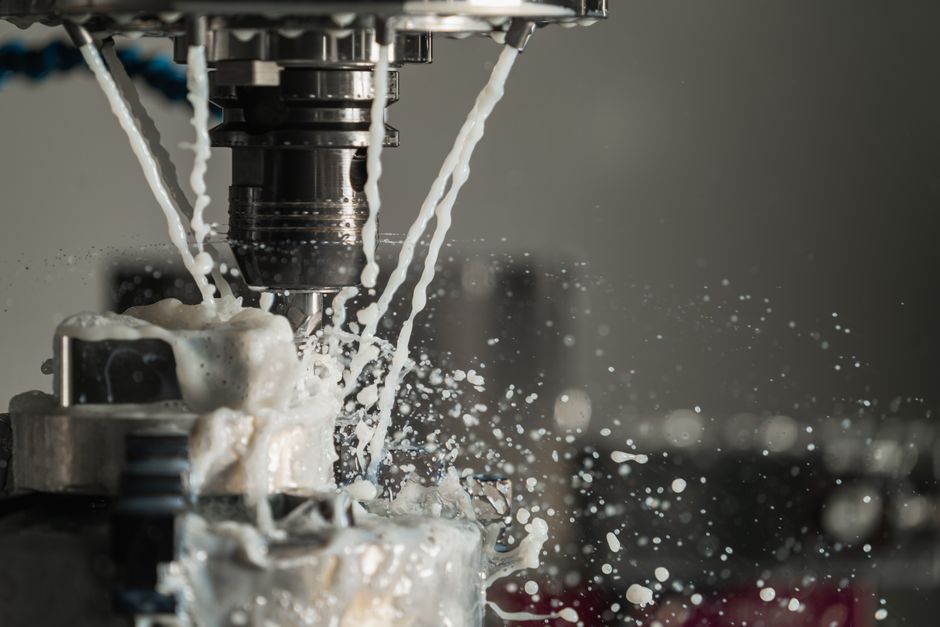
There is no "one-size-fits-all" technology in rapid prototyping. The best method depends entirely on whether your priority is visual aesthetics, dimensional accuracy, material strength, or speed. To make the right choice, we must compare the primary additive, subtractive, and formative technologies available today.
Additive Manufacturing Processes
Additive manufacturing, commonly known as 3D printing, builds parts layer-by-layer from digital models. It is the most popular form of rapid prototyping due to its ability to create highly complex geometries that would be impossible to machine.
- Stereolithography (SLA): This process uses a UV laser to cure liquid photopolymer resin into solid plastic. SLA is highly favored for its exceptional surface finish and high dimensional accuracy, making it perfect for cosmetic prototypes and fit testing. However, SLA parts are often brittle, sensitive to sunlight (photosensitive), and degrade over time, making them poor choices for functional mechanical testing.
- Selective Laser Sintering (SLS) & Multi Jet Fusion (MJF): These are powder bed fusion technologies that use a laser or fusing agent to sinter powdered polymer materials (usually nylon). SLS and MJF parts are durable, have isotropic mechanical properties, and do not require support structures during printing. They are excellent for functional testing, though their surface finish is somewhat grainy.
- Fused Deposition Modeling (FDM): The most common and affordable method, FDM extrudes melted plastic filament layer-by-layer. It is great for quick, low-cost concept models, but suffers from lower accuracy and visible layer lines.
To dive deeper into these methods, you can Read about rapid prototyping techniques to understand which additive process aligns with your material and aesthetic needs.
Subtractive and Formative Processes
While 3D printing gets most of the attention, traditional subtractive and formative processes have been optimized for rapid workflows and remain critical when real material properties and high precision are required.
- CNC Machining: Subtractive CNC milling and turning carve parts out of solid blocks of metal or plastic. CNC machining offers unmatched dimensional accuracy (up to ±0.01 mm) and produces parts with the exact material properties of the final production component. If you need to test a high-strength aluminum bracket under real load conditions, CNC is the gold standard.
- Sheet Metal Prototyping: For enclosures, brackets, and automotive body panels, formative sheet metal fabrication is essential. It allows us to evaluate the material thickness, bending radiuses, and welding characteristics of a design.
Using rapid metal prototyping and prototype sheet metal fabrication ensures that your metal prototypes perform identically to the final stamped mass-production parts, eliminating any surprises during the transition to the assembly line.
Frequently Asked Questions about Rapid Prototyping
Is rapid prototyping cheaper than traditional manufacturing?
Yes, in the early stages of product development, rapid prototyping is significantly cheaper because it eliminates the need for expensive custom tooling, molds, and complex manual setups. However, for large-scale production, traditional manufacturing processes (like high-volume stamping or injection molding) are much cheaper on a per-unit basis because the initial tooling costs are spread across thousands of parts.
What are the material limitations of rapid prototyping?
While rapid prototyping supports a wide range of plastics and metals, the materials used often have different mechanical properties than their mass-production counterparts. For example, 3D-printed plastics can be more brittle or sensitive to heat, UV light, and chemicals. Additionally, the layered nature of additive manufacturing can introduce structural weaknesses that do not exist in molded or forged production parts.
When should you transition from prototyping to mass production?
You should transition to mass production once your design is "frozen"—meaning it has passed all physical fit, functional, and regulatory tests, and no further geometric changes are required. At this stage, you can leverage advanced prototype engineering services to optimize your design for manufacturability (DFM), ensuring a smooth, cost-effective transition to high-volume tooling and assembly.
Conclusion
Navigating the rapid prototyping advantages and disadvantages is the key to accelerating your product development without sacrificing quality or blowing your budget. By leveraging the speed of additive manufacturing for early concepts and the precision of CNC machining and sheet metal fabrication for functional testing, you can confidently bring your designs to life.
At Hidaka USA, Inc., we have spent over three decades perfecting this balance. From our state-of-the-art facility in Dublin, Ohio, we provide world-class prototyping and low-to-high volume production services, specializing in high-quality metal components for the automotive, mass-transit, and motorsports industries. Holding both ISO 9001 and American Welding Society (AWS) certifications, we ensure that every prototype we build meets the highest quality standards.
Whether you need a single proof-of-concept metal prototype or are ready to transition to full-scale mass production, our experienced engineering team is here to guide you every step of the way. Contact us today to discuss your next project!