Detailed Guide to Rapid Prototyping Additive Manufacturing

How Rapid Prototyping Additive Manufacturing Compares — Quick Answer
Rapid prototyping additive manufacturing is the use of 3D printing technologies to quickly build physical parts from digital CAD files, layer by layer, for design validation and testing.
Here is how the main approaches compare at a glance:
| Method | Speed | Cost | Best For |
|---|---|---|---|
| Additive (FDM, SLA, SLS) | Fast (hours to days) | Low to medium | Complex geometry, quick iteration |
| Additive (SLM, DMLS) | Medium | Medium to high | Metal functional prototypes |
| Subtractive (CNC Machining) | Medium | Medium to high | Tight tolerances, end-use materials |
| Injection Molding | Slow (tooling required) | High upfront | High-volume production runs |
Key advantages of additive manufacturing for prototyping:
- No tooling required — start from a CAD file directly
- Prototype design costs can be reduced by up to 80% compared to traditional methods
- Design changes can be made and reprinted within hours or days
- Complex internal geometries are possible that traditional machining cannot achieve
- Parts are typically lighter, which matters in automotive and aerospace applications
Key limitations to know:
- Layered construction can reduce structural integrity versus machined parts
- Metal printing capabilities are still maturing for some applications
- Regulated sectors (defense, medical) require additional certifications and quality steps
- Surface finish is often rougher than CNC-machined parts without post-processing
Automotive and industrial manufacturers today face relentless pressure to compress product development timelines without sacrificing accuracy or quality. Rapid prototyping additive manufacturing has emerged as one of the most effective tools to meet that challenge — enabling engineering teams to move from concept to testable physical part in days rather than weeks, and to iterate multiple design versions simultaneously. At the same time, not all prototyping needs are equal: some parts demand the structural integrity of end-use metals, others require high surface detail, and regulated sectors like defense or aerospace add another layer of complexity around certifications and traceability. This guide breaks down the technologies, trade-offs, and real-world applications so you can make informed decisions for your production program.
I'm Yoshihiro Hidaka, founder of Hidaka USA, Inc., a sheet metal fabrication and prototyping company I established in 1989 to supply the automotive industry with high-quality prototype parts. Over more than three decades supplying both prototype and mass production components, I have seen how rapid prototyping additive manufacturing has transformed product development cycles — and where it works best alongside traditional fabrication methods. In the sections below, I'll walk you through everything you need to know to choose the right approach for your program.
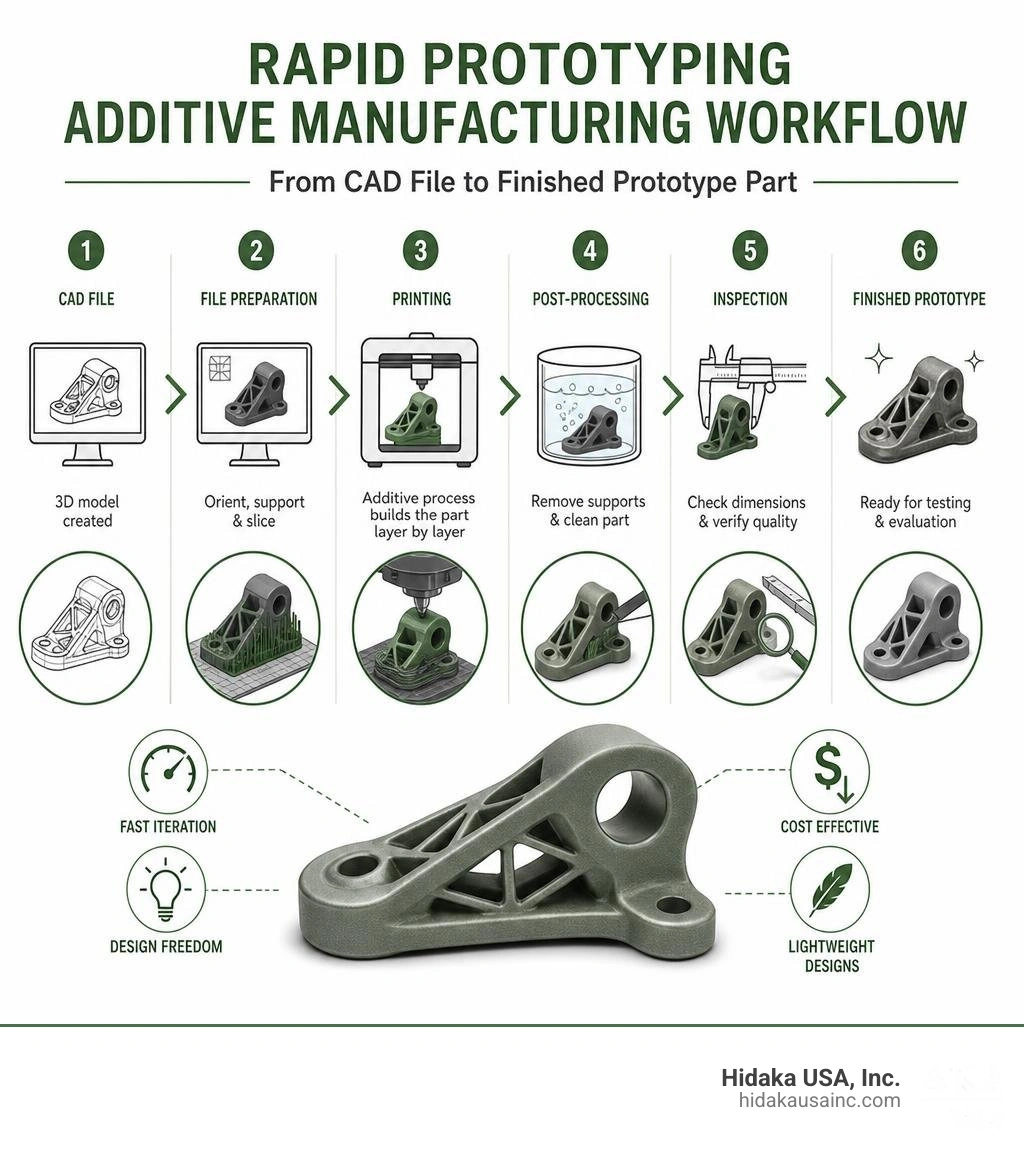
Explore more about rapid prototyping additive manufacturing:
Terminology Demystified: 3D Printing, Additive Manufacturing, and Rapid Prototyping
When you enter advanced product development, you will hear three terms thrown around almost interchangeably: 3D printing, additive manufacturing (AM), and rapid prototyping (RP). While they are closely linked, they are not exactly the same thing. Understanding the nuances between them helps keep everyone on the same page during design reviews.
- 3D Printing: This term historically referred to the physical process of joining materials layer by layer to create objects from 3D model data. Originally popularized in the 1980s and 1990s, "3D printing" is often used by the general public, hobbyists, and the media.
- Additive Manufacturing: In industrial and engineering settings, we generally prefer "additive manufacturing." It sounds more formal because it represents the broader industrial application of the technology. AM encompasses not just the printing itself, but the entire commercial workflow—including digital design, material preparation, software slicing, the physical build, and post-processing. Unlike subtractive manufacturing (like CNC milling, which carves away material from a solid block), AM only deposits material where it is needed.
- Rapid Prototyping: This is an application of additive manufacturing, rather than a standalone technology. Rapid prototyping is the technique of quickly fabricating a scale model or physical part using 3D CAD files. While rapid prototyping can technically use subtractive methods like high-speed CNC machining, it is most commonly associated with AM because layer-by-layer printing requires no custom tooling, making it incredibly fast.
In short, 3D printing is the physical process, additive manufacturing is the industrial industry, and rapid prototyping is the goal we achieve when we use these tools to validate a design. Specialized facilities, such as the PNNL Rapid Prototyping Lab, use these distinct workflows to solve complex engineering challenges. For a deeper look at how these digital workflows fit into broader engineering cycles, you can read our guide on advanced prototype engineering services.
How Rapid Prototyping Additive Manufacturing Compares to Traditional Methods
To appreciate why rapid prototyping additive manufacturing has become so popular in places like Dublin, Ohio, it helps to compare it directly to traditional subtractive and formative manufacturing methods.

Traditional manufacturing relies on removing material (subtractive) or reshaping it using molds and dies (formative). While these methods are unmatched for high-volume mass production, they present significant bottlenecks during the early phases of product development.
Design Flexibility and Tooling-Free Production
Traditional injection molding or metal stamping requires custom tooling—molds, dies, and fixtures—that can take weeks or months to design and machine. If you discover a design flaw during testing, modifying that hard tooling is incredibly slow.
With additive manufacturing, there is no hard tooling. The "tooling" is entirely digital, existing only as a CAD file. If you need to make a change, you simply modify the digital model and send it back to the printer. This gives engineers the freedom to design complex internal geometries, undercuts, and conformal cooling channels that are physically impossible to machine on a standard CNC mill.
Lead Times and Production Agility
Traditional tooling workflows can push first-article delivery times out to several months. Additive manufacturing completely bypasses this setup phase. A physical prototype can be printed, cleaned, and placed on a test bench in as little as 24 to 48 hours. This allows development teams to test three or four design iterations in the time it would take to machine a single mold for traditional injection molding.
To help you visualize these differences, here is a direct comparison between additive prototyping and subtractive CNC machining:
| Feature | Additive Prototyping (3D Printing) | Subtractive Prototyping (CNC Machining) |
|---|---|---|
| Material Waste | Very low (only uses necessary material) | High (shaves away material from a solid block) |
| Geometry Complexity | Virtual "complexity for free" (handles internal cavities easily) | Restricted by tool access and axis limitations |
| Structural Integrity | Anisotropic (weaker along the Z-axis print layers) | Isotropic (uniform strength throughout the solid block) |
| Surface Finish | Rougher, stepped finish (requires post-processing) | Excellent, smooth surface finishes (up to 25 Ra) |
| Material Variety | Growing, but limited compared to traditional metals/plastics | Wide range of certified, production-grade alloys and plastics |
Both methods have their place in a modern development cycle. For instance, when a prototype demands the exact mechanical properties of a solid block of steel or aluminum, subtractive methods remain crucial. You can learn more about how we balance these approaches by reading about rapid prototyping CNC machining.
Key Additive Manufacturing Technologies for Rapid Prototyping
Selecting the right technology for your prototype depends heavily on what you need to test. Are you evaluating visual appeal, checking the physical fit within an assembly, or subjecting the part to functional, high-stress mechanical testing?

Modern additive manufacturing is split into two primary categories: polymer-based and metal-based technologies. Depending on your needs, you can leverage regional resources such as 3D Printing Services in Ohio - Stratasys Direct or Rapid Prototyping - 3D Printing Services Columbus, OH to access these industrial-grade systems. For a broader look at precision laser-based prototyping, check out our insights on 3d laser prototype services.
Polymer-Based Rapid Prototyping Additive Manufacturing
Polymers are the most common materials used in rapid prototyping due to their speed, low cost, and versatile material properties.
- Stereolithography (SLA): SLA uses a UV laser to cure liquid photopolymer resin into solid plastic layer by layer. It is the gold standard for high-resolution visual prototypes, offering incredibly smooth surface finishes and tight tolerances (down to ±0.1 mm). It is ideal for concept models, anatomical replicas, and casting patterns.
- Selective Laser Sintering (SLS): SLS uses a high-power laser to fuse small particles of polymer powder (typically nylon) into a solid structure. Because the unsintered powder bed acts as a natural support structure, SLS can print highly complex geometries without needing temporary support material. SLS parts are durable and well-suited for functional testing.
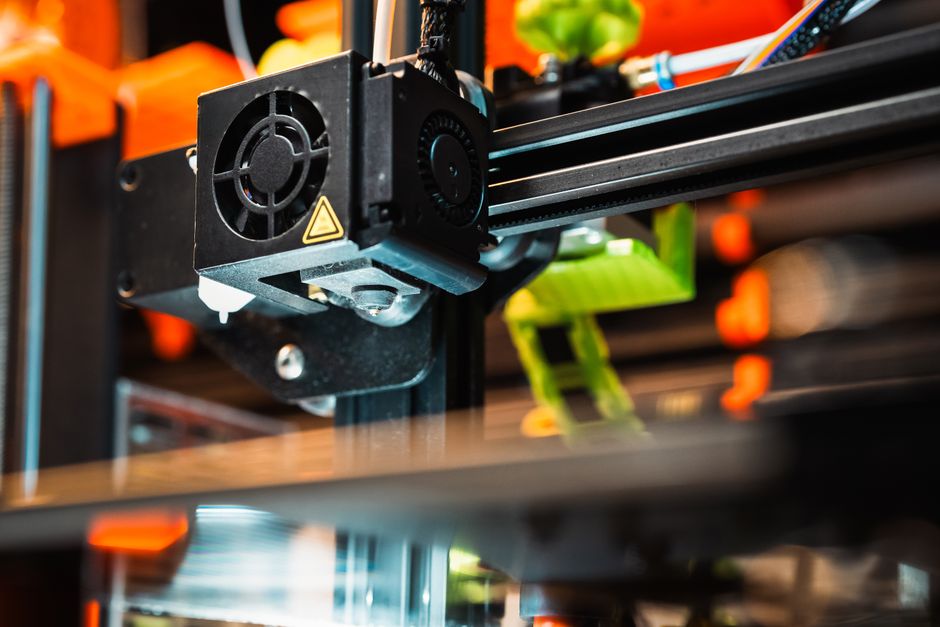
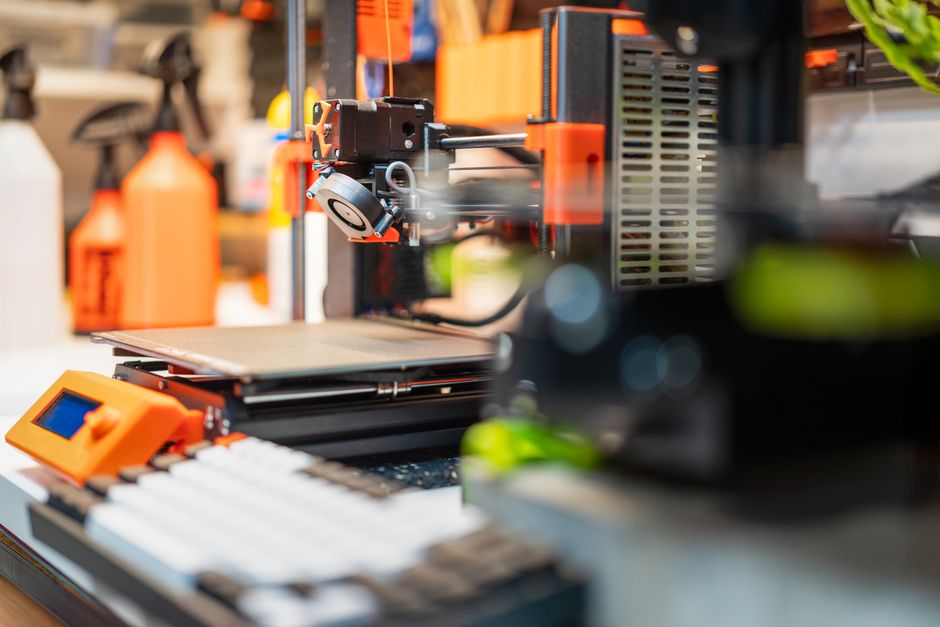
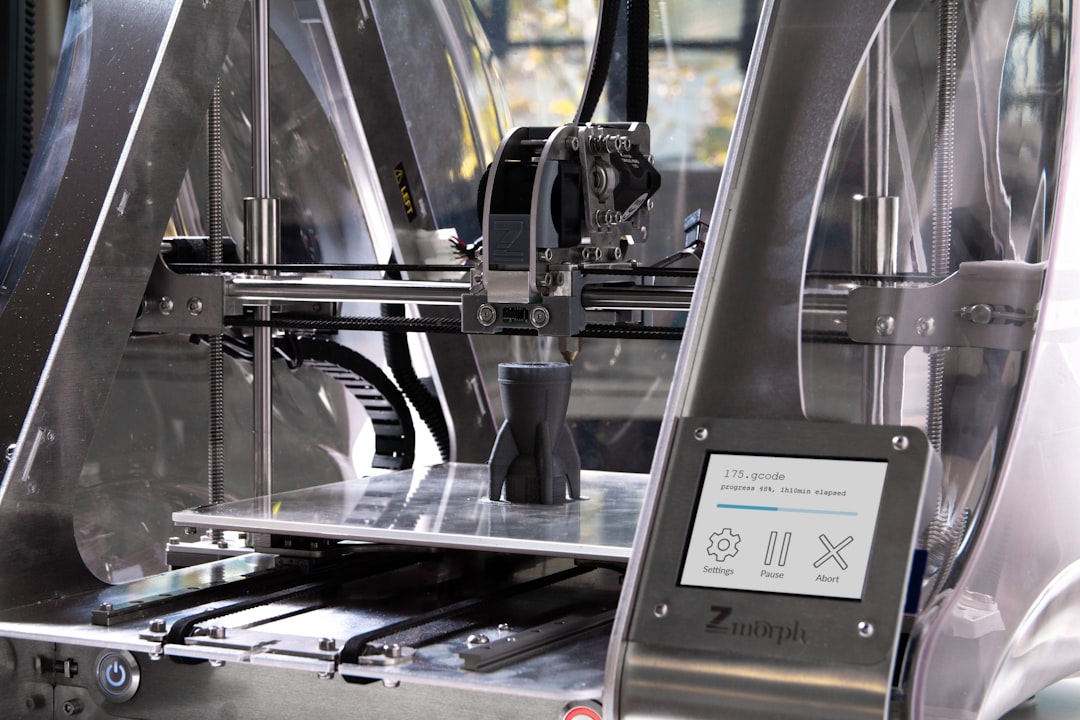
- Fused Deposition Modeling (FDM): The most widely used 3D printing technology, FDM extrudes thermoplastic filaments (such as ABS, Polycarbonate, or ULTEM) through a heated nozzle. While FDM parts have visible layer lines, they are physically robust and excellent for testing functional enclosures, jigs, fixtures, and large-scale components.
- Multi Jet Fusion (MJF): MJF deposits fusing and detailing agents over a powder bed of nylon, which is then cured using infrared lamps. This process yields dense, isotropic parts with excellent mechanical properties, making them highly suitable for rugged functional testing.
For startups looking to validate their initial designs before moving to metal, starting with polymer prototypes is a highly cost-effective strategy. You can read more about this in our guide on metal prototyping for startups.
Metal-Based Rapid Prototyping Additive Manufacturing
When a prototype must withstand extreme heat, high mechanical stress, or corrosive environments, metal-based additive manufacturing is required.
- Selective Laser Melting (SLM) / Direct Metal Laser Sintering (DMLS): These powder bed fusion technologies use a high-powered laser to completely melt and fuse fine metal powders (such as aluminum, titanium, stainless steel, or Inconel) layer by layer. SLM and DMLS produce incredibly strong, dense parts that are widely used in aerospace, automotive, and motorsports prototyping.
- Binder Jetting (BJT): Binder Jetting deposits a liquid binding agent onto a bed of metal powder to form a "green" part, which is then sintered in a furnace to achieve full density. It is an efficient, cost-effective alternative to SLM for producing small batches of complex metal prototypes.
To understand how metal 3D printing compares to traditional sheet metal fabrication and machining, explore our detailed breakdown of rapid metal prototyping.
Benefits, Limitations, and Industry Applications of AM Prototyping
As we look at the manufacturing landscape in June 2026, rapid prototyping additive manufacturing has matured from an experimental tool into a reliable industrial standard.
The Primary Benefits
- Up to 80% Cost Reduction: Traditional prototyping can consume up to 80% of an R&D budget due to tooling, machining setups, and material waste. Additive manufacturing eliminates these overheads, keeping prototyping costs highly manageable.
- Unprecedented Weight Reduction: AM allows engineers to design complex internal lattice structures that maintain high strength while drastically reducing weight. In military vehicles and aircraft, this weight reduction directly translates to lower fuel consumption and extended operating lifespans.
- Accelerated Iteration: Instead of waiting weeks to test a single design change, engineering teams can print, test, and refine multiple variations in a single week, dramatically shortening time-to-market.
Key Limitations
Despite its strengths, additive manufacturing has limitations. The layered nature of the printing process means parts can suffer from anisotropy (being weaker along the Z-axis print lines). Additionally, the surface finish directly off the print bed is typically rougher than a machined part, and metal printing capabilities are still developing for large-format, high-volume production.
Industry Applications
- Automotive and Motorsports: Here in Ohio, the automotive industry relies heavily on rapid prototyping to test engine components, custom brackets, and aerodynamic ducting. Speed is everything in motorsports, and AM allows teams to test new geometries between race weekends.
- Defense and Aerospace: The defense sector utilizes AM to prototype custom components, reproduce legacy aircraft parts, and develop modular systems. For example, military programs use AM to create lighter, highly durable components for field testing.
- Medical Devices: Surgeons regularly use high-resolution SLA prints to create patient-specific anatomical models for pre-operative planning, while medical device manufacturers use biocompatible materials to prototype custom surgical guides.
Organizations like the AM Cluster of Ohio | Additive Manufacturing | YBI help regional businesses integrate these advanced technologies. To learn more about selecting the right manufacturing process for your metal parts, see our guide on how to prototype metal parts.
Post-Processing, Quality Assurance, and Regulatory Challenges
A finished print is rarely ready for end-use testing straight out of the machine. Depending on the technology and application, several post-processing and quality assurance steps are required to ensure the prototype meets engineering standards.
Post-Processing Steps
- Support Removal: Most SLA, FDM, and metal prints require temporary support structures to hold up overhanging features during the build process. These must be manually or chemically removed.
- Surface Finishing: To improve aesthetics or aerodynamic performance, prototypes may undergo bead blasting, sanding, vapor smoothing, or polishing. For high-precision metal parts, critical mating surfaces are often post-machined on a CNC mill to achieve tight tolerances.
- Thermal Treatment: Metal parts printed via SLM or DMLS build up significant internal thermal stresses during the melting process. They must undergo stress-relief heat treatment in a vacuum furnace before being removed from the build plate to prevent warping or cracking.
Quality Assurance and Compliance
In highly regulated sectors like aerospace, defense, and medical devices, prototypes must meet strict quality standards. This includes maintaining full material traceability, conducting non-destructive testing (such as radiographic or ultrasonic testing to check for internal voids), and adhering to strict certifications.
At Hidaka USA, Inc., we understand the importance of quality control. Operating out of our ISO 9001-certified facility in Dublin, Ohio, we combine advanced digital inspection tools with rigorous quality assurance protocols to ensure every prototype—whether additive, subtractive, or formed—meets your exact specifications. For a deeper look at post-print machining and precision finishing, read about prototype machining.
Frequently Asked Questions about Additive Prototyping
What is the difference between 3D printing and additive manufacturing?
In everyday conversation, there is virtually no difference; they are synonyms for building parts layer by layer from a digital file. However, in industrial settings, "additive manufacturing" is preferred as it represents the complete commercial workflow (including engineering, materials science, and post-processing), while "3D printing" is more commonly associated with consumer or hobbyist use.
How does additive manufacturing reduce prototype design costs?
Additive manufacturing reduces prototyping costs primarily by eliminating the need for expensive, time-consuming custom tooling (such as molds or dies). It also minimizes material waste, as the machine only uses the exact amount of material needed to build the part, whereas subtractive machining shaves away a large portion of a solid block.
Can additively manufactured prototypes be used for functional testing?
Yes. By utilizing high-performance engineering thermoplastics (like nylon, polycarbonate, or ULTEM) or metal alloys (like titanium, stainless steel, or aluminum), additively manufactured prototypes can withstand significant thermal, chemical, and mechanical stress. However, designers must account for the layered nature of the parts, which can result in slightly lower structural integrity along the print direction compared to a solid machined component.
Conclusion
Rapid prototyping additive manufacturing has fundamentally transformed the speed and flexibility of modern product development. By eliminating the bottlenecks of traditional tooling and allowing for rapid, cost-effective design iterations, AM enables engineering teams to validate concepts quickly and bring superior products to market faster.
However, additive manufacturing is not a universal cure-all. For prototypes that require high structural integrity, exact production-grade material properties, or exceptionally tight tolerances, traditional methods like CNC machining and precision sheet metal fabrication remain indispensable. Often, the most successful engineering programs rely on a hybrid approach—using additive manufacturing for early-stage design validation and transitioning to precision metal fabrication for functional testing and mass production.
At Hidaka USA, Inc., we have spent over 30 years helping automotive, mass-transit railcar, and motorsports manufacturers bring their designs to life. From our 95,000-square-foot facility in Dublin, Ohio, we offer a comprehensive suite of prototyping and mass production services, backed by ISO 9001 certification and strict American Welding Society (AWS) standards. Whether you need rapid metal prototypes, advanced laser cutting, or high-volume stamping, we have the engineering expertise and production capacity to support your program from concept to final assembly.
Ready to take your product development to the next level?
- Explore our comprehensive prototyping services
- Learn about our mass production capabilities
- Contact our engineering team today to discuss your project