Rapid Metal Prototyping and How to Beat the Clock

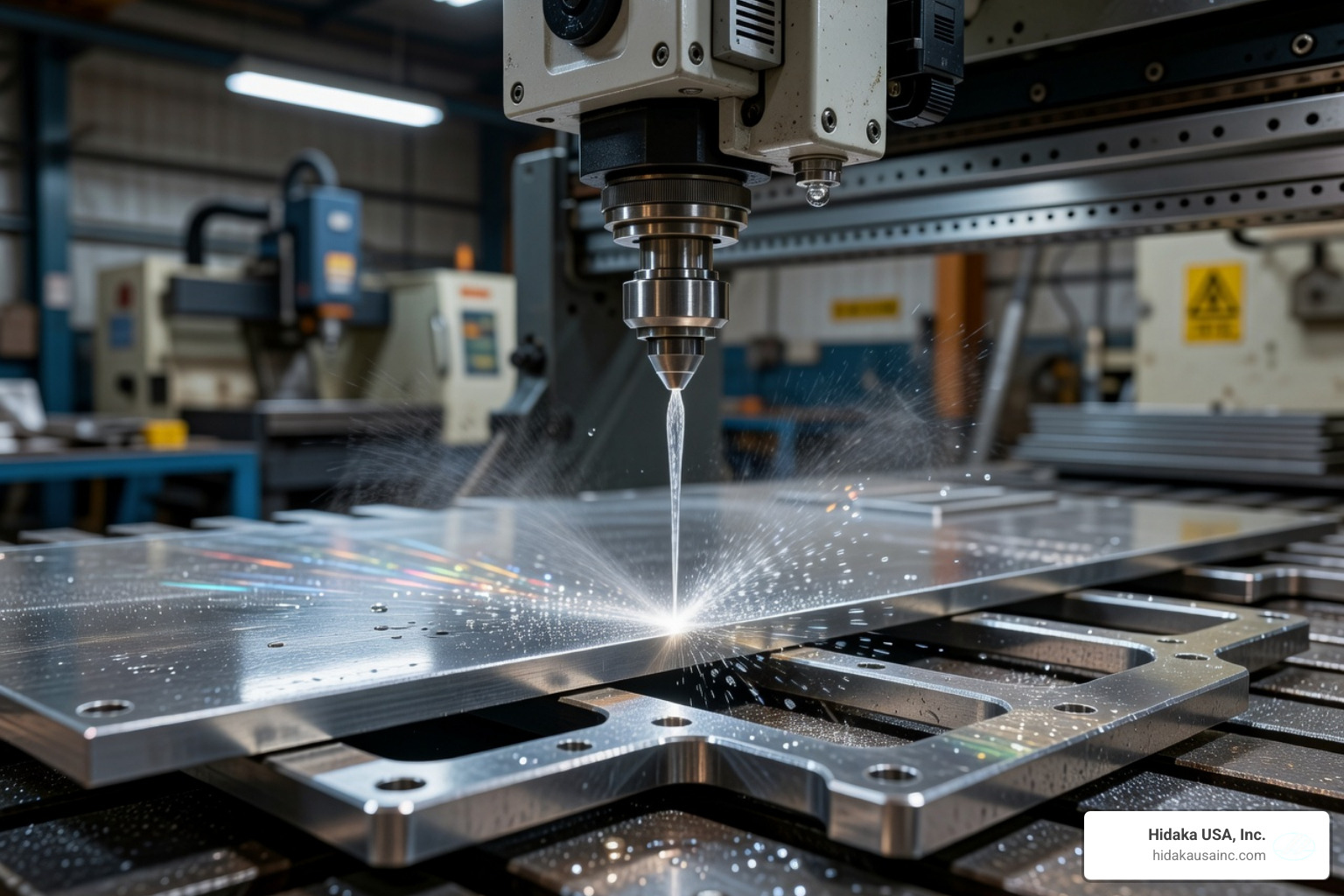
When we talk about rapid metal prototyping, we aren't talking about a single machine, but a suite of technologies that transform digital data into physical reality. In our 95,000-square-foot facility in Dublin, Ohio, we see these technologies as the "muscles" of product development. The two heavy hitters in this arena are subtractive manufacturing and sheet metal fabrication.
Subtractive manufacturing works like a sculptor with a block of marble; it starts with a solid chunk of metal and removes material until the part remains. Sheet metal fabrication, on the other hand, involves cutting, bending, and assembling thin flat sheets. Both are essential, but they serve different masters.

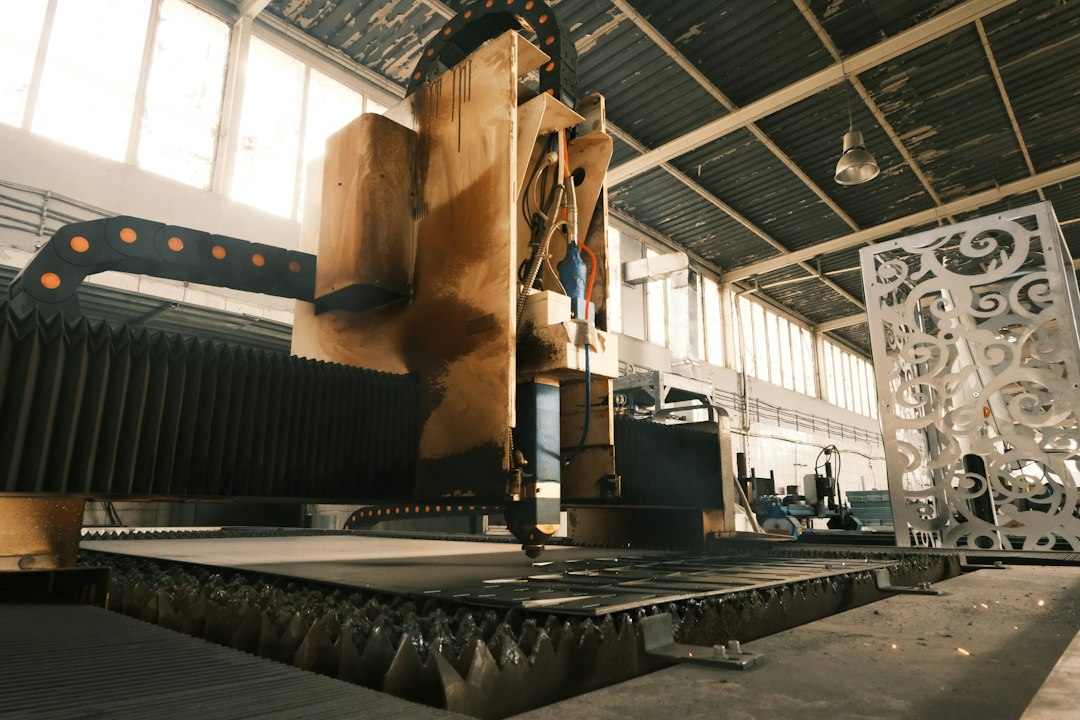
CNC machining is the gold standard for parts with complex 3D geometries, thick walls, or extremely tight requirements for flatness and threading. Sheet metal fabrication is the speed king for enclosures, brackets, and panels. At Hidaka USA, Inc., we often combine these—using 2D/3D laser cutting for the base shape and hydraulic pressing or welding for the final form.
| Feature | CNC Machining | Sheet Metal Fabrication |
|---|---|---|
| Primary Process | Subtractive (Milling/Turning) | Cutting, Bending, Forming |
| Typical Lead Time | 1–5 Days (Standard) | 1–3 Days (Standard) |
| Tolerances | ±0.001 in. (0.025mm) | ±0.005 in. to ±0.010 in. |
| Best For | Solid components, engine parts | Brackets, housings, panels |
| Setup Effort | Moderate (Programming/Fixturing) | Low to Moderate (Tooling/Laser) |
Precision Subtractive Methods: CNC Milling and Turning
To "beat the clock," CNC machines utilize incredible power and speed. Modern CNC mills feature variable spindle speeds typically ranging between 4000 to 10000 RPM. For larger industrial mills, you might see X-axis travel of 31 to 40 inches, Y-axis travel of 17 to 20 inches, and Z-axis travel around 20 inches. This envelope allows us to handle everything from tiny sensors to substantial automotive structural components.
CNC turning (lathe work) handles cylindrical parts with diameters usually between 1 and 18 inches. Because these processes are computer-controlled, human error is minimized to almost zero—limited mostly to the loading and unloading of material. This digital precision ensures that the tenth prototype you order is identical to the first, which is vital for rigorous functional testing.
Material Selection for High-Performance Prototypes
Choosing the right metal is just as important as the design itself. If you use a "placeholder" material like plastic or a soft aluminum for a part intended to be high-strength steel, your test results won't mean much. We believe in using production-grade metals from the start to ensure your real-world stress and load tests are accurate.
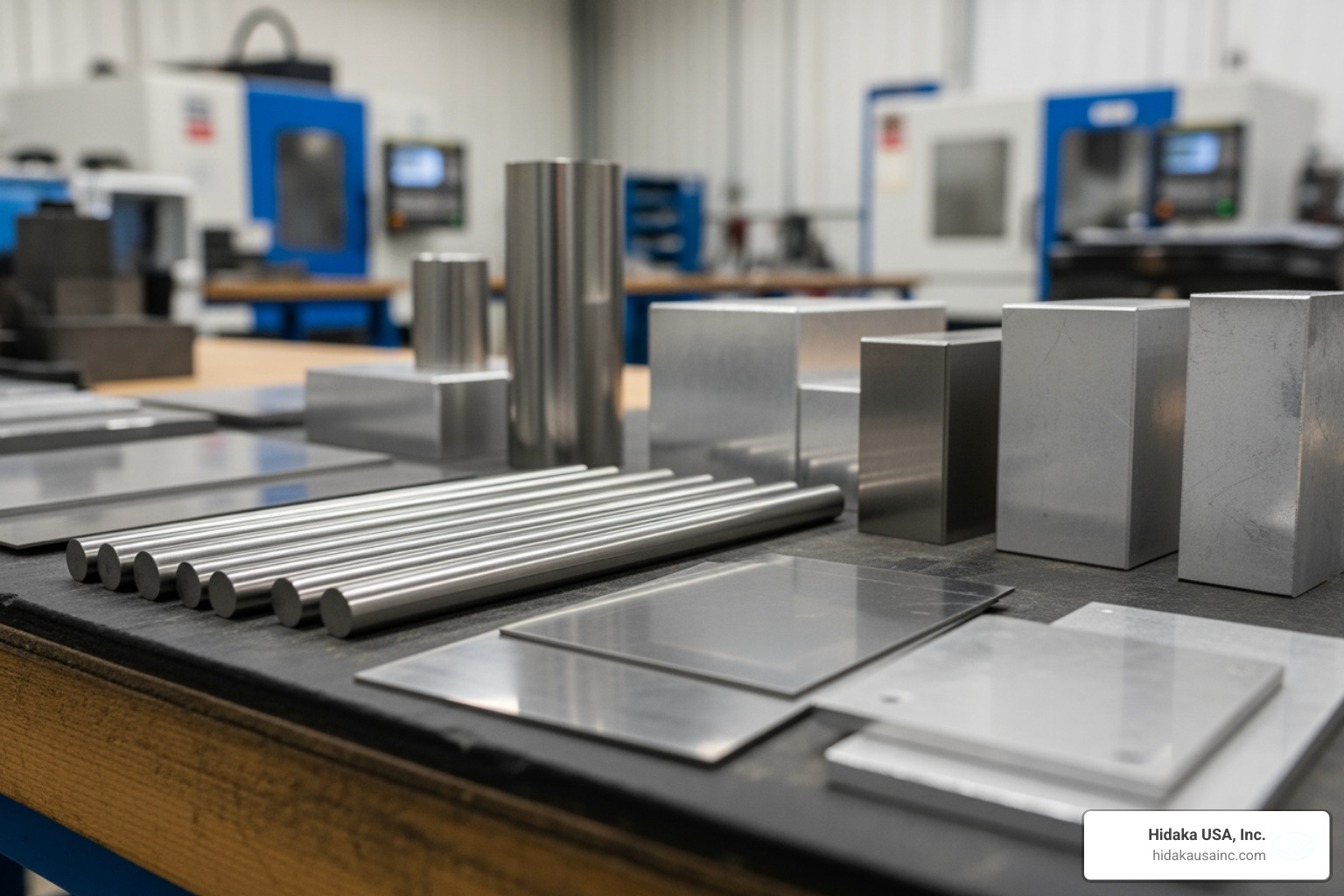
Commonly used materials in rapid metal prototyping include:
- Aluminum (5052 vs. 6061): Aluminum is a favorite for its strength-to-weight ratio. However, 5052 is much better for sheet metal forming because it is more ductile. 6061 is stronger but prone to cracking if bent too sharply, often requiring larger bend radii.
- Stainless Steel: Known for corrosion resistance. 304 is the standard, but 316 is the "marine-grade" choice due to the addition of molybdenum, which fights off pitting in harsh environments.
- Titanium (Ti64): The powerhouse of aerospace and motorsports. It offers extreme strength and corrosion resistance while being significantly lighter than steel.
- Refractory Metals: For specialized applications, metals like Molybdenum, Tungsten, Tantalum, and Niobium are used because they can withstand extreme heat and wear.
- Copper (C101/C110): Essential for electronics and heat exchangers due to its superior thermal and electrical conductivity.
Properties of Common Rapid Metal Prototyping Alloys
When selecting an alloy, keep an eye on the "hardness" and "finish." For instance, 17-4 PH stainless steel is a martensitic precipitation-hardened metal that can reach a hardness of 50 Rc through heat treatment, making it incredibly tough.
If you are working with carbon steels, you might choose between Galvanized and Galvanneal. Galvanized steel is dipped in 850°F liquid zinc for corrosion resistance, leaving a "spangled" pattern. Galvanneal goes a step further with a 1050°F annealing process that bonds the zinc to the iron, creating a matte surface that is much easier to paint—a critical detail for automotive body prototypes.
Design Considerations to Accelerate Lead Times
The secret to 24-hour turnarounds isn't just fast machines; it's "clean" CAD files. Design for Manufacturability (DFM) is the practice of designing parts so they are easy (and therefore fast) to make. When we receive a CAD file, we look for features that might slow down the process, such as impossible internal corners or walls that are too thin to support themselves during machining.
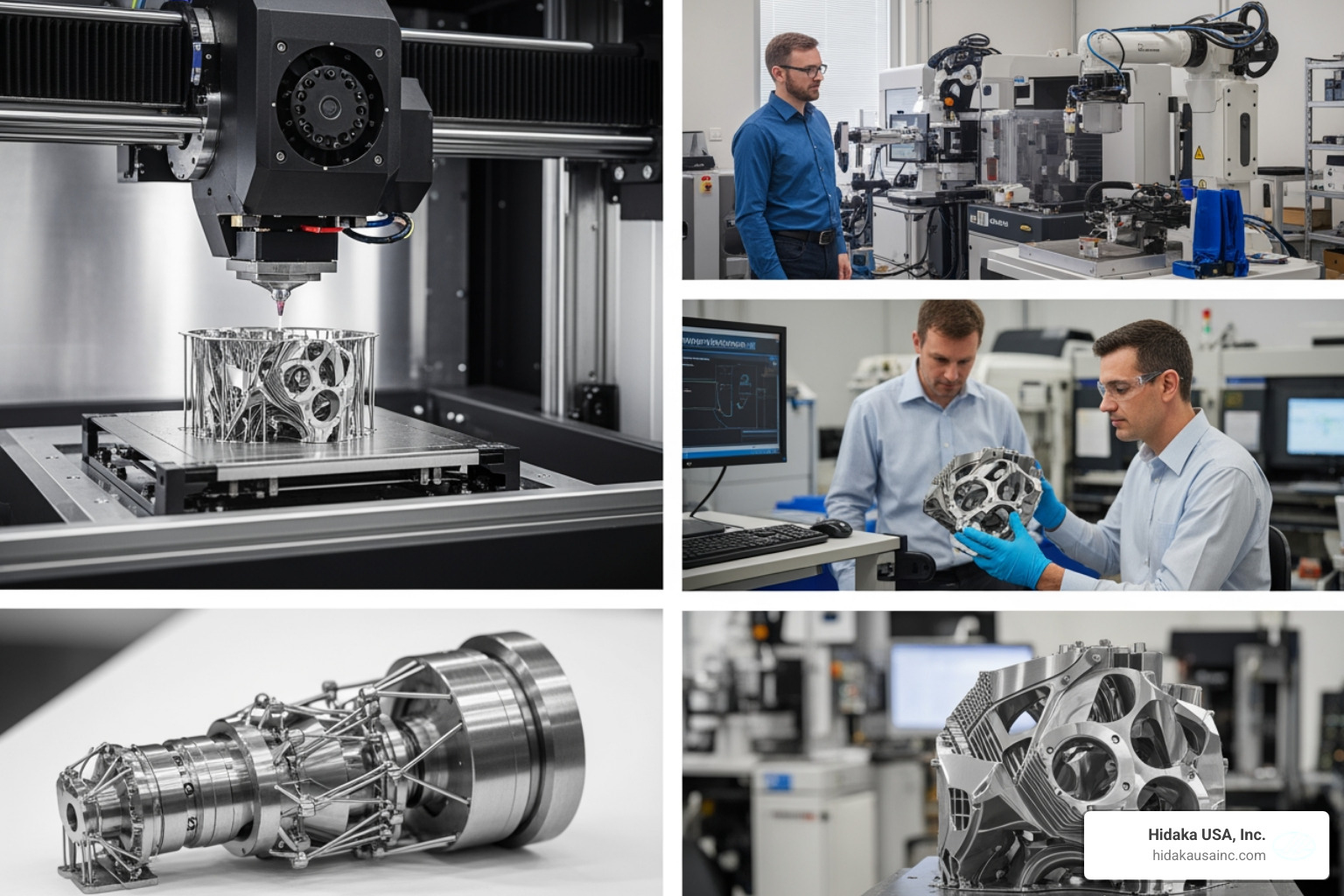
Best Practices for CAD Preparation:
- Use Neutral Formats: Submit files in STEP, IGES, or DXF formats to ensure compatibility across different CAM (Computer-Aided Manufacturing) software.
- Standardize Wall Thickness: For sheet metal, try to stay between 0.024 and 0.250 inches. Keeping a uniform thickness across the part prevents warping.
- Mind the Radii: In CNC milling, internal vertical corners should have a radius. A sharp 90-degree internal corner is impossible for a round drill bit to cut!
- Include Bend Reliefs: When bending sheet metal, small cuts (reliefs) at the corners prevent the metal from tearing or bulging.
Optimizing Sheet Metal for 24-Hour Turnaround
Sheet metal is often the fastest way to get a part in your hands. Because laser cutting is a contactless process, there is no tool wear and very little risk of material contamination. We can achieve burr-free cuts and high-strength, low-spatter welds that require almost no post-processing grinding.
By utilizing standardized hardware insertion (like PEM nuts) and simple press brake forming, we can often move from a digital design to a shipped part in a single day. This rapid iteration allows you to test a bracket, realize it needs to be 2mm longer, and have the revised version on your desk by the following afternoon.
Post-Processing and Finishing Options
A prototype isn't always "finished" once it leaves the machine. Depending on the industry—especially in automotive and aerospace—the surface finish and internal structure are vital for performance.
We offer several finishing options to meet your specifications:
- Anodizing: Creates a hard, non-conductive, protective oxide layer on aluminum parts.
- Powder Coating: Provides a thick, durable, and colorful finish that is more resistant than standard paint.
- Heat Treatment: Includes processes like Nitriding, Carburization, or Quench and Temper to alter the metal's physical properties, such as increasing surface hardness.
- Bead Blasting: Uses small glass beads to create a uniform, matte "satin" finish and remove any machining marks.
- Plating: Options like chromate plating or zinc plating add an extra layer of protection against the elements.
While basic machining can be done in a day, adding complex plating or anodizing typically adds about 3 to 4 days to the lead time. Plan accordingly if your prototype needs to survive a salt-spray test!
Frequently Asked Questions about Metal Prototyping
How fast can I receive a metal prototype?
In rapid metal prototyping, speed is the name of the game. For simple sheet metal parts, same-day efficiency is possible, with shipping occurring in as fast as 1 day. More complex CNC machined parts or assemblies that require welding and finishing usually take between 3 and 7 days. Factors that influence this include material availability (standard aluminum is faster than exotic titanium) and the complexity of the geometry.
Is in-house prototyping cheaper than outsourcing?
This is a classic "Total Cost of Ownership" question. While buying a small laser cutter or 3D printer for your office might seem cheaper, professional outsourcing offers a higher ROI for several reasons:
- Expertise: You gain access to specialized engineers who catch DFM errors before they cost you money.
- No Equipment Overhead: You don't have to maintain $500,000 CNC mills or deal with hazardous waste from finishing chemicals.
- Scalability: A professional shop has no minimum order quantities but can easily transition your prototype into a run of 500 parts.
- Security: Established facilities like ours have strict NDA protocols and ISO certifications to protect your intellectual property.
What industries benefit most from rapid metal prototyping?
While we primarily serve the automotive, mass-transit railcar, and motorsports industries, many others rely on these services:
- Aerospace: For lightweight, high-strength engine components.
- Medical: For surgical tools and orthopedic implants that require extreme precision.
- Consumer Electronics: For chassis, heat sinks, and internal shielding.
- Energy: For heat exchangers and durable valves used in oil and gas.
Conclusion
At Hidaka USA, Inc., we understand that every hour spent waiting for a prototype is an hour your competitors are using to get ahead. Since 1989, we have built our reputation on "beating the clock" without sacrificing the quality that American manufacturing is known for.
With our ISO 9001 and AWS certifications, and a 95,000-square-foot facility in Dublin, Ohio, we provide the end-to-end support—from initial engineering analysis to final quality control—that modern developers need. Whether you are building the next generation of electric vehicles or a custom motorsports assembly, our team is ready to help you turn your CAD files into high-quality metal reality.
For more information on how we can accelerate your next project, visit our prototyping services page or explore our capabilities in mass production to see how we support your product's entire lifecycle. Ready to start? Contact us today!