A Practical Guide to Custom Railcar Prototype Manufacturing Services

Structural Engineering and Fabrication Steps in Specialized Railcar Prototype Manufacturing Services
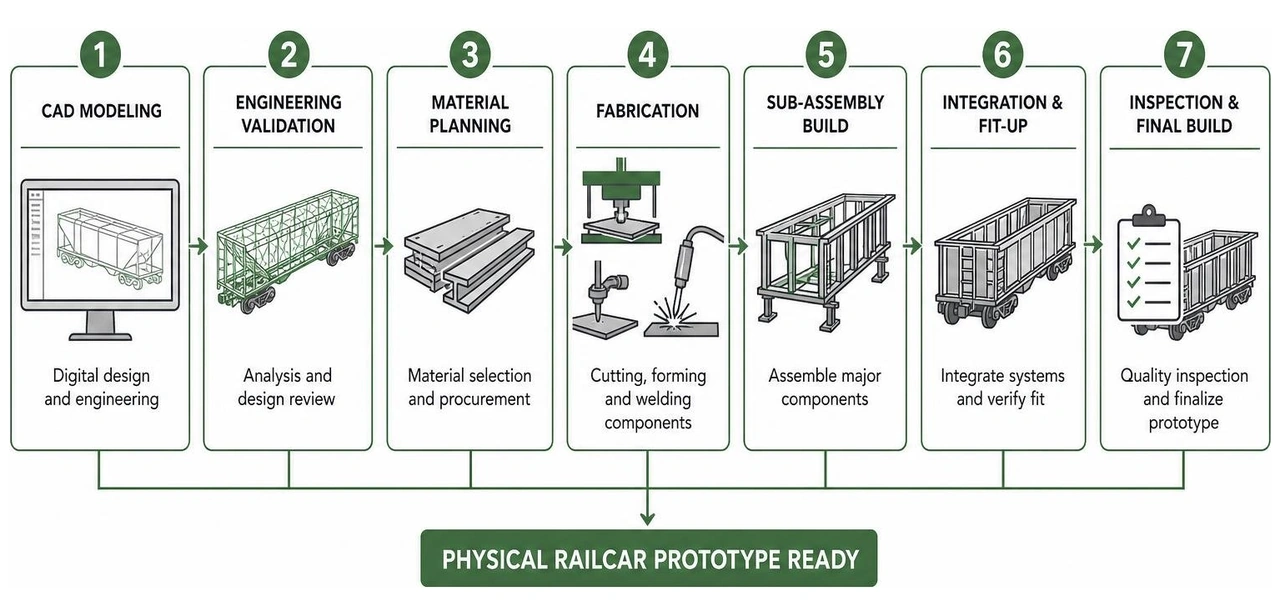
Building a physical prototype for heavy-duty rail transport is a disciplined journey that bridges digital designs and heavy shop operations. When working with complex freight systems, specialized railcar prototype manufacturing services rely on robust engineering workflows to guarantee every weld, joint, and beam handles real-world dynamic stress on the track.
At our 95,000-square-foot facility in Dublin, Ohio, we see how vital proper equipment integration and precision metal fabrication are for heavy structural builds. Fabrication begins by converting digital concepts into exact physical components using heavy metal stamping, high-tonnage hydraulic pressing, and structural welding qualified under strict AWS standards. Incorporating techniques like precision railcar stamping ensures that sub-assemblies interlock cleanly without structural distortion or frame misalignments. Utilizing advanced prototype engineering services upfront allows engineers to identify and resolve assembly tolerance issues long before heat is applied to structural steel plate.
Key Stages of Prototyping Heavy-Duty Railcars
The journey from a blank canvas to a fully validated, rail-ready prototype relies on an iterative, multi-stage engineering approach that integrates both virtual validation and shop-floor craftsmanship:
- Finite Element Analysis (FEA) & CAD Modeling: Engineers construct complete 3D digital twins to simulate structural load distribution, torsional twisting, operational deflection, and impact resistance across diverse track conditions.
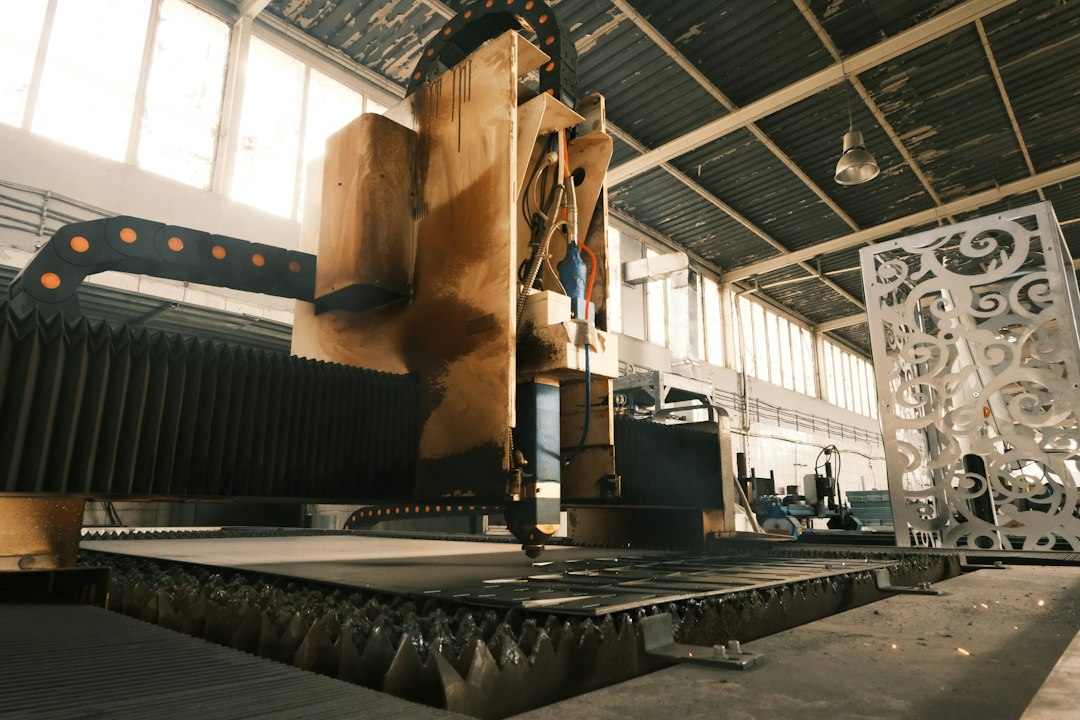
- Precision Material Cutting: Using high-power 2D and 3D laser cutting, thick plates and structural steel shapes are cut to exact tolerances without introducing excessive heat-affected zones that could weaken the base metal.
- Machining and Component Shaping: Custom tooling fixtures, axle pivot points, and mounting brackets are milled using rapid prototyping cnc machining to fit complex structural geometries with extreme accuracy.
- Assembly and Welding: Certified structural welders assemble the car body structure using rigorous procedure specifications, applying full-penetration welds designed to withstand high compressive, tensile, and dynamic forces.
This structured approach gives developers—ranging from established rail OEMs to innovative commercial teams leveraging metal prototyping for startups—complete confidence that their initial physical unit matches theoretical calculations before undergoing high-stakes physical track testing.
Material Selection and Advanced Railcar Prototype Manufacturing Services
Selecting structural materials for heavy industrial railcars requires carefully balancing tare weight, ductility, crash resistance, and structural yield strength. Specialized transport cars, particularly those engineered to haul loaded Type B transportation casks weighing up to 240 tons (including the shipping cask, cradle, impact limiters, and end stops), depend heavily on high-strength, low-alloy steels that perform reliably under cyclic stress.

To maintain absolute weldment integrity and structural longevity, physical component development must follow precise metal-forming principles. For non-structural components, internal enclosure mockups, or preliminary visual scale models, engineers often leverage additive manufacturing or learn how to prototype metal parts to test spatial fit before cutting thick structural plate steel. Developers frequently utilize external rapid tooling options, such as Rapid Prototyping - 3D Printing Services Columbus, OH, for rapid fitment checks on cabin controls, sensor mounts, or conduit brackets prior to full vehicle assembly.
Regulatory Compliance and AAR S-2043 Requirements for Radioactive Waste Transport
Transporting hazardous or high-level radioactive waste by rail requires strictly verified safety margins that go far beyond standard freight rules. Railcars engineered for this critical duty must pass rigorous certification under standard AAR S-2043, established by the Association of American Railroads. This standard tightens the broader freight railcar qualification testing rules found in Chapter XI of the AAR Manual of Standards and Recommended Practices (MSRP), focusing explicitly on derailment risk reduction, dynamic roll stability, and structural endurance under extreme operating scenarios.

Compliance with AAR S-2043 follows a strict three-phase development lifecycle designed to catch design defects long before commercial deployment:
- Phase 1: Preliminary Design and Analysis – Exhaustive computer modeling, finite element stress simulations, dynamic behavior predictions, and multi-agency design reviews.
- Phase 2: Prototype Testing – Physical prototype fabrication followed by full-scale static, dynamic, and dynamic curving tests witnessed and audited by certified independent observers.
- Phase 3: Final Design and Analysis – Re-evaluating analytical models using physical sensor test data to ensure complete model correlation before granting full fleet operating clearance.
Comparative Analysis: The Eight-Axle Fortis vs. Legacy 12-Axle Designs
To understand how modern prototyping services drive progress in high-capacity rail transport, consider the U.S. Department of Energy's Fortis prototype railcar compared to legacy transport vehicles like the DOE Atlas railcar or the U.S. Navy’s twelve-axle railcar.
While legacy designs use twelve axles distributed across complex span bolsters to carry heavy shielding, the Fortis railcar features an optimized eight-axle design. Reducing the axle count simplifies the mechanical linkage, decreases overall tare weight, cuts maintenance overhead, and significantly reduces wheel-rail wear on curve tracks—all while comfortably carrying heavy 240-ton Type B casks across national rail networks.
Specialized Railcar Prototype Manufacturing Services for High-Risk Cargo
Custom manufacturing for high-risk cargo environments goes far beyond basic car body fabrication. It involves integrating specialized mechanical interfaces to keep sensitive loads firmly secured under sudden track accelerations or emergency braking events.
Fabrication teams must produce custom cradles, heavy-duty end stops, and mounting interfaces for impact limiters with zero margin for error. Building these structural components demands high precision metal assemblies capable of surviving extreme dynamic fatigue, environmental exposure, and operational vibrations over decades of active service.
Physical Testing and Validation at the Transportation Technology Center
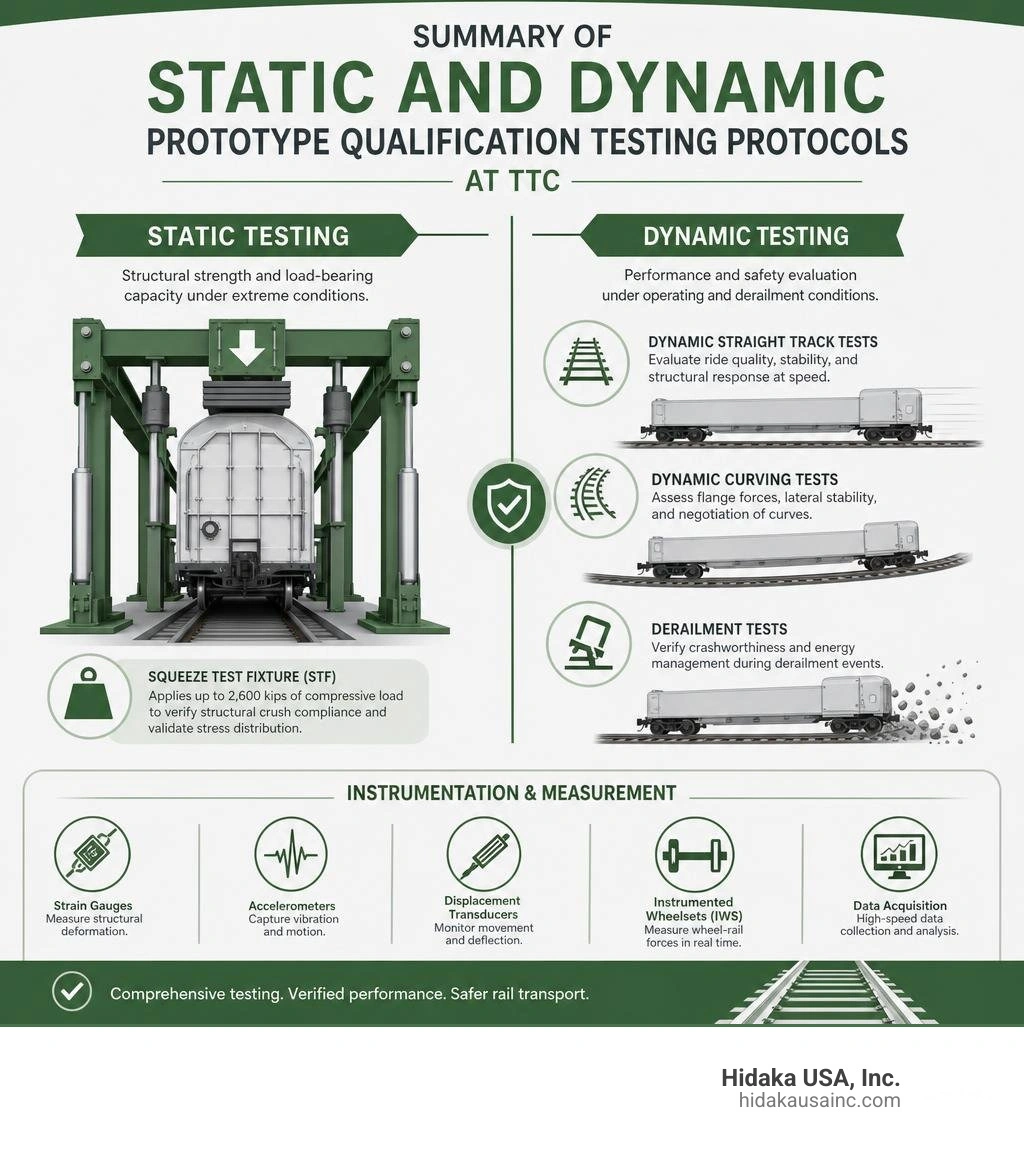
Once physical prototype fabrication is complete, the vehicle undergoes intensive validation to verify every design calculation. Prototype railcars are shipped to world-class test sites, such as the Transportation Technology Center (TTC) in Pueblo, Colorado (operated by ENSCO), for exhaustive qualification testing across rigorous physical tracks.
Testing involves two primary phases: single-car characterization tests (to isolate the prototype’s individual physical properties, modal frequencies, and brake response) and multiple-car consist interaction tests (to evaluate how the car behaves when coupled to heavy locomotives and buffer cars). Prototype units are outfitted with comprehensive sensor arrays, including strain gauges, accelerometers, displacement transducers, and specialized Instrumented Wheelsets (IWS) to track real-time vertical, lateral, and longitudinal forces between wheel flanges and the rail head.
Structural and Static Stress Verification
Before touching open rail, the car's structural backbone is proven indoors under extreme compression to guarantee operator and public safety.
The TTC’s Squeeze Test Fixture (STF) can apply up to 2,600 kips (2.6 million pounds) of compressive load directly to an entire railcar body. This test verifies structural crush compliance and verifies that calculated stress distributions match actual physical strain gauge readings without yielding permanent deformation or structural buckling.
Dynamic Curving and Track Performance Evaluation
After static loading, the car moves to dynamic stress testing to evaluate rail holding, suspension dampening, speed compliance, and roll stability under realistic operating conditions.
Essential dynamic testing tools include:
- Mini-Shaker Unit (MSU): Equipped with 13 hydraulic actuators that deliver up to 210 kips of dynamic force, simulating track vibration and roll frequencies across a wide operational spectrum.
- Wheel Rail Mechanism Loop (WRM): A dedicated 7.5-mile test loop featuring sharp curves ranging from 4 to 12 degrees. Dynamic curving on the WRM loop tests the car’s resistance to wheel climb, flange wear, and derailment under harsh track geometry.
Future Implications and Industry Impact of Custom Railcar Prototyping
With 92 nuclear power reactors across 53 power plants delivering 19% of the nation's total electricity, safe spent nuclear fuel transport infrastructure is vital to America’s clean energy grid and long-term energy transition. Prototyping advanced freight cars like the eight-axle Fortis proves that modern fabrication techniques can build lighter, safer, and more agile freight railcars that adhere to stringent regulatory oversight.
The engineering lessons gained from building heavy nuclear transport cars spill directly into broader freight rail innovation and heavy vehicle design. Modern fabrication relies on specialized components, whether using precision bracket manufacturing ohio processes for internal equipment mounting or drawing on techniques perfected by automotive metal prototype specialists to streamline structural frame production and reduce prototype manufacturing lead times.
Frequently Asked Questions About Railcar Prototype Fabrication
How long does the three-phase qualification process take under AAR S-2043?
The process generally spans several years due to multi-agency reviews and detailed testing schedules. Phase 1 analytical modeling and CAD simulation take roughly 6 to 12 months, physical prototype fabrication and TTC instrumented field testing take 12 to 24 months, and final Phase 3 data review and regulatory approval require another 6 months.
What testing equipment is required to validate spent nuclear fuel railcar prototypes?
Validation requires a comprehensive combination of indoor structural test fixtures and outdoor test loops:
- Squeeze Test Fixtures (applying up to 2,600 kips compressive load directly to the frame)
- Dynamic Mini-Shaker Units (applying up to 210 kips via 13 coordinated hydraulic actuators)
- Instrumented Wheelsets (IWS) for real-time dynamic force logging
- Dedicated curving loops like the 7.5-mile Wheel Rail Mechanism (WRM) loop
Why is an eight-axle railcar design preferred over traditional twelve-axle configurations?
An eight-axle design significantly reduces overall car weight, cuts mechanical linkage complexity, lowers ongoing maintenance costs, and reduces rail head wear during dynamic curving—all while safely handling heavy 240-ton Type B casks.
Partnering with Experts for Custom Railcar Prototyping
Executing a successful custom railcar build demands an experienced manufacturing partner who understands heavy metal fabrication, tight tolerances, structural engineering standards, and robust quality management.
At Hidaka USA, Inc., located in Dublin, Ohio, we bring decades of specialized experience to advanced metal prototyping and structural assembly. Operating out of our 95,000-square-foot manufacturing and engineering facility, our skilled technical team offers:
- Full American Welding Society (AWS) certified structural welding and inspection
- Precision 2D and 3D laser cutting for heavy-gauge plate, structural beams, and complex tubing
- High-tonnage hydraulic pressing and precision heavy metal stamping
- ISO 9001 certified quality management systems ensuring full traceability
Whether you need sub-assemblies for mass-transit railcars, specialized structural brackets, or heavy prototype components, our team delivers American-made precision from concept to completion. Discover how our ohio metal prototype facility and prototype manufacturing dublin ohio services can move your next structural engineering project forward by exploring Hidaka USA Prototyping Services today.