Ultimate Checklist for Railcar Fabrication Stamping

What Is Railcar Fabrication Stamping and Why It Matters
Railcar fabrication stamping is the process of using dies and presses to shape metal into the hundreds of structural and functional parts that make up a railcar. Every component — from steel frames and manway covers to brake brackets and suspension parts — must fit precisely and hold up under years of mechanical stress, vibration, and heavy loads.
Here is a quick overview of what railcar fabrication stamping involves:
| Aspect | Details |
|---|---|
| What it is | Metal forming process using dies and presses to produce railcar components |
| Key parts produced | Structural frames, manway covers, suspension brackets, ventilation shells, wayside equipment |
| Materials used | Cold-rolled steel, stainless steel, aluminum alloys, draw quality steel |
| Tolerances required | As tight as ±0.0005 inches on critical dimensions |
| Press capacity range | 30 to 700 tons for heavy-gauge rail materials |
| Key standards | ISO 9001:2015, AAR Standard S-2043, AAR Standard S-2044 |
| Main goal | Produce identical, interchangeable parts that meet strict safety and durability requirements |
Unlike standard metal stamping, rail applications demand tighter tolerances, heavier gauge materials, and compliance with strict industry safety standards. A single out-of-tolerance part can affect the performance and safety of an entire railcar — and railcars are expected to remain in service for decades.
I'm Yoshihiro Hidaka, founder of Hidaka USA, Inc., and with over 35 years of sheet metal fabrication experience spanning automotive prototyping and mass production, I have seen how the precision disciplines developed in automotive manufacturing translate directly into the demands of railcar fabrication stamping. In this guide, I'll walk you through the complete checklist of processes, materials, technologies, and standards that define high-quality railcar stamping today.
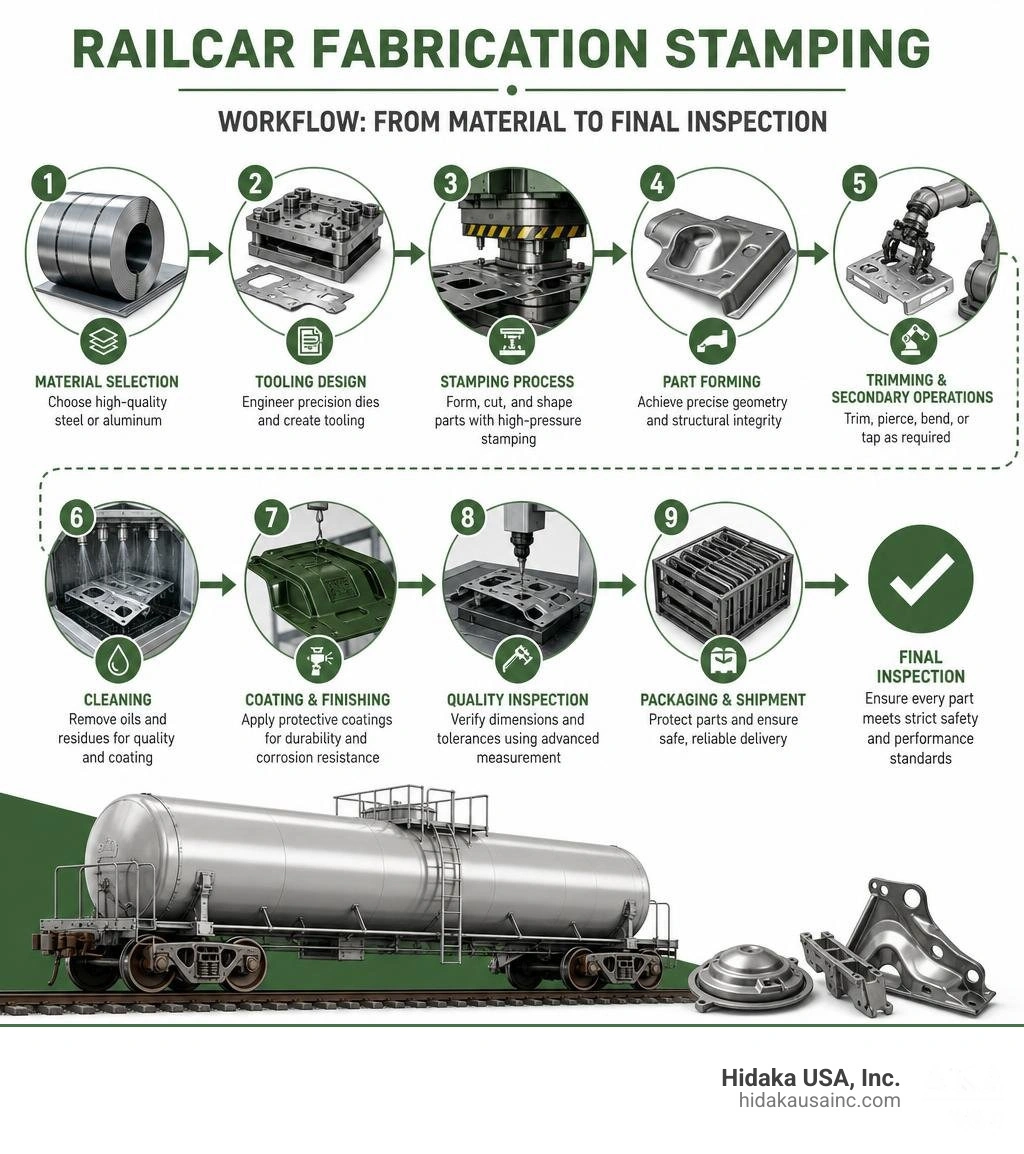
Easy Railcar fabrication stamping word list:
Understanding Railcar Fabrication Stamping vs. Standard Stamping

At its core, all metal stamping relies on presses and dies to cut, bend, and shape sheet metal. However, when we transition from standard commercial stamping to specialized railcar fabrication stamping, the manufacturing rules change dramatically.
Railcars operate in an environment of unrelenting mechanical stress and continuous high-frequency vibration. Whether it is a freight car hauling thousands of tons of coal across the Midwest, a transit vehicle carrying commuters through a metropolitan transit system, or a specialized tank car transporting hazardous chemicals, every single component must offer extreme vibration resistance. While a slightly imperfect bracket on a household appliance might only cause a minor rattle, a failed structural bracket on a railcar can lead to catastrophic derailment or structural failure.
Because rail equipment is built to last for decades under these punishing conditions, the stamping processes we use must be specifically engineered to handle the unique physical demands of heavy rail transport. This is where Precision Railcar Stamping becomes the true backbone of modern rail manufacturing.
Defining the Differences in Tolerances and Scale
The most immediate differences between standard metal stamping and precision railcar stamping lie in the physical scale of the materials and the strictness of the tolerances. Standard stamping typically handles light-gauge materials—often under 0.080 inches thick—for applications where a variance of ten or fifteen thousandths of an inch is perfectly acceptable.
In contrast, railcar components require heavy-gauge materials up to 0.250 inches (and sometimes thicker) to withstand structural loads. Despite handling these massive, thick sheets of industrial steel, our stamping presses must maintain microscopic accuracy. For critical dimensions, we routinely hold tolerances as tight as ±0.0005 inches.
| Specification | Standard Metal Stamping | Precision Railcar Stamping |
|---|---|---|
| Material Thickness | Typically under 0.080 inches | 0.003 to 0.250+ inches (heavy-gauge) |
| Standard Tolerances | ±0.010" to ±0.015" | ±0.001" to ±0.0005" (critical dimensions) |
| Press Force Required | Low to Moderate (typically under 150 tons) | Heavy-duty (30 to 700+ tons) |
| Primary Focus | Cosmetic appearance, high-speed low-cost runs | Structural integrity, safety, extreme wear resistance |
| Tooling Complexity | Standard commercial tooling | Custom-engineered progressive and deep draw dies |
Material Selection for Heavy-Duty Rail Applications
Selecting the right metal is a balancing act between strength, weight, corrosion resistance, and formability. Depending on where the component will live on the railcar, we utilize several distinct materials:
- Cold-Rolled Steel: Excellent for interior brackets, structural frames, and components where a smooth surface finish and precise thickness are required.
- Stainless Steel: With at least 10.5% chromium, stainless steel forms a self-repairing oxide film. This makes it the premier choice for highly corrosive environments, such as the outer jackets of tank cars or commuter rail components exposed to winter road salt.
- Aluminum Alloys: When weight reduction is a priority—such as in modern passenger trains or high-capacity coal hoppers—aluminum alloys provide an outstanding strength-to-weight ratio.
- Draw Quality Steel: Used specifically for complex, deep-molded parts (like manway covers and deep-dish ventilation shells) that require the metal to stretch without tearing or thinning out excessively.
- Low-Carbon Steel: Known for its excellent weldability and toughness, low-carbon steel is often used for heavy structural plates and chassis components.
To understand how these metals react under intense forming pressure, you can explore our Sheet Metal Stamping Complete Guide.
How Precision Stamping Enhances Railcar Safety and Efficiency
Precision stamping is not just about making parts fit; it directly impacts the overall performance, safety, and operational costs of the railcar.
First, consider aerodynamic panels and weight reduction. By using high-strength, thin-gauge alloys formed on precision presses, we can manufacture lighter aerodynamic body panels. Lighter railcars require less energy to pull, directly translating to massive fuel savings for Class 1 railroads.
Second, safety-critical components like emergency brakes, door latches, and impact-resistant panels rely on absolute consistency. If an emergency brake bracket is even slightly out of tolerance, the mechanical linkage can bind, delaying braking response. Precision stamping ensures that every single safety latch and bracket is identical to the last.
Finally, using precision-stamped, standardized components completely revolutionizes maintenance. In the past, railcar maintenance crews often had to manually grind, weld, and custom-fit replacement parts. Today, because we produce identical parts with microscopic consistency, maintenance crews can order standardized parts knowing they will bolt on perfectly without custom fitting. This minimizes downtime and keeps fleets moving.
Overcoming Key Challenges in Railcar Fabrication Stamping

Stamping heavy-duty rail parts is not for the faint of heart. It presents physical and metallurgical challenges that require advanced engineering expertise and rugged machinery. When you are pressing thick, high-strength steel, you are pushing both the metal and the machinery to their absolute physical limits. To succeed, we rely on specialized High Precision Stamping Services that are built to handle these heavy-duty environments.
Managing Tight Tolerances and Heavy-Gauge Materials
The primary challenge in railcar fabrication is manipulating heavy material thickness while maintaining tight tolerances. Standard stamping presses simply do not possess the structural rigidity or tonnage required to form 0.250-inch steel plates.
To overcome this, we utilize a robust lineup of heavy-duty hydraulic presses ranging from 30 to 700 tons of capacity. These massive machines deliver the immense, controlled force needed to blank, pierce, and form thick structural frames.
However, raw power is only half the battle. When heavy-gauge metal is bent, it exhibits a phenomenon known as "springback"—the tendency of the metal to partially return to its original flat shape after the press releases. The thicker and stronger the steel, the more unpredictable the springback. Managing this requires sophisticated engineering analysis to calculate exactly how much to "over-bend" the part so that it relaxes into the precise target dimension (often within ±0.0005 inches) once it exits the die. You can learn more about how we scale these operations in our guide to Custom High Volume Stamping.
The Role of In-House Tooling in Railcar Fabrication Stamping
In railcar manufacturing, outsourcing your tool and die design is a recipe for major delays. This is why maintaining an on-site, full-time toolroom is absolutely critical.
When we design and build our progressive dies and stamping tools in-house, our toolmakers and stamping engineers work side-by-side. If a high-strength steel alloy exhibits unexpected springback during initial trial runs, we don't have to wait weeks for an external tool shop to modify the die. Our in-house team can immediately adjust the tool geometry, test it, and keep production moving. This close collaboration dramatically reduces downtime, lowers tooling costs, and ensures that the final dies are perfectly tuned to the unique behavior of the selected metal.
For a deeper look at our local Ohio-based tool and die capabilities, visit our page on being a Precision Metal Stamping Manufacturer Ohio.
Advanced Technologies in Modern Railcar Fabrication
While traditional stamping presses do the heavy lifting, modern railcar fabrication relies on a suite of advanced manufacturing technologies to handle low-volume prototypes, complex geometries, and final assembly steps. By combining stamping with cutting-edge fabrication tools, we can deliver complete, multi-part assemblies that are ready for immediate integration on the railcar assembly line. You can explore these integrated methods in our guide to Prototype Sheet Metal Fabrication.
5-Axis Laser Cutting and Wire EDM Precision
Not every rail component is suited for a standard stamping die, especially during the prototyping phase or for low-volume specialty cars. In these scenarios, we turn to advanced cutting technologies:
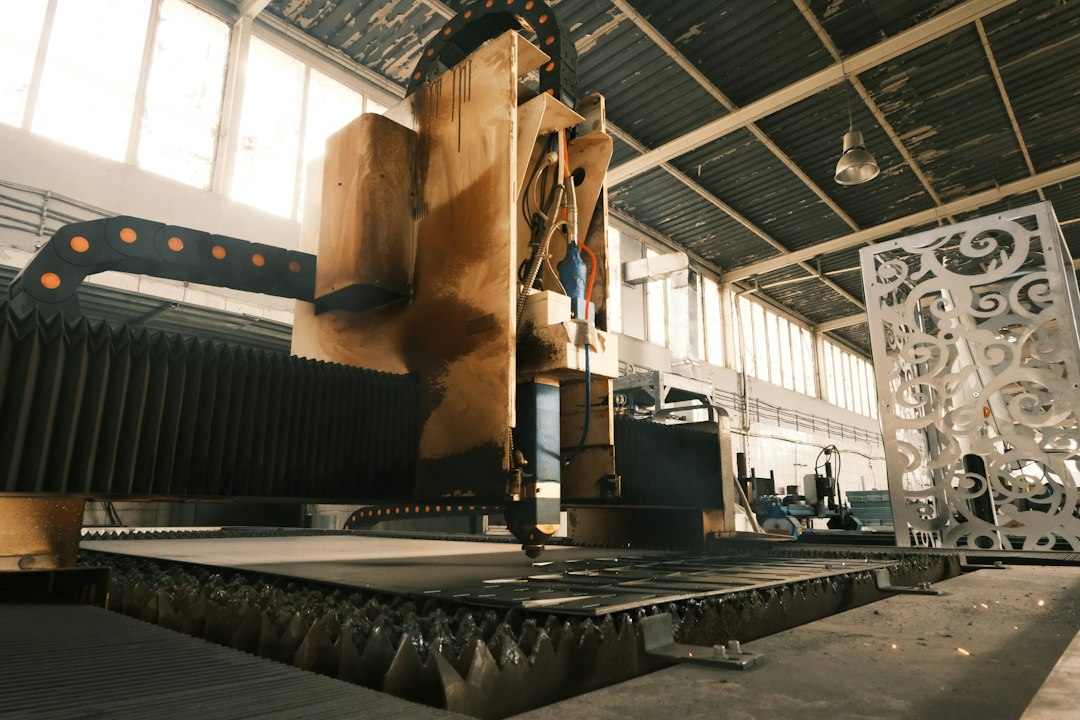
- 5-Axis Laser Cutting: Unlike standard flat-bed lasers, a 5-axis laser head can move in three dimensions, allowing us to trim complex 3D shapes, cut holes in pre-formed curved panels, and prep weld bevels with extreme accuracy.
- Wire EDM (Electrical Discharge Machining): When we need to cut incredibly complex shapes out of hardened tool steels (such as die components) or produce low-volume, high-precision rail parts, wire EDM is the ultimate tool. It uses an electrically charged wire to slice through metal, leaving incredibly smooth, burr-free finishes and tight radii that are impossible to achieve with mechanical cutting.
Using these technologies alongside traditional stamping ensures that even the most complex geometries are executed flawlessly. You can learn more about our comprehensive fabrication capabilities on our Sheet Metal Fabrication page.
Robotic Welding and Assembly Integration
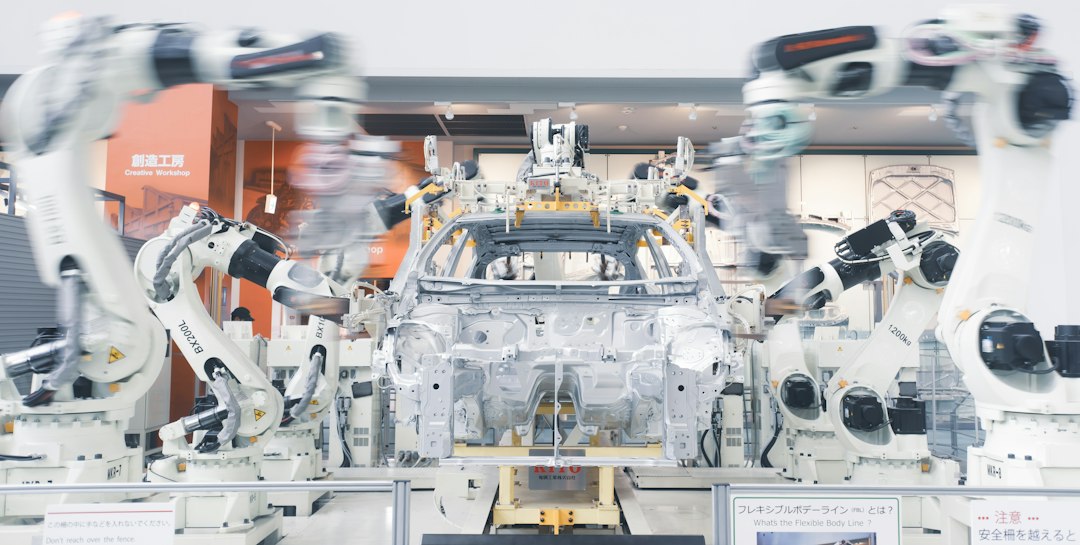
A stamped part is rarely used in isolation; most are welded together to form larger sub-assemblies, such as complete side walls or brake system weldments. To ensure absolute consistency across high-volume runs, we integrate robotic welding into our assembly lines. Robots apply welds with identical speed, angle, and temperature every single time, eliminating the human variability that can lead to structural weld defects.
Furthermore, advanced design techniques have completely changed how railcars are built. For example, modern side wall designs often utilize integrated side sheets with formed side post portions. By bending the structural side posts directly into the sheet metal using advanced press brakes, we eliminate the need to weld separate vertical posts onto flat sheets.
When joining these advanced formed sheets, we utilize offset overlap welding. This technique involves forming a slight offset bend along the edge of one sheet, allowing the adjacent sheet to overlap and sit completely flush, creating a flat interior surface while maximizing weld strength. This innovative assembly method is detailed in US Patent 12421585, which highlights how modern metal forming reduces welding joints and assembly times.
Quality Standards, Certifications, and Regulatory Compliance
In the rail industry, quality control is not a formality; it is a matter of public safety. Because railcars carry massive payloads—often including hazardous materials—at high speeds across public infrastructure, every supplier must adhere to strict quality management systems and regulatory standards. For a look at how we apply these rigorous standards to high-volume production, check out our insights on Automotive Stamping High Volume.
Production Capabilities and Tolerances in Railcar Fabrication Stamping
To appreciate the scale of compliance required, let’s look at a real-world example of heavy rail engineering: the specialized Atlas railcar. Designed to transport high-level radioactive material (HLRM) under strict Department of Energy guidelines, the Atlas railcar represents the absolute pinnacle of railcar engineering and load-carrying capability.
- Total Railcar Truck Capacity: 858,000 lbs (based on a 71,500 lbs/axle limit).
- Operational Load Limit: 789,000 lbs gross rail load (based on an interchange limit of 65,750 lbs/axle).
- Empty Weight: 229,000 lbs (including 29,000 lbs for the permanently attached cradle interface and end stop pin blocks).
- Heaviest Payload: Approximately 480,000 lbs (representing a fully loaded cask, impact limiters, cradle, and end stops).
- Axle Configuration: Twelve axles designed to safely distribute these massive loads.
- Dimensions: A loading deck length of 48 feet, an overall length of 73 feet 5 inches, and a coupled length of 78 feet 1.25 inches.
- AAR Standards: Designed to meet AAR Standard S-2031 Plate E clearance requirements.
Every bracket, frame member, and pin block on a massive car like the Atlas must be fabricated to exact tolerances to ensure that the load is distributed perfectly across all twelve axles. A single misaligned stamped bracket could cause uneven weight distribution, leading to accelerated wheel wear or structural failure under a 480,000-pound load.
Ensuring Compliance with AAR and FRA Standards
Any manufacturer supplying components to the railroad industry must be prepared to prove compliance at every step of the production process. This requires holding key certifications and following strict regulatory frameworks:
- ISO 9001:2015: This standard ensures that our facility in Dublin, Ohio maintains a documented, repeatable quality management system. Every batch of raw material is inspected, logged, and tracked from the moment it enters our facility to the moment the finished parts ship.
- AAR Standard S-2043: This Association of American Railroads (AAR) standard prescribes the performance guidelines that must be met by trains carrying high-level radioactive materials, demanding rigorous structural integrity and testing.
- AAR Standard S-2044: This standard governs the safety appliances on railcars, ensuring that safety handrails, steps, and ladders are fabricated and installed to prevent crew injuries.
- FRA (Federal Railroad Administration) Approvals: The FRA oversees all US rail safety regulations, requiring comprehensive inspection reports, material certifications, and nonconformance reporting for all structural railcar components.
To maintain these standards, we utilize Coordinate Measuring Machines (CMM) and statistical process control to verify that every stamped part matches the approved digital engineering model down to the micron.
Frequently Asked Questions about Railcar Stamping
What are the main differences between standard and precision railcar stamping?
The main differences are material thickness, tolerances, and safety standards. Standard stamping typically works with thin metals (under 0.080 inches) and holds looser tolerances (±0.010" to ±0.015"). Precision railcar stamping processes heavy-gauge materials (up to 0.250 inches or more) to incredibly tight tolerances (down to ±0.0005 inches on critical dimensions) to ensure parts can withstand the extreme mechanical stress and vibration of rail travel.
Why is in-house tooling critical for railcar fabrication projects?
In-house tooling dramatically improves production speed, part precision, and cost control. Because heavy-gauge metals exhibit high "springback" when bent, having an on-site toolroom allows our engineers to make immediate, precise adjustments to the stamping dies without waiting weeks for an external tool shop. This minimizes downtime and keeps large-scale projects on schedule.
How does precision stamping improve railcar maintenance and safety?
Precision stamping ensures that every single part produced is identical to the next. This allows railroad operators to use standardized, interchangeable parts that bolt on perfectly during repairs, eliminating the need for maintenance crews to manually grind or custom-fit replacement pieces. This consistency also guarantees that safety-critical parts, like brakes and door latches, operate reliably every time.
Conclusion
Railcar fabrication stamping is a highly specialized discipline where massive industrial power meets microscopic precision. Whether we are forming heavy-gauge steel brackets, laser-cutting complex 3D components, or integrating robotic welds, every step of the process must be executed with an unwavering commitment to quality and safety.
At Hidaka USA, Inc., we have spent decades refining our prototyping and mass production capabilities at our 95,000-square-foot facility in Dublin, Ohio. Holding both ISO 9001 and American Welding Society (AWS) certifications, we bring the rigorous quality control and advanced engineering analysis of the automotive and motorsports worlds directly to the mass-transit railcar industry.
If you are looking for an experienced, US-based manufacturing partner who understands the microscopic details of the railroad industry, we invite you to Partner with Hidaka USA for Mass Production. Let's move your next project forward, one precision part at a time.
.jpeg)