Why Your Next Big Idea Needs Prototype Sheet Metal Fabrication

What Is Prototype Sheet Metal Fabrication (And Why It Matters)
Prototype sheet metal fabrication is the process of creating physical metal parts from thin sheet stock to test, validate, and refine a design before full-scale production begins.
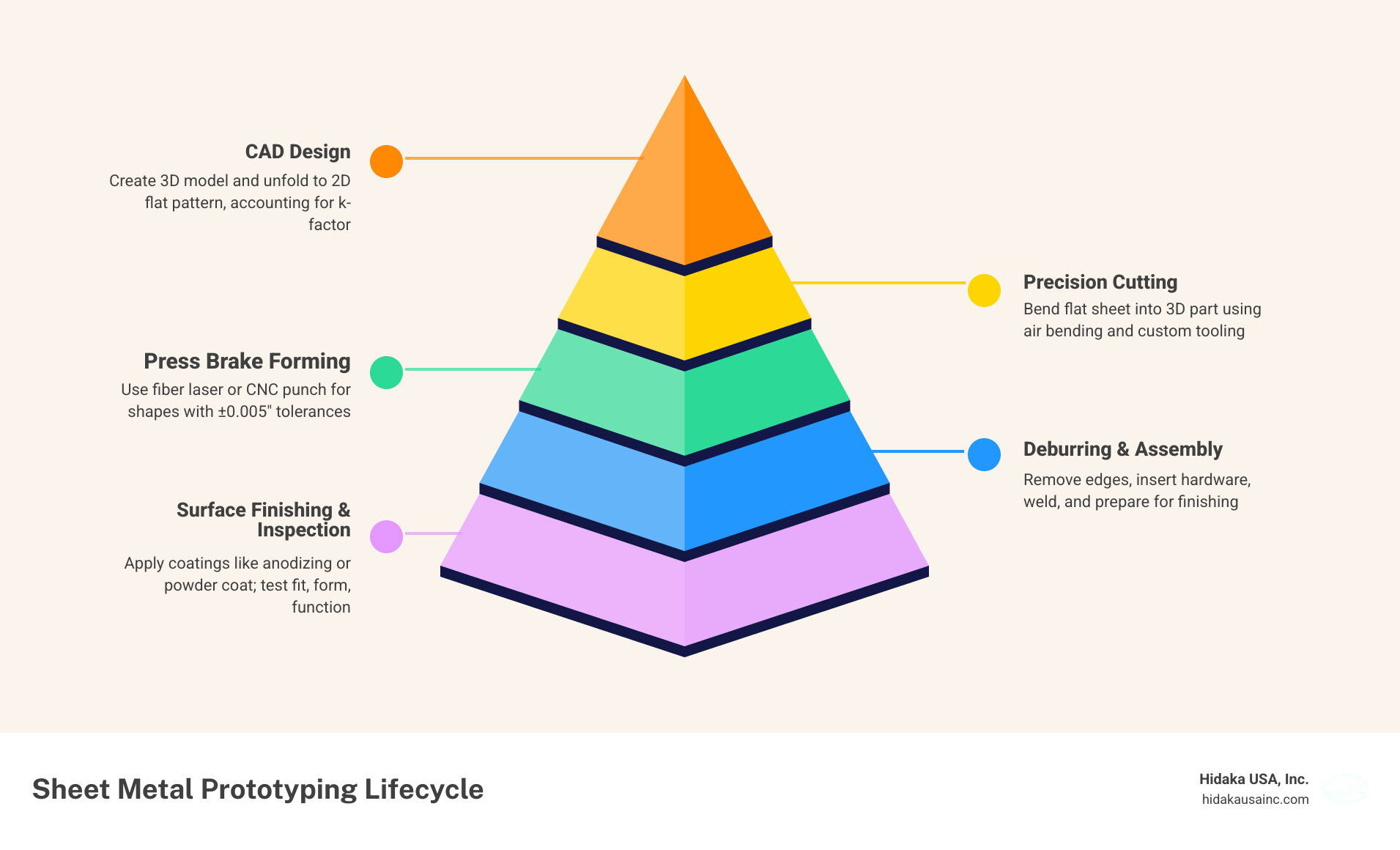
Here is a quick overview of what it involves:
StepWhat HappensDesignA CAD model is created and converted to a flat patternCuttingLaser cutting or punching shapes the flat metalFormingPress brakes bend the part into its 3D shapeFinishingParts are deburred, welded, coated, or platedTestingThe physical prototype is evaluated for fit, form, and function
This process allows engineers and product developers to catch design flaws early, test with real materials, and reduce the risk of costly mistakes in production.
For manufacturers in industries like automotive, aerospace, and medical devices, getting a reliable prototype quickly is not just convenient - it is critical. A part that fails on the assembly line, or worse, in the field, can mean significant delays and costs. Physical prototypes made from production-grade metal give teams the confidence to move forward.
I'm Yoshihiro Hidaka, founder of Hidaka USA, Inc., and I have been delivering prototype sheet metal fabrication to the automotive industry since 1989. In that time, I've seen how a well-executed prototype can make or break a product launch.
For readers who want a neutral definition of prototyping in product development, see Prototype (engineering).
The Core Steps of Prototype Sheet Metal Fabrication
At Hidaka USA, Inc., we believe that understanding the "how" behind the "what" helps our partners make better design decisions. The journey from a digital file to a physical part is a blend of high-tech software and heavy-duty machinery. It is an art form that has evolved from ancient blacksmithing into a highly automated, precision-driven science.
The process typically begins with CAD modeling. Engineers create a 3D representation of the part, which is then unfolded into a 2D flat pattern. This step is crucial; if the flat pattern doesn't account for the k-factor (the way metal stretches during a bend), the final part won't fit.
Precision Cutting and Punching
Once the design is finalized and the material is selected, we move to the cutting stage. This is where the flat pattern is carved out of a larger sheet of metal.
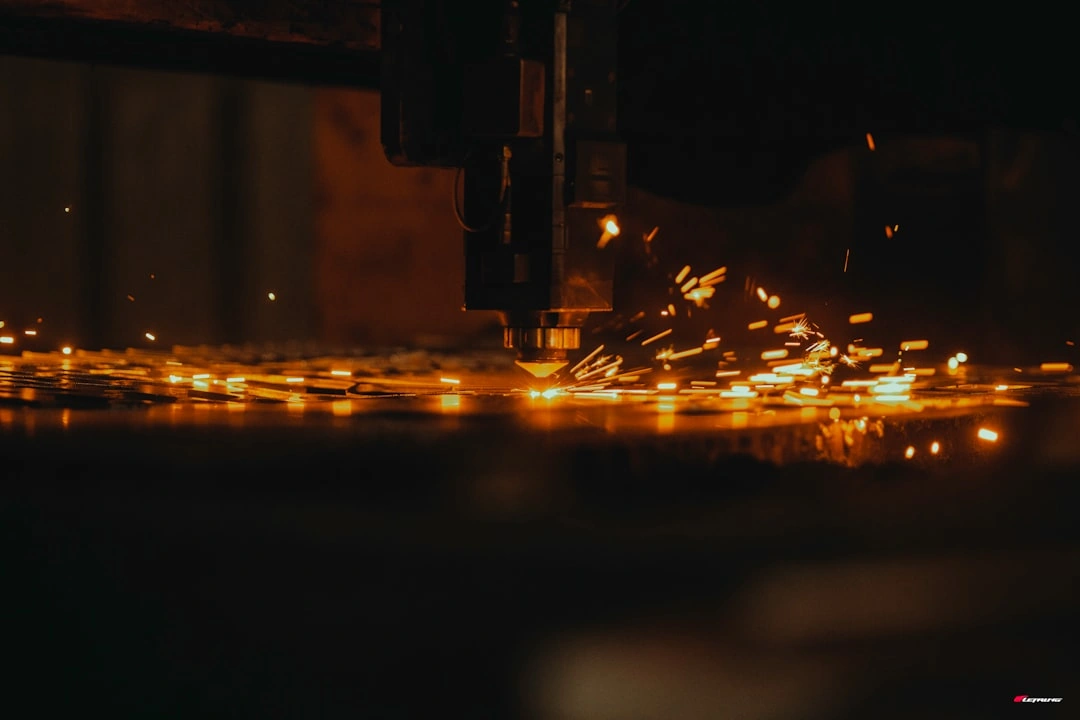
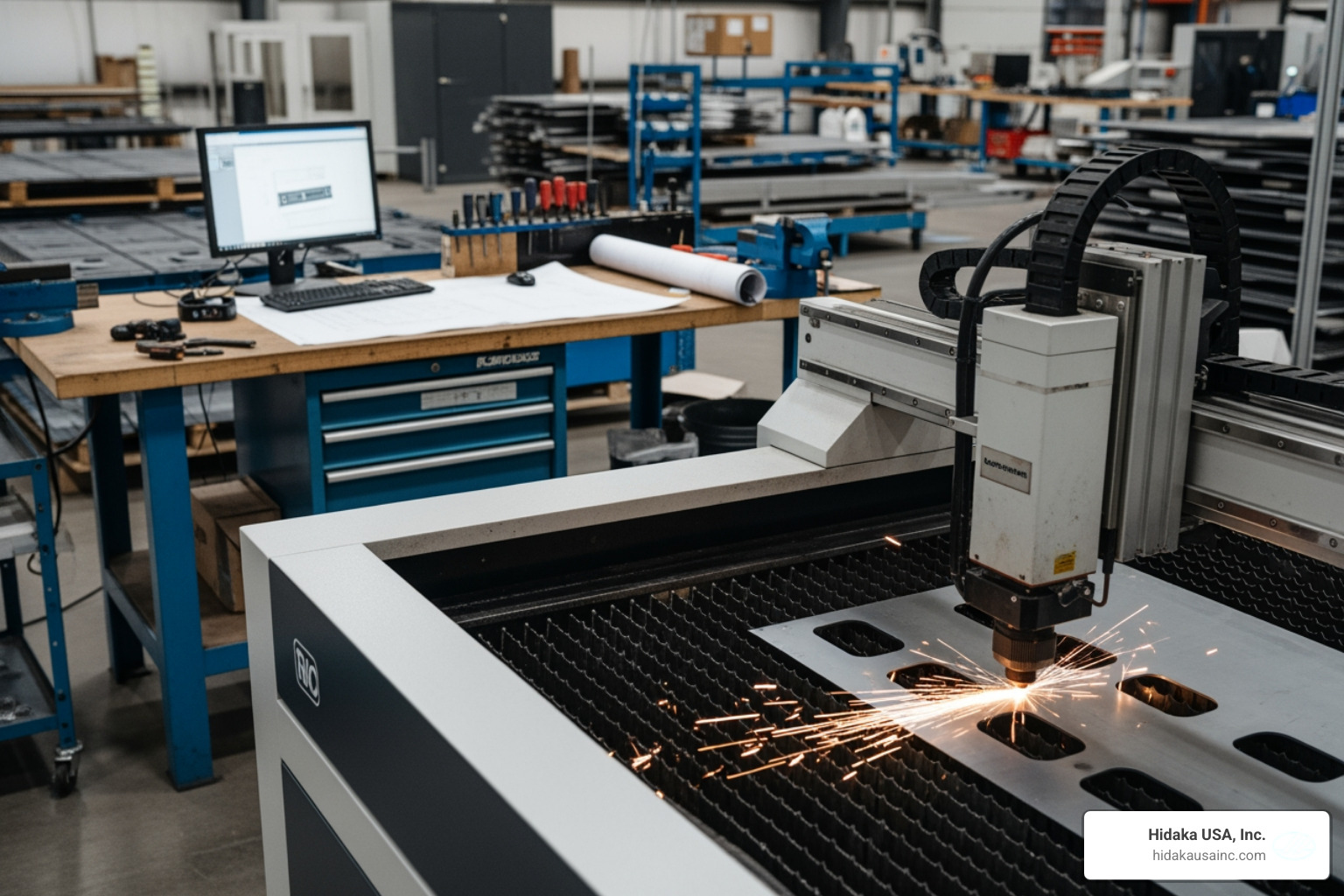
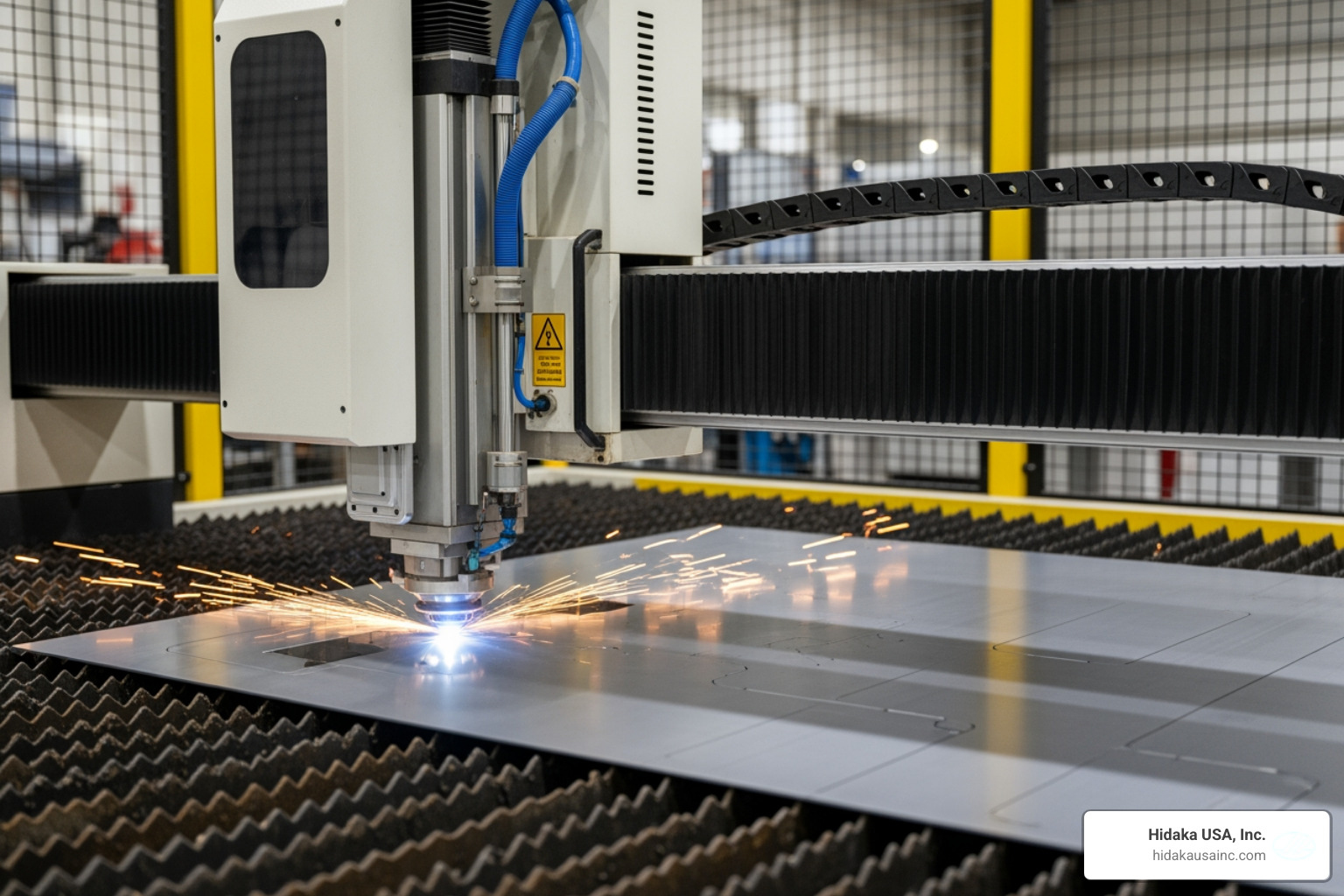
- Fiber Lasers: Modern fiber lasers are the workhorses of prototype sheet metal fabrication. They use a high-powered, focused beam to slice through metal with incredible speed. We can achieve ±0.005 inch accuracy with these machines, ensuring that even the most complex geometries are captured perfectly.
- CNC Turret Punching: For parts that require repeatable hole patterns, louvers, or embossments, a turret punch press is ideal. It operates at hundreds of strokes per minute, creating features that a laser simply can't replicate.
- Material Nesting: To keep costs down and support sustainability, we use software to "nest" parts. This means we arrange as many components as possible on a single sheet of metal to maximize material usage and reduce waste.
Forming and Bending Techniques
After the part is cut and deburred (the process of smoothing out sharp edges), it is time to give it some dimension. This is primarily done using a press brake.
- Air Bending: This is the most common technique in prototyping. The metal is pressed into a V-shaped die by a punch, but it doesn't touch the bottom of the die. This allows for a variety of angles using the same tooling.
- Bend Radii: Choosing a standard bend radius - like 0.030 in., 0.060 in., or 0.090 in. - is a best practice that helps keep lead times short and costs manageable.
- Bump Forming: If your design requires a large internal radius (greater than 1 inch), we use bump forming. This involves making a series of small, incremental bends to create a smooth curve.
- Hardware Insertion: Many prototypes require PEM(R) fasteners, standoffs, or studs. These are pressed into the metal after forming to ensure they are securely seated for assembly testing.
Material Selection and Design Best Practices
Choosing the right material is just as important as the design itself. In prototype sheet metal fabrication, we often recommend using the same material intended for final production. This ensures that functional tests—like vibration, heat dissipation, or stress loading—accurately reflect how the end product will behave.
Material Selection for Prototype Sheet Metal Fabrication
We work with a wide variety of metals in our Dublin, Ohio facility. Here’s a breakdown of the most common choices:
- Aluminum (6061, 5052): The "workhorse" of the industry. It’s lightweight, offers a great strength-to-weight ratio, and is highly resistant to corrosion.
- Stainless Steel (304, 316): Known for its durability and resistance to rust. It is a favorite for medical devices and food-grade applications. Some spring-like stainless steels require specialized equipment because they "work-harden" and need over-bending to reach the final shape.
- Cold-Rolled Steel (CRS): An excellent, cost-effective choice for structural parts that will eventually be painted or powder-coated.
- Copper and Brass: These are typically chosen for their electrical conductivity or aesthetic appeal.
- Titanium: Used in high-performance aerospace and medical applications where biocompatibility and extreme heat resistance are required.
Optimizing Design for Prototype Sheet Metal Fabrication
To ensure your prototype is manufacturable and cost-effective, keep these "rules of thumb" in mind:
- The 4T Rule: Keep holes and other features at least four times the material thickness (4T) away from any bend lines. This prevents the holes from deforming when the metal is stretched.
- Uniform Thickness: Sheet metal parts must maintain a constant thickness throughout the design. If you need varying thicknesses, you're likely looking at a machined part, not a sheet metal one.
- Bend Reliefs: Always include small notches at the ends of a bend. This prevents the metal from tearing and allows for a cleaner finish.
- Standard Tooling: Whenever possible, design your parts to use standard bend radii. Custom tooling can add significant time and cost to a project.
- DFM Feedback: At Hidaka USA, Inc., our team of experts—bringing a collective 573 years of experience to the floor—provides Design for Manufacturability (DFM) feedback. We look for features that might pose challenges and suggest alternatives before we strike the first arc.
Industry Applications: From Automotive to Medical Devices
Prototype sheet metal fabrication isn't just for one niche; it's the backbone of product development across dozens of sectors. Because it bridges the gap between a 3D-printed plastic model and a mass-produced stamped part, it is indispensable for functional testing.
- Automotive and Motorsports: From brackets and heat shields to complex chassis components, we help automotive teams iterate quickly. In racing, where every ounce matters, prototyping in aluminum or high-strength steel is vital.
- Aerospace: High-precision housings and frames must withstand intense vibration and pressure. Prototyping allows for rigorous safety testing before flight.
- Medical Devices: We fabricate surgical instruments like forceps, as well as complex equipment enclosures that require strict quality control and specific surface finishes for sterilization.
- Robotics and Industrial: Machine guards, electrical boxes, and structural supports for heavy machinery need to be rugged. A sheet metal prototype allows for real-world load testing.
- Consumer Electronics: Custom enclosures for everything from servers to high-end audio equipment often start as sheet metal prototypes to test EMI shielding and thermal management.
Frequently Asked Questions
What are the typical lead times for sheet metal prototypes?
Standard lead times for prototype sheet metal fabrication generally range from 1 to 15 business days. However, this can vary based on complexity and finishing requirements. For simple flat parts, we often offer Same Day Rush services that deliver parts in less than 24 hours. If your design has fewer than 12 bends and uses standard material thicknesses (≤0.125 in.), you can often expect a 3-day turnaround.
What tolerances can be achieved in sheet metal prototyping?
While standard industry tolerances often follow ISO 2768, we can achieve precision as tight as ±0.005 inches for laser-cut features. For formed parts, tolerances are typically around ±0.010 to ±0.020 inches, depending on the material and the number of bends. It’s important to remember that metal "springs back" slightly after being bent, so precision is a combination of high-end CNC technology and operator expertise.
Which finishing options are available for metal prototypes?
We offer over 40 different surface finishes to meet both functional and aesthetic needs:
- Powder Coating: Provides a durable, colorful, and corrosion-resistant layer.
- Anodizing: Common for aluminum parts to increase surface hardness and corrosion resistance.
- Plating (Zinc, Nickel, Chrome): Used for conductivity or to prevent oxidation.
- Silk Screening: For adding logos, instructions, or labels directly to the part.
- Sandblasting and Brushing: To create a uniform matte or grained texture.
- Passivation: A chemical treatment for stainless steel to enhance its natural corrosion resistance.
Conclusion
The path from a "big idea" to a successful product is paved with iterations. Prototype sheet metal fabrication provides the most accurate way to simulate production-grade performance while maintaining the flexibility to change your design on the fly. By identifying design flaws early, you mitigate risk and ensure a smoother transition to mass production.
At Hidaka USA, Inc., we take pride in being a partner in your innovation. From our 95,000-square-foot facility in Dublin, Ohio, we combine decades of American manufacturing heritage with the latest in laser and hydraulic technology. Whether you need a single bracket or a thousand complex assemblies, our ISO 9001 and AWS-certified team is ready to help.
Ready to see your design in steel or aluminum? Start your prototype sheet metal fabrication project with us today, and let’s build something great together.