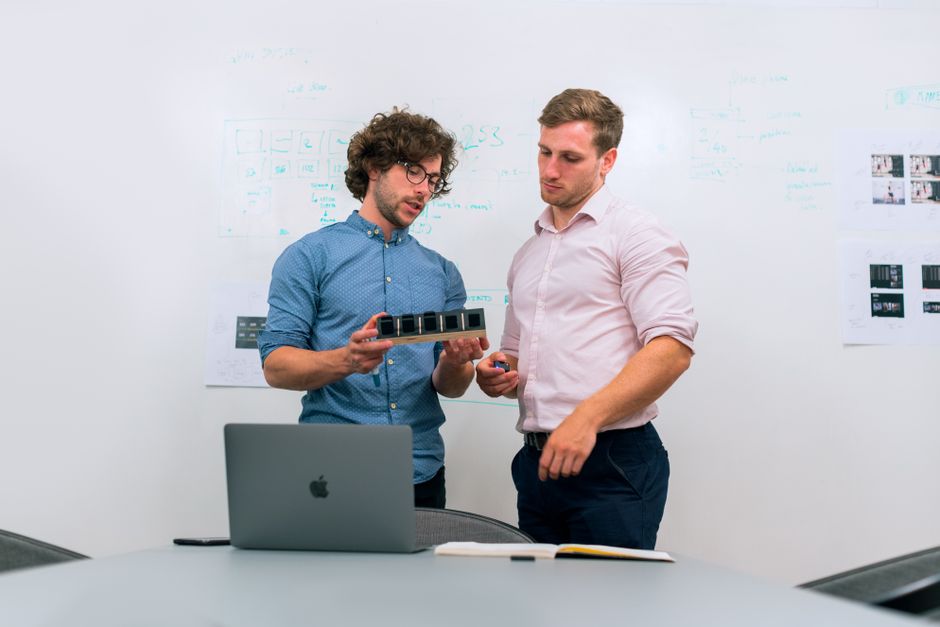
Machining Your Way to a Perfect Prototype

What Is Prototype Machining and How to Compare Your Options
Prototype machining is the process of using precision cutting equipment — most often CNC (Computer Numerical Control) machines — to produce a physical part directly from a CAD file, before committing to full-scale manufacturing.
Here is a quick comparison of the most common prototype machining approaches to help you decide:
| Method | Best For | Typical Tolerances | Lead Time |
|---|---|---|---|
| CNC Milling | Complex geometries, flat/contoured surfaces | ±0.005 in. standard | 1-9 days |
| CNC Turning | Cylindrical parts, shafts, bushings | ±0.005 in. standard | 1-9 days |
| 5-Axis Milling | High-complexity parts, tight tolerances | ±0.0001 in. achievable | 1-9 days |
| EDM | Delicate features, hard metals | Very tight | Varies |
Key factors to compare when choosing a prototype machining service:
- Tolerances — standard services hold ±0.005 in.; precision services can reach ±0.0001 in.
- Materials — look for access to 30+ engineering-grade metals and plastics
- Lead time — top services deliver parts in as little as 1 day
- Certifications — ISO 9001, AS9100D, and ITAR registration signal proven quality standards
- Scalability — can the same supplier take you from prototype to mass production?
Prototype machining sits at the heart of product development. It lets engineers build, test, and refine real parts — in real materials — before a single production dollar is spent. For automotive manufacturers especially, where tight tolerances and on-time delivery are non-negotiable, choosing the right machining partner can make or break a product launch.
I'm Yoshihiro Hidaka, founder of Hidaka USA, Inc., and I've spent over three decades supplying precision prototype machining and mass production parts to the automotive industry and beyond. In the sections below, I'll walk you through everything you need to know to make the right choice for your next project.
The Role of Prototype Machining in Product Development
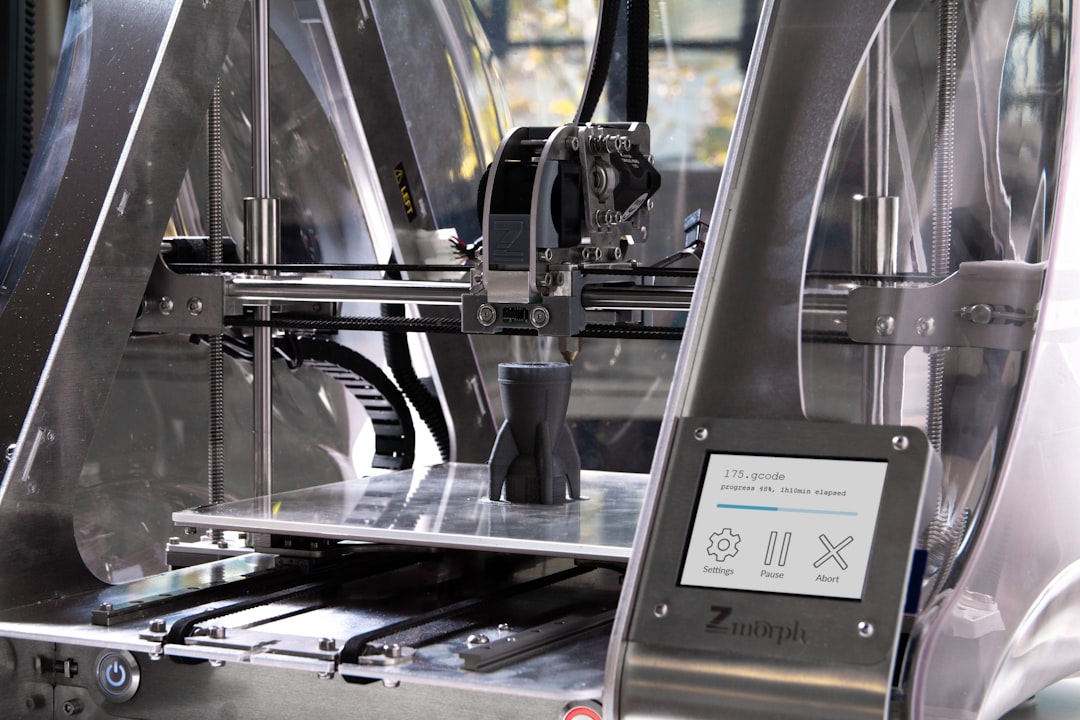
At its core, prototype machining is a subtractive manufacturing process. Unlike 3D printing, which adds material layer by layer, machining starts with a solid block of material—often called a "blank" or "billet"—and carves away everything that isn't your part. This distinction is vital for anyone looking to create a high-fidelity model.
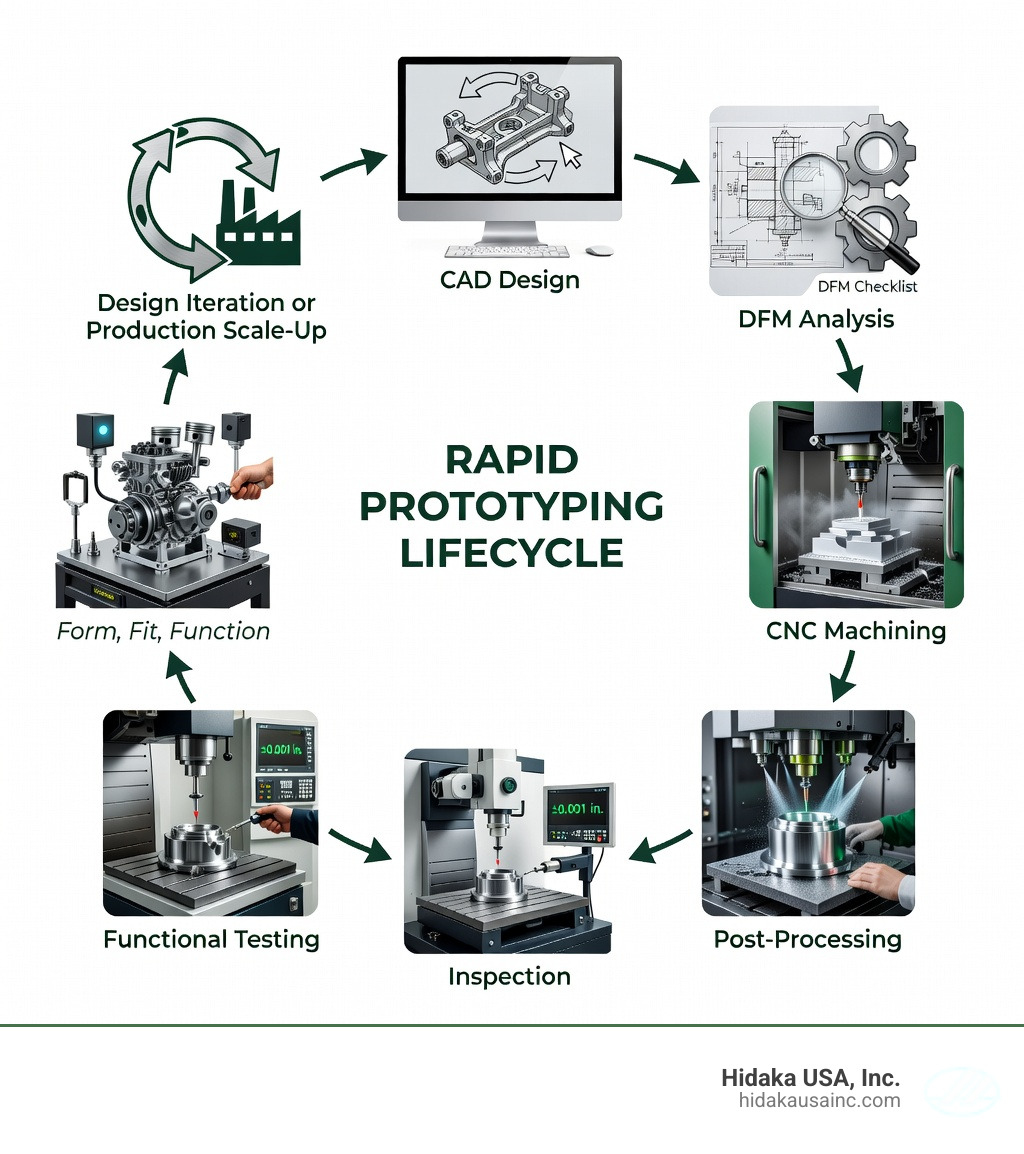
Why do we choose this over other methods? It comes down to "form, fit, and function." While a 3D-printed plastic model is great for a concept model to show stakeholders, it often lacks the structural integrity needed for rigorous testing. Research shows that additive manufacturing can sometimes result in voids, porosity, or layer shifting. In contrast, a machined prototype is carved from a solid, homogenous piece of engineering-grade material. This means the prototype behaves exactly like the final production part will.
In our work at Hidaka USA, Inc., we see how this mitigates risk. If you are developing a component for a mass-transit railcar or a high-performance motorsports engine, you need to know it won't fail under stress. Machining allows you to use the exact alloy or polymer intended for the final product, providing a true-to-life validation of your design. Furthermore, getting a professional Design for Manufacturability (DFM) analysis during the prototyping stage ensures that your "perfect" design can actually be built efficiently when you transition to mass production.
5 Essential Processes for Prototype Machining
When you send a CAD file to a machine shop, several different technologies might be used to bring your vision to life. Modern shops utilize multi-axis systems and advanced G-code programming (the language that tells the machine where to move) to achieve incredible precision.
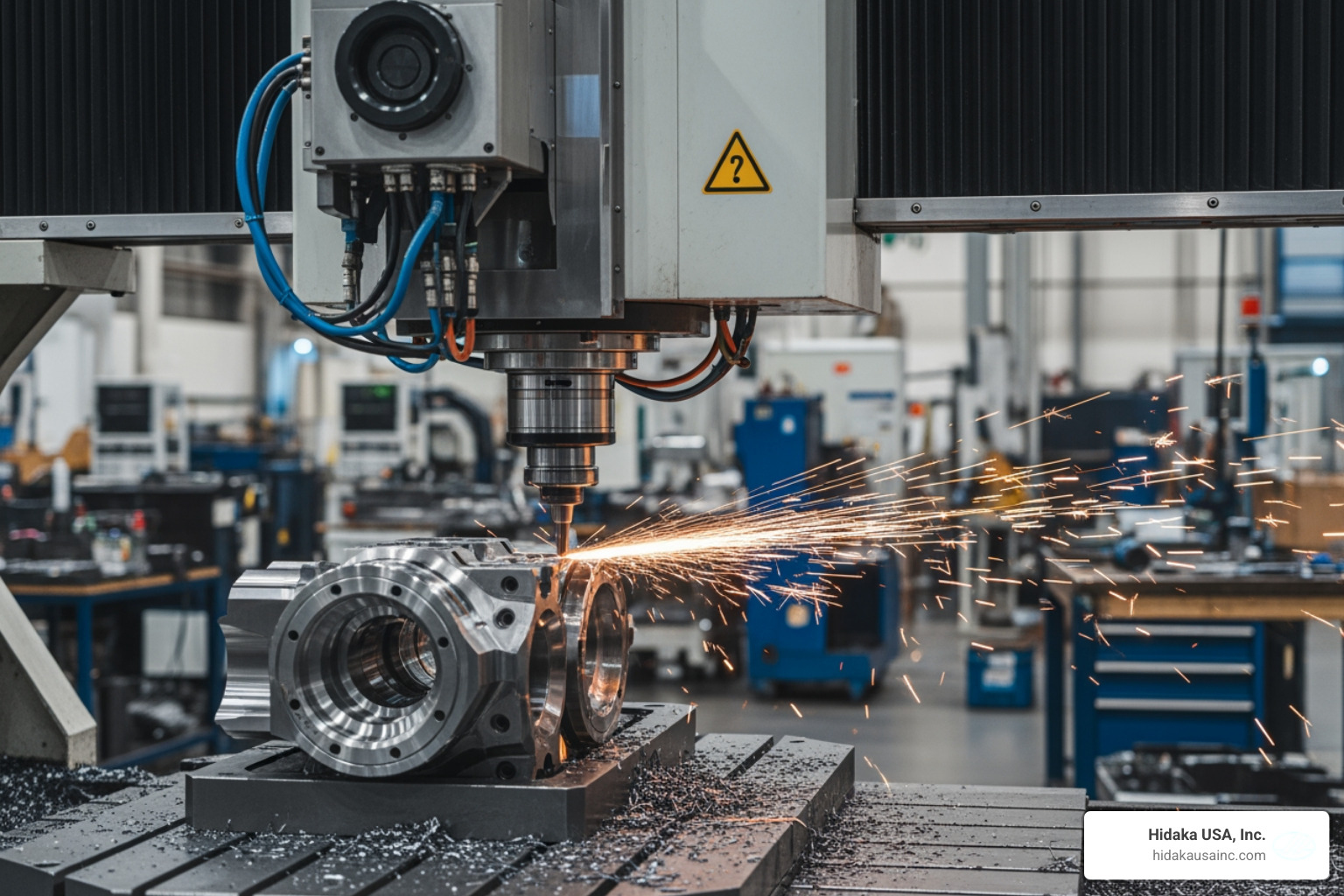
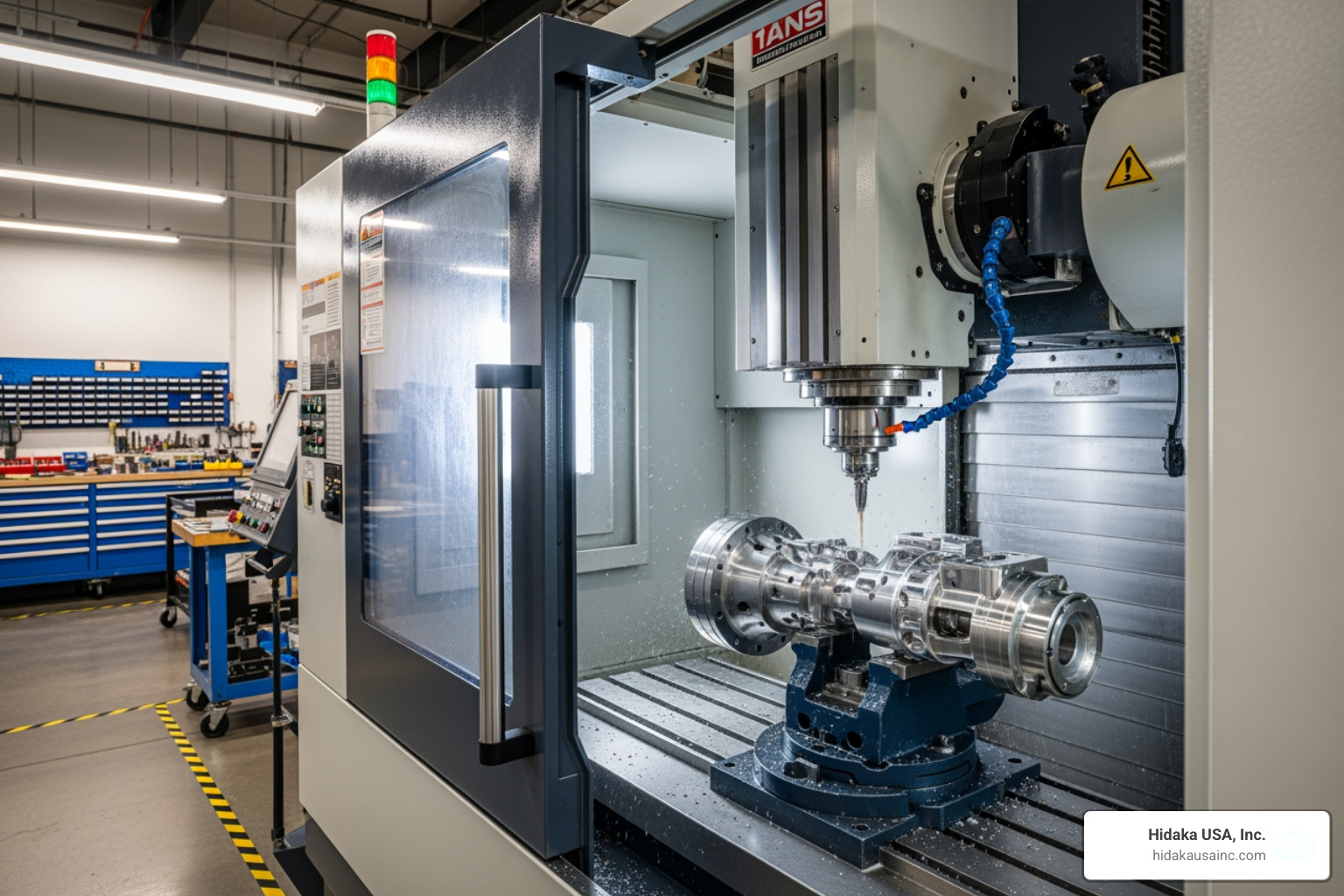
Precision CNC Milling for Prototype Machining
CNC milling is perhaps the most versatile process in the shop. In a standard 3-axis mill, the workpiece is fixed, and the cutting tool moves along the X, Y, and Z axes. However, for more complex geometries, we utilize 5-axis indexed milling. This allows the part to be oriented in almost any direction, enabling the tool to reach deep cavities or undercuts without multiple setups.
Typical spindle speeds range from 4,000 to 10,000 RPM, allowing for smooth finishes and fast material removal. Depending on the equipment, travel limits can handle parts ranging from small brackets to large structural components, with some mills offering X-axis travel up to 40 inches.
High-Speed CNC Turning for Prototype Machining
If your part is cylindrical—think shafts, bolts, or pulleys—CNC turning is the way to go. In this process, the workpiece rotates at high speeds while a single-point cutting tool moves linearly along its surface.
Our lathe centers can typically handle turning diameters between 1 and 18 inches. By rotating the part itself, we achieve perfect concentricity and exceptional surface finishes that milling simply can't match for round geometries.
Electrical Discharge Machining (EDM) and Secondary Operations
Sometimes, a mechanical drill or end mill is too "blunt" for the job. Wire EDM uses a thin, electrically charged wire to "slice" through hard metals with extreme precision. This is ideal for delicate features, sharp internal corners, or ultra-tight tolerances that traditional milling can't reach.
Once the primary machining is done, secondary operations like bead blasting, anodizing, or chromate plating are often applied to provide the final aesthetic or protective layer your prototype needs.
Material Selection and Design Guidelines for Prototype Machining
One of the biggest advantages of prototype machining is the sheer variety of materials available. Whether you need the lightweight strength of aluminum or the high-heat resistance of specialized plastics, machining can handle it.
Common Materials
- Aluminum 6061 & 7075: 6061 is the "workhorse" of the industry—versatile and cost-effective. 7075 is nearly twice as strong (often used in aerospace and military firearms) but comes at a higher cost.
- Stainless Steel (304, 316, 17-4 PH): Known for corrosion resistance and high tensile strength. 17-4 PH is particularly valued for its hardness.
- Titanium: The gold standard for strength-to-weight ratio, commonly used in medical implants and aerospace.
- Plastics (PEEK, ABS, Acetal, Nylon): For functional plastic prototypes, PEEK offers incredible thermal stability, while Acetal (Delrin) provides excellent machinability and low friction.
Design Guidelines for Prototype Machining Success
To get the best results and keep costs down, follow these best practices:
- Wall Thickness: Keep metal walls above 0.8mm and plastic walls above 1.5mm to prevent warping or breaking during the cut.
- Cavity Depth: Ideally, limit the depth of a cavity to 3x the tool diameter. Deep, narrow holes are difficult to machine and prone to tool breakage.
- Internal Radii: CNC tools are round. Avoid sharp 90-degree internal corners; instead, design with a radius that matches standard tool sizes.
- Threading: Use standard UNC/UNF or metric sizes. For prototypes, we often recommend using coil or key inserts for added durability in softer materials.
- Text: If you need labels, recessed text is much faster and cheaper to machine than raised text.
Industry Applications for Machined Prototypes
We’ve found that certain industries rely on CNC prototypes more than others due to their strict safety and performance standards:
- Aerospace: Requires precision tolerances (often down to ±0.0001 in.) and material certifications for flight-critical parts.
- Automotive: Uses functional prototypes for engine components, suspension parts, and interior trim to simulate real-world driving conditions.
- Medical: Relies on PEEK and Titanium for bone screws and surgical instruments that must be biocompatible.
- Motorsports: Needs rapid iterations of high-strength parts that can withstand extreme heat and vibration.
Managing Costs, Lead Times, and Production Transitions
We know that "time is money" in product development. Typical lead times for prototype machining range from 1 to 9 days, depending on complexity.
Pricing Factors
Several factors influence the final quote:
- Setup Fees: Every time we have to change the "fix-it" or reprogram the machine, it adds time.
- Material Costs: Titanium and 7075 Aluminum are significantly more expensive than 6061 or ABS.
- Complexity: A 5-axis part takes more programming and machine time than a simple 3-axis part.
- Quantity: While machining is great for one-offs, the cost per part drops significantly as you move toward low-volume production.
Scaling Up
The beauty of starting with a machined prototype is the ease of transition. Because you’ve already validated the design in a production-grade material, moving to low-volume production or even full-scale manufacturing is a smoother process. For plastic parts, we might transition from CNC machining to bridge tooling using aluminum molds, which is much faster and cheaper than jumping straight into high-volume steel injection molds.
At Hidaka USA, Inc., we maintain ISO 9001 certification to ensure that the quality you see in your first prototype is the exact same quality you get in your 10,000th production part.
Frequently Asked Questions about Prototype Machining
What is the typical lead time for a machined prototype?
Standard lead times generally range from 1 to 9 days. For very simple parts, some shops can offer a 24-hour turnaround. However, if your project requires specialized materials, complex 5-axis setups, or secondary finishing like anodizing, the lead time may extend to 2 weeks.
What tolerances can prototype machining achieve?
Standard machining tolerances are typically ±0.005 inches (0.13mm). This is more than sufficient for most functional tests. However, for critical features in the aerospace or medical industries, precision services can achieve tolerances as tight as ±0.0001 inches (one-ten-thousandth of an inch).
How does CNC machining compare to 3D printing?
While 3D printing is often faster and cheaper for visual concept models, CNC machining is superior for functional testing. Machined parts have better mechanical properties, tighter tolerances, and use the actual production-grade metals or plastics required for the final product.
Conclusion
Creating a successful product requires more than just a good idea; it requires a partner who understands the nuances of manufacturing. Whether you are in the automotive, mass-transit, or motorsports industry, prototype machining is the bridge that takes you from a digital concept to a physical reality.
At Hidaka USA, Inc., based in Dublin, Ohio, we pride ourselves on our American-made precision and strict quality control. From our 95,000-square-foot facility, we offer end-to-end services—from initial engineering analysis to mass production. We don't just make parts; we help you refine your designs to ensure they are ready for the real world.
Ready to see your design come to life? Start your next project with expert prototyping services at Hidaka USA, Inc. and let’s build something great together.