Laser Prototyping Material Options and How to Use Them
What Is Prototype Laser Cutting — and Why It Matters for Manufacturers
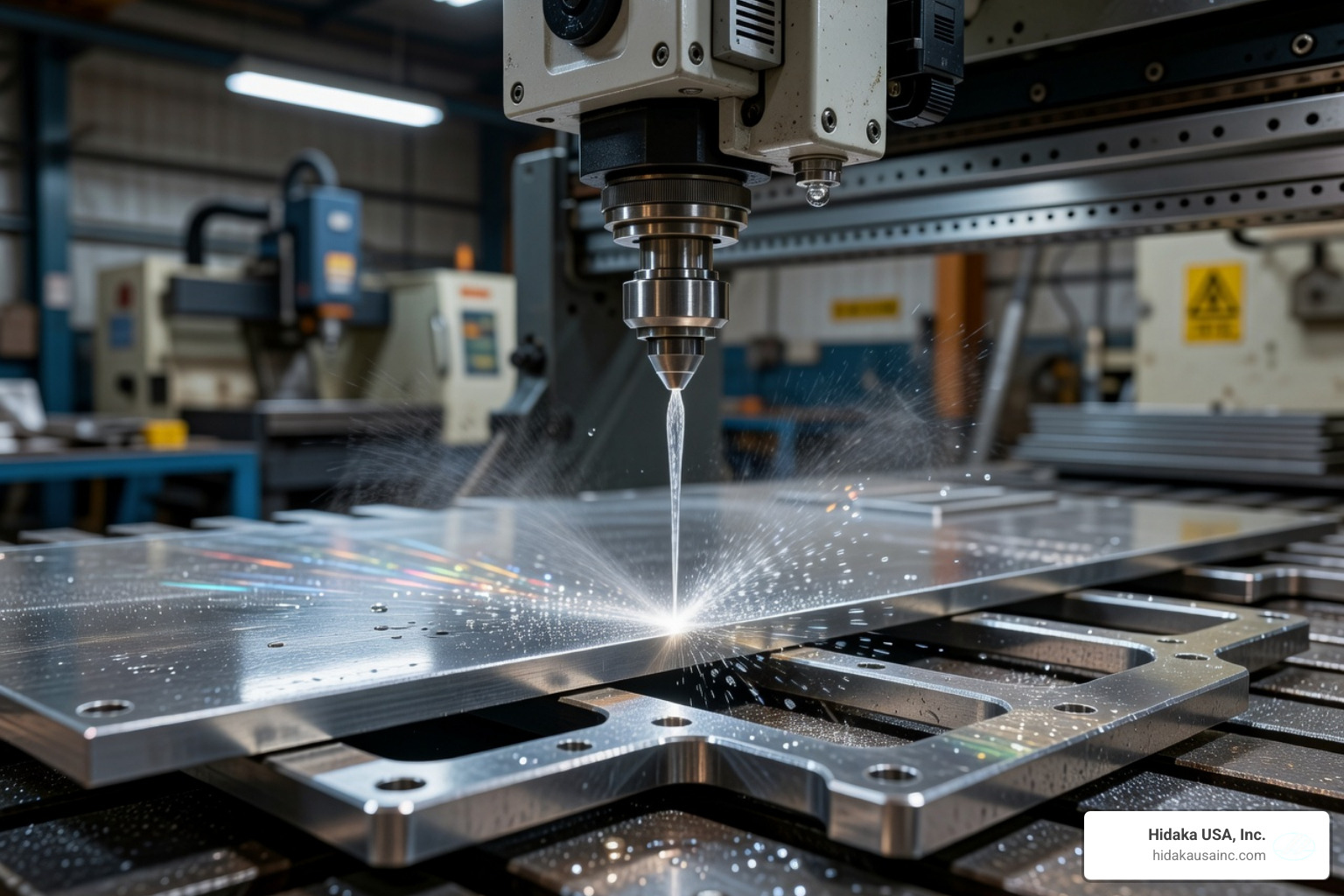
Prototype laser cutting is a non-contact fabrication process that uses a focused beam of electromagnetic energy to cut, score, or engrave materials into precise 2D parts — directly from a CAD file, with no custom tooling required.
Here is a quick overview of how it works and what to expect:
| Topic | Key Facts |
|---|---|
| How it works | A focused laser beam vaporizes material along a programmed path, guided by CNC automation |
| Common materials | Stainless steel, aluminum, acrylic, wood, carbon fiber, PETG, polypropylene |
| Typical tolerances | ±0.1 mm (±0.004 in.) for most applications |
| Lead times | As fast as 1–3 business days for small quantities |
| File formats accepted | .DXF, .SVG, .AI (vector files required for cutting) |
| Key advantage | No tooling means design changes can be made and re-cut within hours |
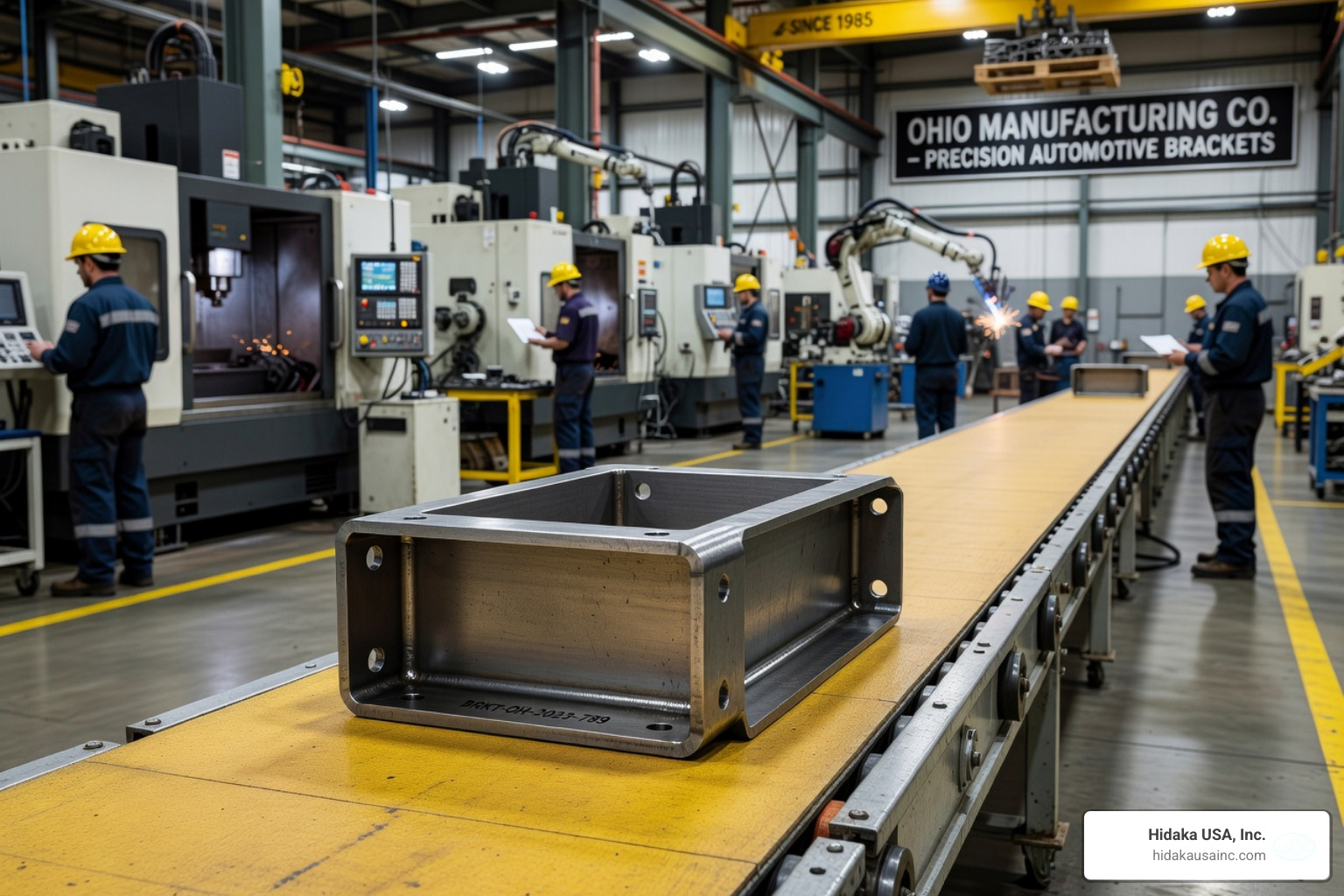
| Common uses | Automotive brackets, enclosures, gaskets, medical components, electronic faceplates |
Laser cutting is one of the fastest ways to move from a digital design to a physical, testable part. Because the process is CNC-driven and requires no molds or dies, manufacturers can run multiple design iterations in a single week — a major advantage when tight deadlines and product accuracy are at stake.
I'm Yoshihiro Hidaka, founder of Hidaka USA, Inc., and since 1989 I have built our business around delivering precision sheet metal prototypes — including prototype laser cutting — to the automotive industry and beyond. That hands-on experience across both prototype and mass production is the foundation of everything covered in this guide.
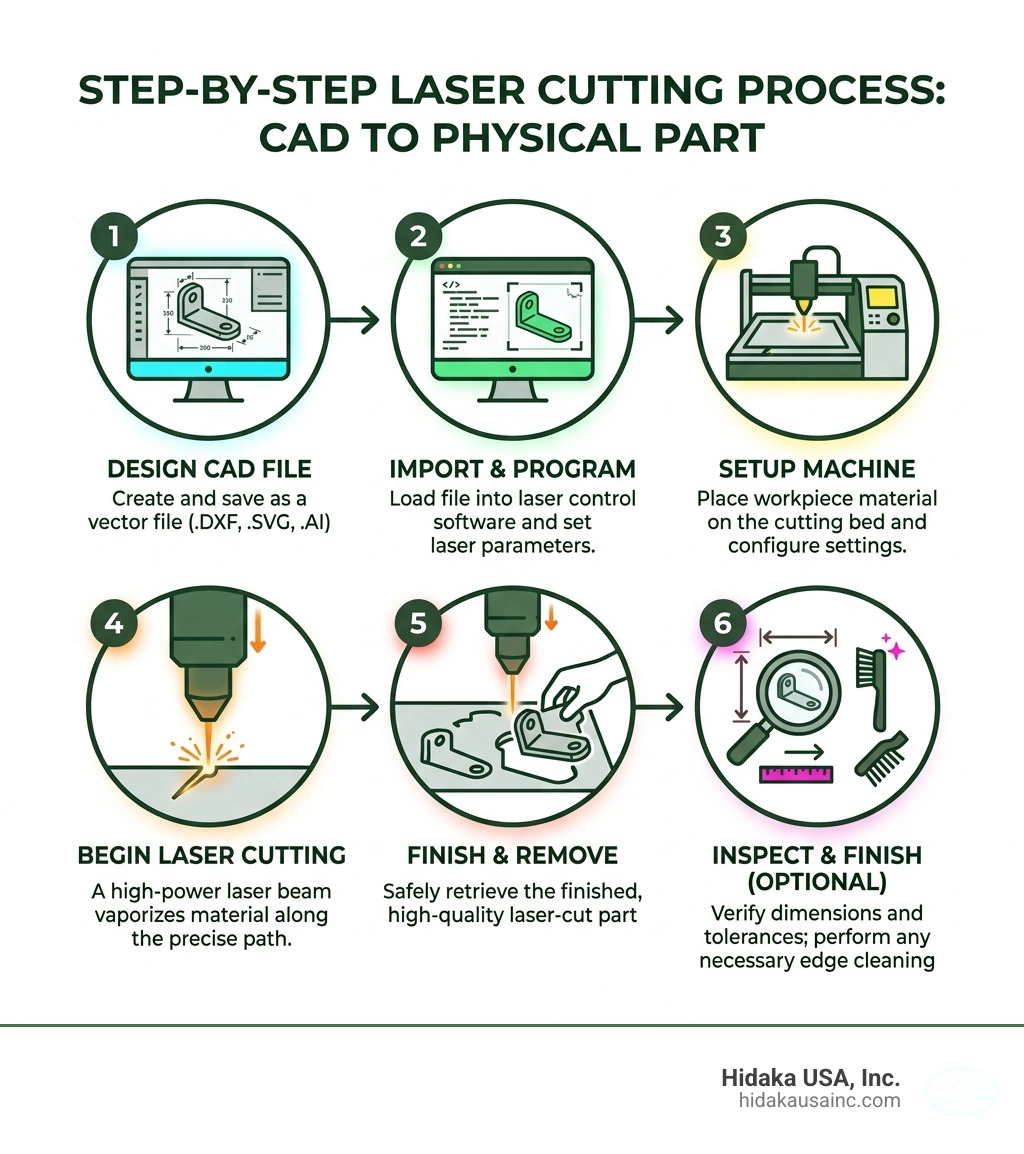
Simple guide to prototype laser cutting:
The Mechanics of Prototype Laser Cutting
To understand why prototype laser cutting is so effective in April 2026, we have to look at the science of "stimulated emission." The word LASER is actually an acronym: Light Amplification by Stimulated Emission of Radiation. In simple terms, we take light energy and concentrate it into a beam so powerful it can vaporize solid steel.
In our Dublin, Ohio facility, we utilize CNC (Computer Numerical Control) automation to guide this beam. Because the laser never physically touches the material, there is no mechanical force applied. This means no "work hardening" and minimal risk of distorting delicate parts.
Comparing Laser Technologies
Not all lasers are created equal. Depending on your prototype’s material, we choose between two primary types:
| Feature | CO2 Lasers | Fiber Lasers |
|---|---|---|
| Source | Gas mixture (Carbon Dioxide) | Optical fiber doped with rare-earth elements |
| Best For | Non-metals (wood, acrylic, plastics) and thick metals | Thin to medium metals, highly reflective metals |
| Precision | Excellent for smooth edges on organic materials | Extremely tight tolerances on metals |
| Energy Efficiency | Higher power consumption | Lower power consumption, higher speed on thin sheets |
Safety and Precision Controls
The "magic" happens at the focal point, which can be as small as a single square micron. As the material vaporizes, an "assist gas" (like Nitrogen or Oxygen) blows away the molten debris, leaving a clean edge.
However, this process creates fumes, especially when cutting thermoplastics or treated woods. In a professional setting, we use advanced fume management and HEPA filtration to ensure a safe environment. We also carefully monitor the Heat-Affected Zone (HAZ)—the small area near the cut that gets warm—to ensure the structural integrity of your prototype remains intact.
Material Selection and Technical Specifications
Choosing the right material is the most critical step in prototype laser cutting. While many people think lasers are only for heavy industrial steel, the reality in 2026 is far more versatile.

Suitable Prototyping Materials
- Metals: Stainless steel (304/316), Aluminum (6061/7075), Titanium, Copper, and Brass.
- Plastics: Delrin (POM), Mylar, PETG, Polypropylene, and Styrene. (Note: We avoid PVC due to toxic chlorine gas).
- Composites: Carbon-fiber composites (often requiring hybrid laser setups to handle both the resin and the fiber).
- Organics: Untreated wood, plywood, MDF, and leather.
Material Selection for Prototype Laser Cutting
When we evaluate a design for a client in Ohio, we look at several technical factors:
- Thickness Limits: Fiber lasers can now comfortably cut through metals up to 25.4mm (1 inch) thick. For non-metals, CO2 lasers typically handle up to 19mm.
- Reflectivity: Metals like copper and brass reflect laser light, which can damage older machines. Modern fiber lasers are designed to handle this, though sometimes we apply a marking paste to reduce reflectivity.
- Density and Composition: In composites, the laser must vaporize the polymer matrix while simultaneously cutting through high-strength fibers.
Precision and Tolerances in Design
One of the biggest draws of prototype laser cutting is the accuracy. We typically achieve tolerances of ±0.1 mm (±0.004”). Some specialized parts can even reach ±0.025mm depending on the geometry.
To get these results, we use "kerf compensation." The kerf is the width of the material removed by the laser beam (similar to the width of a saw blade). Our software automatically adjusts the path to ensure the final part matches your exact dimensions.
- Minimum Feature Size: Generally, we recommend a minimum feature size of 1x1mm. Anything smaller risks melting away due to heat accumulation.
- Nesting: We use advanced nesting software to arrange parts as tightly as possible on a sheet. This reduces material waste, which is better for the environment and your budget.
Scaling from Design to Production
The true power of prototype laser cutting lies in its ability to bridge the gap between a "cool idea" and a "market-ready product." In the world of automotive and aerospace manufacturing, "failing fast" is the key to succeeding faster.
Advantages of Prototype Laser Cutting for Rapid Iteration
- Zero Tooling Costs: Unlike stamping or injection molding, you don't need to wait weeks for a custom die or mold.
- 24-Hour Design Cycles: You can send us a CAD file in the morning, and we can often have a physical part ready for testing by the next day.
- Scalability: Because we use the same CNC programs for prototypes as we do for mass production, moving from 1 part to 1,000 parts is seamless.
- Repeatability: Once the parameters are set, every part is identical, ensuring your testing data is reliable.
Finishing Options
A prototype often needs more than just a clean cut. We offer several secondary services to make your part "production-ready":
- Deburring: Removing any tiny sharp edges (burrs) left by the laser.
- Anodizing/Powder Coating: Adding a protective or aesthetic color layer.
- Laser Engraving: Adding serial numbers, QR codes, or branding directly onto the part.
Real-World Applications and Industry Use Cases
We see prototype laser cutting used across every major industry in the Midwest:
- Automotive: Brackets, seat frames, fenders, and even experimental vehicle hoods.
- Medical: Precision components for pacemakers, stents, and prosthetic joints.
- Electronics: Custom enclosures, faceplates with perfect port cutouts, and EMI shielding.
- Creative Engineering: Everything from complex "living hinges" in cardboard or plastic to intricate phone stands and architectural models.
Frequently Asked Questions about Laser Prototyping
What are the typical costs and lead times for laser-cut prototypes?
While we don't list specific prices due to the custom nature of the work, laser cutting is generally the most cost-effective method for flat or 2.5D parts. Lead times are impressively short—standard orders usually ship within 2 to 4 business days, while rush orders can sometimes be completed same-day if the design is ready by 11 AM.
How does laser cutting compare to 3D printing for prototypes?
3D printing is fantastic for complex, "chunky" 3D geometries. However, for sheet metal parts, brackets, or flat components, laser cutting is significantly faster and offers much better material strength. A laser can cut a part in seconds that might take a 3D printer hours to build layer-by-layer.
What file formats and design preparation are required for laser cutting?
We require vector files. Unlike raster images (which are made of pixels), vector files use mathematical paths. The most common formats are .DXF, .SVG, and .AI. When preparing your file, ensure all text is converted to outlines and that your "cut lines" are a different color than your "engrave lines."
Conclusion
At Hidaka USA, Inc., we believe that your prototype should be more than just a placeholder — it should be a high-precision tool that helps you perfect your design. From our 95,000-square-foot facility in Dublin, Ohio, we combine decades of experience with the latest 2026 laser technology to bring your concepts to life.
Whether you need a single bracket for a motorsports project or a complex assembly for a mass-transit railcar, our ISO 9001 and AWS-certified team is here to ensure every cut is perfect. We take pride in our American-made quality and our ability to scale with you from that first "fail fast" iteration to full-scale production.
Start your prototype laser cutting project today. Contact our engineering team in Dublin, Ohio, to see how we can accelerate your time-to-market with precision and speed.