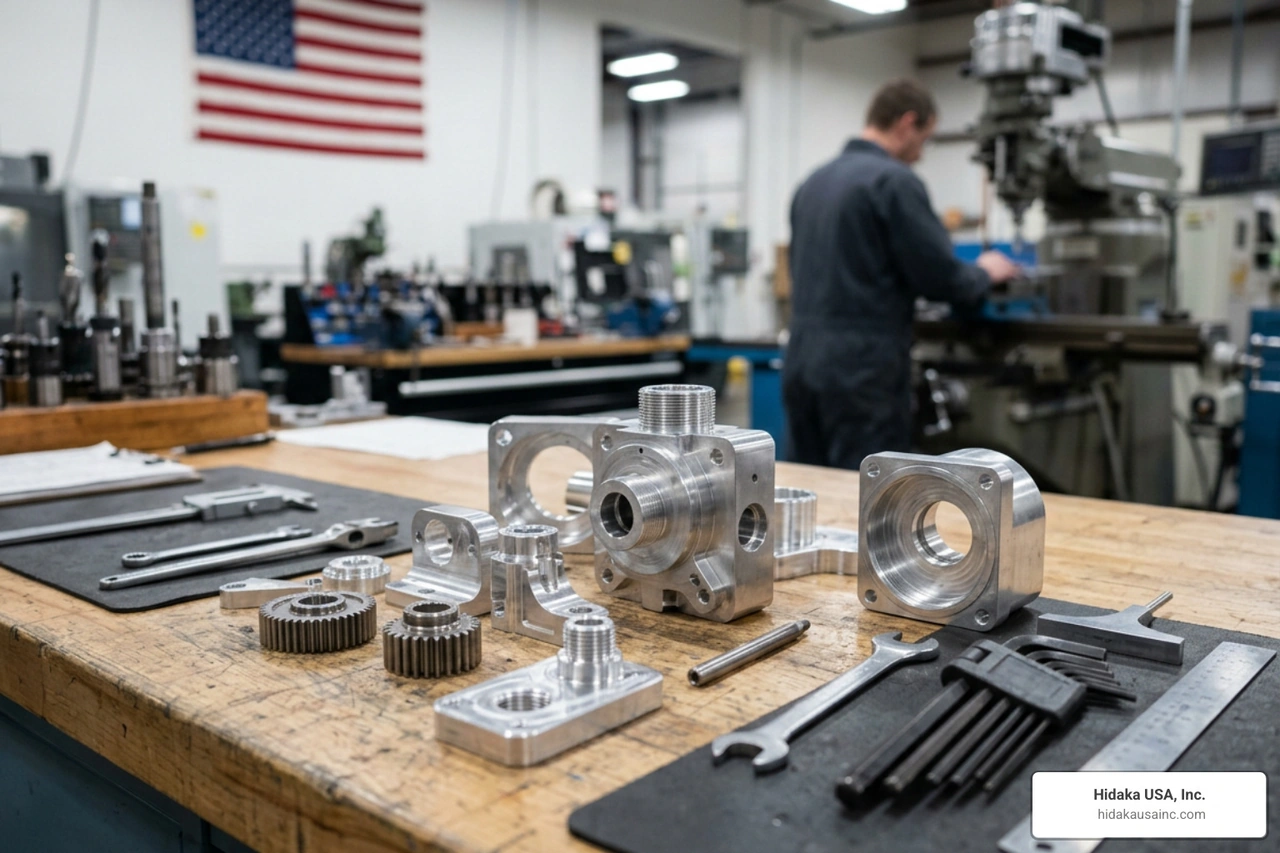
Why Your Project Needs High Precision Stamping Services to Succeed

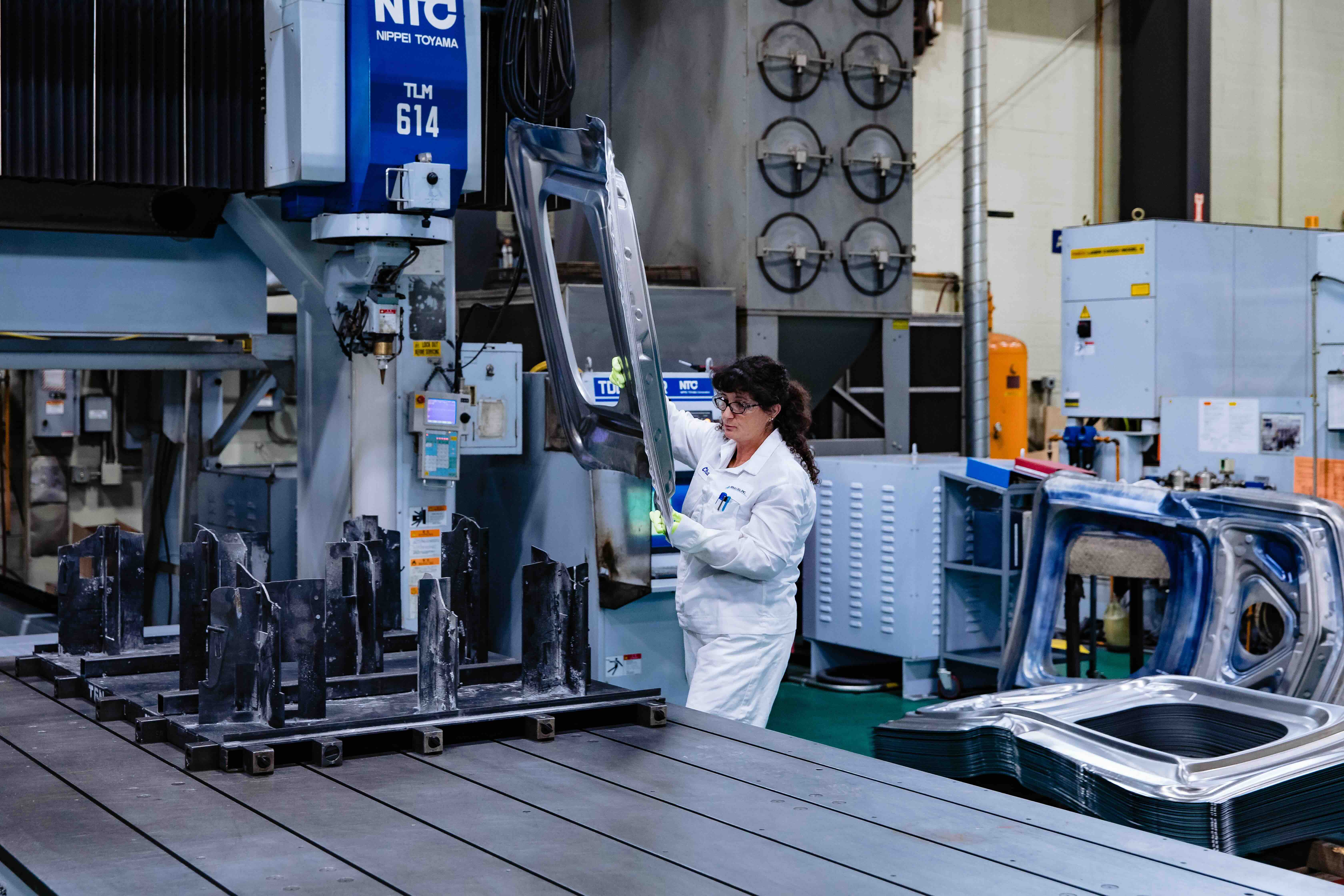
What High Precision Stamping Services Are — and Why They Matter for Your Project
High precision stamping services are specialized metal forming processes that produce parts with extremely tight dimensional tolerances, often as close as ±0.0005", using high-speed presses, precision dies, and advanced quality controls.
Here is a quick overview of what high precision stamping delivers:
FeatureWhat It Means for YouTolerances as tight as ±0.0005"Parts fit and function correctly every timeMaterial thickness from 0.001" to 0.250"Works for delicate foils to heavy sheet metalPress speeds up to 600 SPMHigh output without sacrificing accuracyProgressive, compound, and transfer diesFlexible solutions for complex geometriesISO 9001:2015 and industry certificationsConsistent quality backed by standardsHigh-volume runs from 60,000 to 1,000,000+ piecesScalable from prototype to full production
When a part fails because it is 0.002" out of spec, it can shut down an entire assembly line. In manufacturing, small errors have large consequences.
That is exactly the problem high precision stamping is built to solve. It combines repeatable accuracy, fast cycle times, and material versatility to keep production moving without costly defects or delays.
I'm Yoshihiro Hidaka, founder of Hidaka USA, Inc., with over three decades of experience delivering high precision stamping services to the automotive and manufacturing industries, starting from prototype through mass production. This guide draws on that hands-on expertise to help you understand what precision stamping can do for your project and how to get it right from the start.
Core Capabilities of High Precision Stamping Services
When we talk about "high precision," we aren't just using a marketing buzzword. In metal fabrication, there is a massive technical gulf between standard stamping and the high-precision variety. Standard stamping is great for simple brackets or large, forgiving panels. But when you are building a fuel injector, a medical implant, or an aerospace connector, "close enough" is a recipe for disaster.
Standard Stamping vs. High Precision Stamping
To understand the value of high precision stamping services, it helps to look at the numbers.
FeatureStandard StampingHigh Precision StampingTypical Tolerances±0.005" to ±0.015"±0.001" to ±0.0005"Material Thickness0.020" and up0.001" to 0.250"ComplexitySimple bends/holesComplex 3D geometriesPress Speeds20–100 SPMUp to 600 SPMEquipmentMechanical pressesHigh-speed Bruderer/Servo presses
Tight Tolerances and Accuracy
The hallmark of precision work is the ability to hold tolerances within ±0.001" for internal features and ±0.003" for external features consistently. In specialized applications, we can even push those boundaries down to ±0.0005". Achieving this requires more than just a good machine; it requires a climate-controlled environment, ultra-precise tool steel (like D2 or carbide), and a deep understanding of how different metals "spring back" after being hit by the die.
Material Versatility
Our capabilities allow us to work with incredibly thin foils—down to 0.001" (0.0254 mm)—up to sturdier sheets of 0.060" or more. Whether you need a delicate copper contact for a circuit board or a robust stainless steel housing, the equipment must be calibrated to handle the specific "flow" of that material.
Press Tonnage and Capacity
In our Dublin, Ohio facility, we utilize a range of press capacities to match the job. High precision doesn't always mean "small." While many precision jobs run on 15 to 100-ton high-speed presses, we also utilize presses ranging up to 300 tons for larger parts that still require exacting accuracy. This range ensures that whether your part is the size of a dime or a dinner plate, the press has the right amount of force to form the metal without deforming the tool.
Key Techniques: Progressive, Compound, and Transfer Stamping
Choosing the right stamping technique is like choosing the right tool for a home renovation—get it wrong, and you waste time and money. We specialize in three primary methods to ensure your project is optimized for both cost and quality.
Progressive Dies: The High-Speed Workhorse
Progressive die stamping is the "assembly line" of the stamping world. A coil of metal is fed through a series of stations. At each station, the die performs a specific operation—piercing, coining, bending, or blanking. The part remains attached to the metal strip until the very last step.
- Why it works: It’s incredibly efficient for high-volume production. Because all operations happen in one tool, you get high repeatability and lower labor costs.
- Best for: Complex parts with multiple features that need to be produced by the millions.
Compound Stamping: Precision in a Single Stroke
In compound stamping, we perform multiple operations, such as blanking and piercing, simultaneously with a single stroke of the press.
- Why it works: Because the operations happen at the exact same moment, there is no "lead error" or shifting between stations. This results in superior flatness and hole-to-edge accuracy.
- Best for: Flat, high-precision parts like washers, gears, or simple brackets where concentricity is critical.
Transfer Stamping: Flexibility for Large Parts
Unlike progressive stamping, transfer stamping involves individual parts that are "transferred" from one station to the next by mechanical fingers or a rail system.
- Why it works: It allows for more complex 3D shapes and deep-drawn features that might be impossible if the part stayed attached to a strip.
- Best for: Large frames, deep shells, and projects requiring flexibility in part orientation.
Optimizing High Volume Production with High Precision Stamping Services
When you move into high-volume territory—runs from 60,000 to over 1,000,000 pieces per year—the stakes get higher. At these volumes, even a tiny inefficiency in the tool can lead to thousands of dollars in wasted material.
We utilize high-speed presses capable of speeds up to 600 strokes per minute (SPM). To maintain precision at these speeds, we implement:
- Tool Protection Systems: Advanced sensors detect if a part hasn't ejected or if the material has buckled, stopping the press instantly to prevent die damage.
- Die Maintenance: We provide lifetime die maintenance for our customers. High-volume runs naturally cause tool wear; our in-house team monitors and sharpens dies to ensure the millionth part looks just like the first.
- Reduced Waste: Through clever engineering, we minimize the "scrap" between parts on the strip, which is a major factor in evaluating a metal stamping partner.
Prototyping and Tooling Design for High Precision Stamping Services
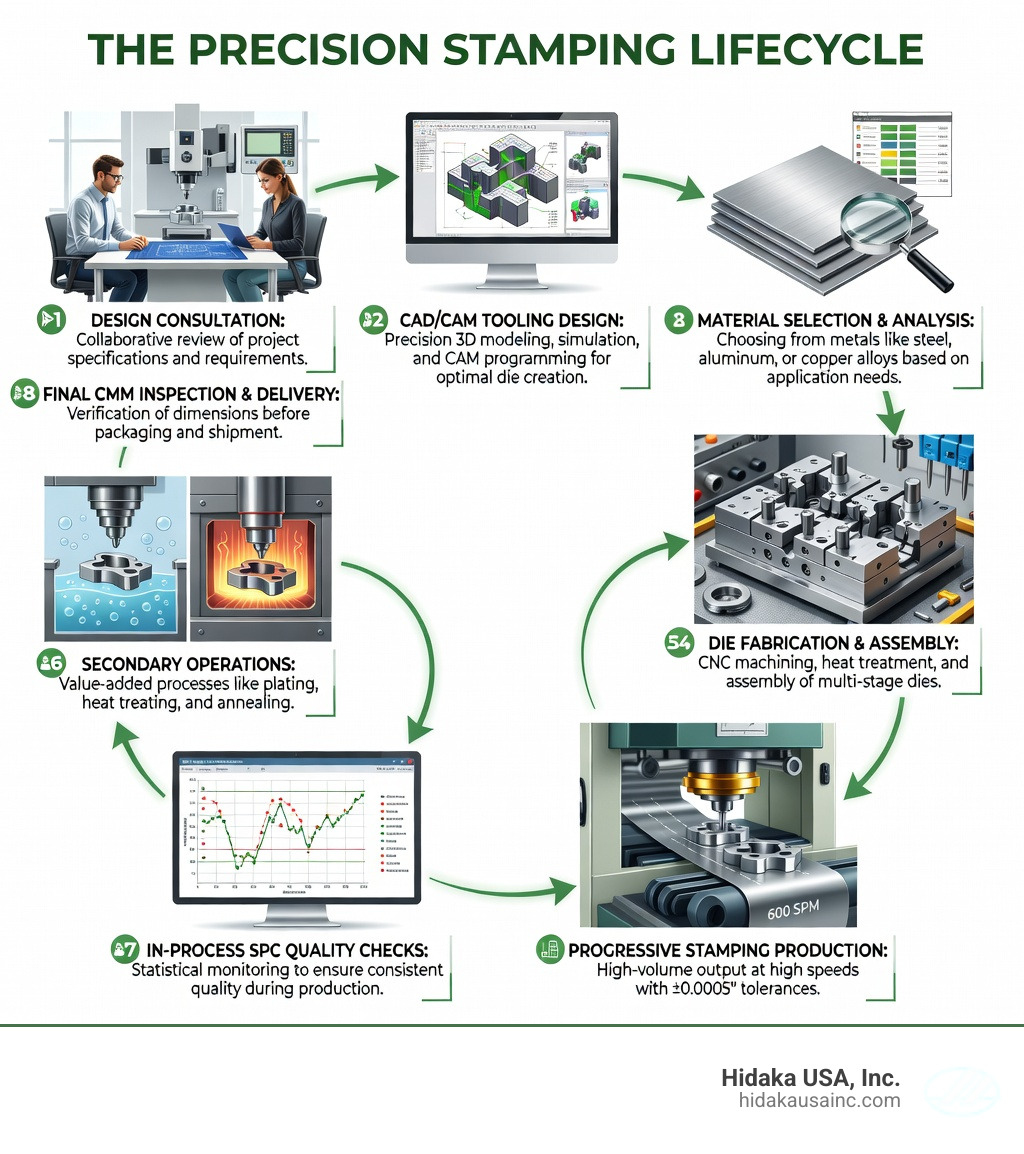
Every great part starts with a great tool. At Hidaka USA, Inc., we don't just "run" parts; we engineer the solutions. Our in-house tool shop uses CAD/CAM integration and Wire EDM (Electrical Discharge Machining) to create dies with extreme accuracy.
Our Wire EDM capabilities allow us to cut tool steel with diameters from 0.003" to 0.012", enabling us to create the tiny, intricate features required for micro-stamping. We offer both:
- Soft Tooling: Ideal for low-volume prototypes or testing a design before committing to a full production die.
- Hard Tooling: Built for the long haul, these dies are made from hardened steels designed to withstand millions of hits.
For businesses still in the R&D phase, we provide extensive prototyping services to help refine designs for manufacturability (DFM) before mass production begins.
Material Versatility and Industry Applications
The "personality" of a metal changes based on its alloy and thickness. A high-speed press needs to be "tuned" to the material it's hitting. We work with a vast array of metals, each serving a specific purpose.
- Aluminum: Lightweight and corrosion-resistant. We offer guidance on aluminum selection to help you choose the right grade for aerospace or automotive housings.
- Stainless Steel: Known for strength and heat resistance. We provide expertise on stainless steel selection and finishes for parts that need to look as good as they perform.
- Copper and Brass: Excellent for electrical conductivity.
- Specialty Alloys: We handle exotic materials like Beryllium Copper (for springs), Phosphor Bronze, Inconel, and Titanium for high-stress environments.
- Steel Options: From cold rolled steel to galvanized options, we match the material to your durability requirements.
Why Aerospace and Medical Sectors Rely on High Precision Stamping Services
In industries where a failure can be life-threatening, "good enough" is never an option.
Aerospace:The aerospace industry demands rugged strength and exceptional accuracy. We produce components like lightweight ducting, engine mounts, and intricate door closure parts. With tolerances of ±0.001" for internal features, we meet the zero-error mandate required for flight-critical hardware.
Medical:Precision is literally a matter of life and death here. We produce surgical instruments, temperature probes, pump components, and housings for medical devices. These often require micro-stamping of materials as thin as 0.005".
Electric Vehicles (EV):The shift to electric mobility has created a massive demand for Busbars. These are high-precision copper or aluminum strips that carry heavy electrical loads. They require exacting dimensions to fit into tight battery modules and ensure safe energy transfer.
Quality Assurance and Secondary Operations
A part isn't finished just because it came out of the press. At Hidaka USA, Inc., we believe quality is something you build into the process, not something you check for at the end.
Statistical Process Control (SPC) and Monitoring
We use Statistical Process Control (SPC) to monitor production in real-time. By tracking dimensions throughout a run, we can see if a tool is starting to wear before it produces a part that is out of spec. Our integrated ERP systems allow for machine monitoring and rapid issue resolution. If you want a neutral overview of SPC concepts and terminology, see Statistical process control.
Advanced Inspection Tools
To verify our work, we utilize:
- Programmable CMM (Coordinate Measuring Machines): For automated, high-accuracy 3D measurements.
- Optical Inspection Systems: Like Microvu, which use cameras to measure parts that are too small or delicate for physical probes.
- Leak and Burst Testing: Critical for components used in fluid systems.
Secondary Services: The One-Stop Shop
Most of our clients need more than just a stamped part; they need a finished component ready for assembly. By offering secondary operations under one roof, we reduce your shipping costs and lead times while maintaining total control over quality.
- Machining & Tapping: For parts that need threaded holes or secondary milled features.
- Heat Treating: To achieve the necessary hardness or spring temper.
- Plating & Coating: Including anodizing, powder coating, and passivation for corrosion resistance.
- Assembly: We offer press-fit assembly, welding (AWS certified), and even kitting.
For more information on how we handle large-scale orders, see our mass production services page.
Frequently Asked Questions about Precision Stamping
What is the difference between standard and high precision stamping?
Standard stamping typically holds tolerances between ±0.005" and ±0.015". High precision stamping services hold tolerances as tight as ±0.0005". Additionally, precision stamping utilizes higher-grade tool steels, more advanced sensors, and high-speed presses (up to 600 SPM) to ensure every part in a million-piece run is identical.
How does precision stamping compare to CNC machining for cost?
For low volumes (prototypes), CNC machining is often cheaper because there is no "tooling cost." However, for high volumes, precision stamping is significantly more cost-effective. Once the die is built, a stamping press can produce hundreds of parts per minute, whereas a CNC machine might take several minutes per part. Stamping also produces less material waste.
What certifications are required for high precision manufacturing?
At a minimum, you should look for ISO 9001:2015 standards. For specific industries, look for IATF 16949 (Automotive), AS9100D (Aerospace), or ISO 13485 (Medical). These certifications ensure the company has a documented, repeatable system for maintaining quality.
Conclusion
Choosing the right partner for your high precision stamping services is one of the most important decisions you will make for your project's success. A cheap tool that breaks after 10,000 hits or a supplier that can't hold a ±0.001" tolerance will ultimately cost you more in downtime, scrap, and lost reputation.
At Hidaka USA, Inc., we combine our 95,000-square-foot Dublin, Ohio facility with decades of engineering expertise to deliver American-made excellence. From your first prototype to a million-piece production run, we ensure your project succeeds through strict quality control, advanced technology, and a commitment to precision.
Ready to see how we can bring your design to life? Start your project with Hidaka USA today or contact us to discuss your specific requirements. We are here to make your manufacturing process risk-free and reliable.
.jpeg)