Why High Precision Metal Assemblies are the Backbone of Modern Tech

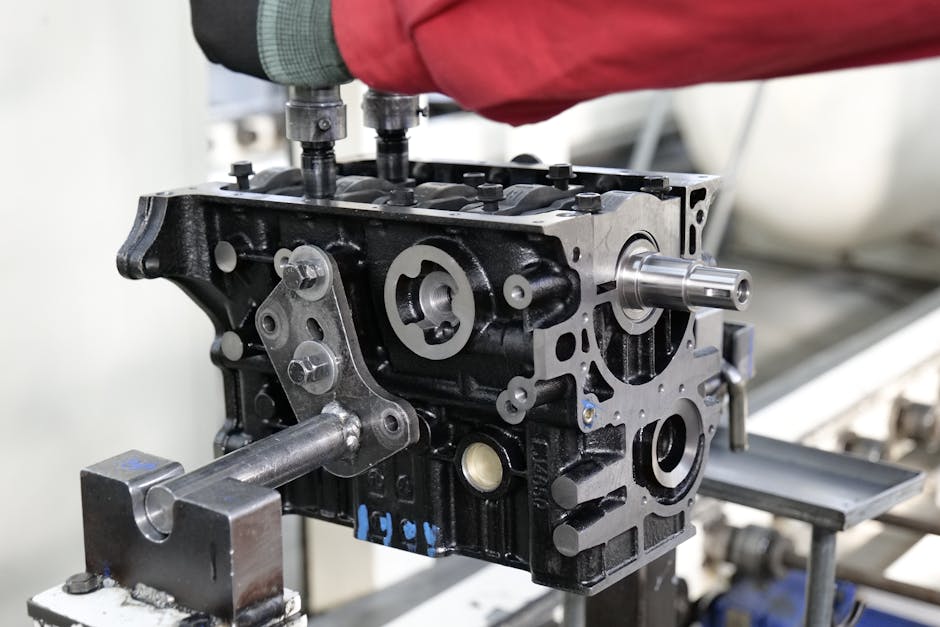
What High Precision Metal Assemblies Are — and Why They Matter
High precision metal assemblies are multi-component metal structures built to very tight dimensional tolerances, where every part must fit, align, and function exactly as designed — often within thousandths of an inch.
Here is a quick overview of what makes them essential:
Key AspectWhat It MeansTolerance rangeAs tight as +/-0.0005 in. (0.0127 mm) on critical dimensionsJoining methodsWelding, mechanical fasteners, adhesives, press-fitting, brazingCore design toolsGD&T, CAD modeling, tolerance stack-up analysisIndustries servedAerospace, medical, automotive, electronics, defenseQuality standardsISO 9001:2015, AS9100, ISO 13485, ITARKey technologiesCNC machining, robotic welding, automated inspection
Modern products — from surgical instruments to satellite frames to electric vehicle battery housings — depend on metal assemblies where every dimension counts. A misalignment of just a few thousandths of an inch can cause a product to fail, a production line to halt, or, in critical industries, a safety incident.
The challenge is not just making precise individual parts. It is making them work together reliably, across hundreds or thousands of production units, under real-world stress and environmental conditions.
That combination of part accuracy, joint integrity, and repeatable assembly is what separates a high precision metal assembly from ordinary fabrication.
I'm Yoshihiro Hidaka, founder of Hidaka USA, Inc., where I have spent over three decades delivering high precision metal assemblies — starting with automotive prototypes and expanding into mass production across multiple industries. That hands-on experience across the full production lifecycle informs everything covered in this guide.

Core Methods for Joining High Precision Metal Assemblies
"Close enough" is a four-letter word. When we talk about high precision metal assemblies, the method we choose to join two or more components is just as critical as the accuracy of the parts themselves. Think of it like a high-end watch: if the gears are perfect but the pins holding them are loose, the watch is useless.
In modern manufacturing, we rely on several primary methods to create these bonds. Each has its own personality, strengths, and "mood swings" (usually involving heat).
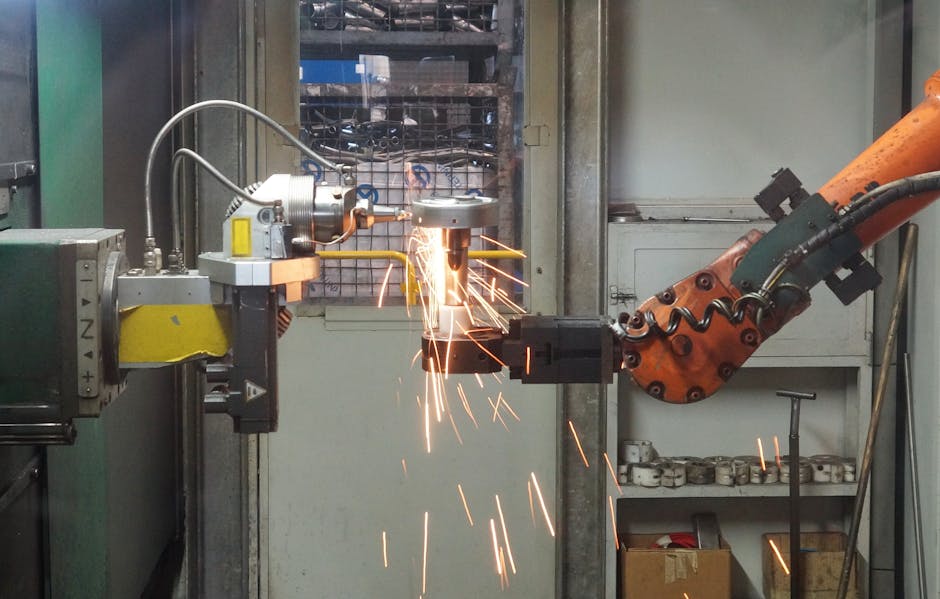
Advantages and Limitations of Thermal Joining
Thermal joining, which includes welding, brazing, and soldering, is the go-to when we need structural rigidity and permanent bonds. However, it requires a delicate touch.
- Welding (MIG, TIG, Laser, and Robotic): Welding creates an incredibly strong, permanent joint by melting the base metals together. In high-precision environments, robotic welding is often preferred for high-volume production because it offers "perfect repeatability." It doesn't get tired, and it doesn't have a "bad Monday."
- The Heat Problem: The biggest limitation of welding is heat distortion. When you heat metal to its melting point, it expands; as it cools, it contracts. This can pull a precision assembly out of alignment. To combat this, we use specialized fixtures and heat management techniques to ensure the final product stays within those tight +/-0.0005 in. tolerances.
- Brazing and Soldering: These are the "gentler" cousins of welding. Brazing happens above 450°C, while soldering stays below that mark. Because we aren't melting the base metal, there is significantly less heat distortion. This makes them ideal for intricate electrical assemblies or thin-walled tubing where maintaining the base metal's integrity is the top priority.
Precision Fastening and Mechanical Features
Sometimes, you don't want to melt things. Mechanical joining is the backbone of modularity and serviceability.
- Mechanical Fasteners (Bolts, Screws, and Rivets): These are the classic choices. For high-precision work, we often use PEM hardware—threaded inserts that are pressed into sheet metal to provide high-strength threads in thin materials.
- Vibration Resistance: In industries like motorsports or mass-transit rail, vibration is the enemy. We use locking features like thread-lockers or specialized lock washers to ensure fasteners don't back out over time.
- Press-Fitting and Swaging: These methods use force to create a "friction fit." For example, orbital forming or swaging can create robust, permanent connections without the need for heat or external hardware.
When we handle prototyping services, we often experiment with these different methods to see which offers the best balance of strength and manufacturability for the final mass-production run.
MethodStrengthPermanenceHeat DistortionBest ForWeldingVery HighPermanentHighHeavy structural framesLaser WeldingHighPermanentLowIntricate, thin componentsFastenersMediumRemovableNoneModular enclosuresAdhesivesMediumPermanentNoneDissimilar metal bonding
Engineering for Accuracy: Design and Tolerance Management
Designing high precision metal assemblies is a bit like playing 3D chess. You aren't just looking at one part; you're looking at how every part interacts. If you have five parts stacked on top of each other, and each is "just a little bit off," by the time you reach the fifth part, you have a major problem.
Impact of GD&T and Tolerance Stack-ups on High Precision Metal Assemblies
This is where Geometric Dimensioning and Tolerancing (GD&T) comes in. It’s a universal language that tells the manufacturer not just "how big" a part is, but how it relates to other features.
- Tolerance Stack-ups: This is the cumulative effect of individual part tolerances. If Part A has a tolerance of +/-0.002 and Part B has the same, the total assembly could be off by 0.004. In high-precision work, we use "virtual tolerance analysis" to predict these issues before we ever cut metal.
- ISO 2768-f Standards: In fine machining, we often follow "fine" (f) standards, which can require linear tolerances as tight as +/-0.0508 mm (+/-0.002 in.) even on soft metals. For critical dimensions, we can go even tighter, down to +/-0.0005 in.
- Datum Structures: A datum is a starting point. By establishing clear datums in a 2D drawing, we ensure that every measurement is taken from the same "anchor," reducing the chance of error as the assembly grows.
Common Pitfalls in Designing High Precision Metal Assemblies
Even the best engineers can fall into traps. Here are a few we see often:
- Over-specifying Tolerances: It’s tempting to make everything +/-0.0005 in. But if a feature doesn't need to be that tight, you're just adding cost and time. We call this "polishing the back of the drawer."
- Incompatible Alloys: If you join stainless steel and aluminum in a humid environment without proper insulation, you get galvanic corrosion. The metals essentially "eat" each other.
- Neglecting Thermal Expansion: If an assembly operates in an engine bay, it will get hot. If different parts expand at different rates, the assembly can warp or crack.
- Poor Fastener Accessibility: If a robotic arm or a human technician can't reach a bolt head, the assembly can't be built. We always design with "tool clearance" in mind.
For companies looking to move from a single prototype to thousands of units, our mass production solutions focus on refining these designs to ensure they are both precise and "manufacturable" at scale.
Critical Applications and Industry Use Cases
Where do you actually find these high precision metal assemblies? The short answer is: everywhere that failure isn't an option.
High Precision Metal Assemblies in Aerospace and Medical Sectors
In these sectors, precision is literally a matter of life and death.
- Medical Devices: We’re talking about surgical instruments, bone implants, and ventilator components. Some of these parts are "super miniature," with outer diameters as small as 0.1 mm (0.00394 in.). These require Swiss screw machining and micro-machining capabilities to achieve the necessary surface finish and concentricity.
- Aerospace and Satellites: Weight is everything in space. We build lightweight welded frames and "skins" for airframes. These assemblies must withstand extreme temperature swings and high-G forces while maintaining perfect structural integrity. Titanium and Inconel are common here because they are strong and heat-resistant, but they require expert handling to machine and weld.
Automotive and Mass-Transit Innovations
At Hidaka USA, Inc., our roots are in the automotive and railcar industries. These sectors demand a unique blend of high precision and high volume.
- Chassis and Engine Mounts: These are the "bones" of a vehicle. They need to be incredibly strong to handle the load path of the engine and the impact of the road, but they also need to be precise so that everything else—the transmission, the exhaust, the body panels—lines up perfectly.
- Electric Vehicles (EVs): The EV revolution has created a massive demand for precision battery housings and cooling plates. These assemblies often involve complex 2D/3D laser cutting and intricate welding to ensure they are airtight and vibration-resistant.
- Mass-Transit Rail: Railcar assemblies are massive, but they still require precision. Whether it's the structural frames or the internal components, we use robotic assembly lines to ensure that every unit delivered to the tracks is identical to the one before it.
Advanced Manufacturing, Quality, and Future Trends
The "old school" way of building things—a guy with a manual lathe and a prayer—is gone. Today, we use "Smart Factories" where the machines do the heavy lifting and the humans do the heavy thinking.
The Role of Automation and Digital Twins
Automation isn't just about speed; it's about consistency.
- Robotic Integration: High-speed assembly cells use robots to pick, place, and join parts with sub-millimeter accuracy. This removes "human variability" from the equation.
- Digital Twins and Simulation: Before we ever strike an arc or cut a piece of steel, we can create a "Digital Twin" of the assembly. We simulate the stresses, the heat of the weld, and the tolerance stack-up in a virtual environment. This allows us to catch mistakes when they cost $0 to fix, rather than $10,000.
- 3D Scanning and Automated Inspection: Once a part is made, we use 3D laser scanning to compare the physical part back to the original CAD model. If a hole is 0.001 in. out of place, the computer flags it immediately.
The Future of High Precision Metal Assemblies
What’s next? We’re looking at Industry 4.0. This means machines that talk to each other. If a CNC machine in Dublin, Ohio, notices its cutting tool is getting dull (and therefore losing precision), it can automatically adjust its path or alert a technician before a single "bad" part is made.
We are also seeing a shift toward sustainable material sourcing and "green" manufacturing. Using laser cutting to minimize scrap and choosing alloys that are easier to recycle are becoming standard practices for us and our partners.
Frequently Asked Questions
What is the difference between standard and high precision assemblies?
Standard assembly usually deals with tolerances in the +/-0.010 in. to +/-0.030 in. range. High precision metal assemblies push that much further, often holding tolerances of +/-0.002 in. down to +/-0.0005 in. It’s the difference between a gate latch and a jet engine component.
How do you prevent corrosion in multi-metal assemblies?
We use several strategies:
- Material Selection: Using metals with similar "nobility" to prevent galvanic reaction.
- Surface Finishes: Passivation for stainless steel, anodizing for aluminum, or zinc plating for steel.
- Insulation: Using non-conductive gaskets or washers to "break the circuit" between dissimilar metals.
Why is GD&T critical for complex metal sub-assemblies?
Without GD&T, a drawing only tells you the size of a part. GD&T tells you the intent. It explains how a hole needs to be perpendicular to a face, or how two surfaces must be perfectly parallel. This ensures that when the sub-assembly arrives at the final production line, it fits every time.
Conclusion
At the end of the day, high precision metal assemblies are about trust. When an aerospace engineer designs a wing spar, or an automotive designer creates a new EV chassis, they are trusting that the manufacturer can turn those digital lines into physical reality.
At Hidaka USA, Inc., we’ve built our reputation on that trust since 1989. From our 95,000-square-foot facility in Dublin, Ohio, we provide the end-to-end engineering, prototyping, and mass production services that keep the automotive and rail industries moving. We don't just join metal; we engineer integrity.
Whether you need a single complex prototype or a run of 5,000 precision units, our ISO 9001 and AWS-certified team is ready to help. We combine the "art" of industrial precision with the science of modern automation to ensure your tech has the backbone it deserves.
Ready to bring your next project to life with American-made precision? Contact Hidaka USA for precision manufacturing and let's build something that lasts.