A Practical Guide to Verify AWS Certified Prototype Welding Scope

What is AWS Certified Prototype Welding?
AWS certified prototype welding is the practice of producing pre-production weld assemblies under verified American Welding Society (AWS) standards, using qualified procedures and certified personnel. It ensures that prototype parts meet the same structural and safety requirements expected of finished production components.
Quick answer — what to verify in AWS certified prototype welding:
- Welder credentials — confirm active AWS Certified Welder status with current six-month maintenance documentation
- Applicable code — identify the correct AWS standard for your material (e.g., D1.1 for structural steel, D1.2 for aluminum, D17.1 for aerospace)
- WPS and PQR on file — the facility must hold a written Weld Procedure Specification backed by a Procedure Qualification Record
- CWI oversight — a Certified Welding Inspector must verify weld quality against the governing code
- Quality system — look for ISO 9001:2015 or AS9100D certification alongside AWS credentials
- Traceability records — certified material test reports (MTRs) and weld documentation must be available for every prototype joint
When a single weak weld on a prototype can halt an entire product development program, the stakes of getting certification right from the start are very high. For automotive manufacturers working against tight launch schedules, an undocumented welding procedure discovered during a supplier audit can cost far more in delays than the entire prototype run was worth.
I'm Yoshihiro Hidaka, founder of Hidaka USA, Inc., and since establishing our Dublin, Ohio facility in 1991, I have spent over three decades supplying AWS certified prototype welding and fabrication services to the automotive industry and beyond. This guide draws on that experience to help engineers and procurement teams verify every critical element of a certified prototype welding program before a single arc is struck.

AWS certified prototype welding terms at a glance:
- automotive metal prototype specialists
- prototype sheet metal fabrication
- rapid prototyping processes
At its core, AWS certified prototype welding is the application of rigorous, standardized welding codes to low-volume, pre-production components. Many people assume that certifications are only necessary for mass production, but applying these standards during the prototyping phase guarantees that the initial physical parts behave exactly as the digital CAD models intended.
When we manufacture a prototype, we are not just creating a visual representation; we are building a functional, structural component designed to undergo physical testing. By utilizing certified welding processes, we ensure that the joint's structural integrity, mechanical properties, and chemical composition meet strict regulatory baselines. This level of control is made possible by combining experienced manual craftsmanship with advanced prototype engineering services to evaluate the part's performance under simulated real-world stresses.
The Importance of AWS Certified Prototype Welding in Product Development
In product development, risk mitigation is everything. If a prototype fails during physical crash testing, shaker table testing, or environmental testing, engineers must know why it failed. Was it a design flaw, or was it simply a poor weld?
By utilizing the Certified Welder Program - Pinnacle of Welding Proficiency | American Welding Society , we eliminate the weld joint as an unknown variable. Certified welds behave predictably. They preserve the parent material's properties, minimize heat-affected zone (HAZ) degradation, and meet verified safety standards. This predictability allows your engineering team to focus on validating the actual design rather than troubleshooting fabrication inconsistencies.
Key AWS Codes and Standards for Prototype Fabrication
Different materials and industries require different rules. When verifying the scope of your prototype project, you must ensure your manufacturing partner is certified to the specific AWS code that governs your material substrate and application:
- AWS D1.1 (Structural Steel): The standard for load-bearing carbon steel and low-alloy steel components.
- AWS D1.2 (Structural Aluminum): Governs structural aluminum alloys, such as 6061-T6, which require precise heat control to prevent joint softening.
- AWS D1.3 (Structural Sheet Steel): Crucial for thin-gauge automotive body panels and brackets.
- AWS D1.6 (Structural Stainless Steel): Applied to corrosion-resistant components.
- AWS D17.1 (Aerospace Fusion Welding): Focuses on high-precision fusion welding of aerospace flight hardware and high-performance motorsports assemblies.
- ASME Section IX: While technically an ASME standard, this code governs pressure-retaining and high-integrity boiler or pressure vessel components, which are often integrated into advanced industrial prototypes.
Even if your project involves highly specialized materials, AWS standards have a solution. For instance, the Specification for Welding Procedure and Performance Qualification for Thermoplastics governs the welding of advanced polymer assemblies, proving that the AWS framework covers more than just traditional metals.
Aerospace, Automotive, and Transit Applications
The requirements for structural welds vary greatly depending on the industry. In the automotive and transit sectors, prototype components must withstand continuous vibration, cyclic loading, and extreme impact forces.
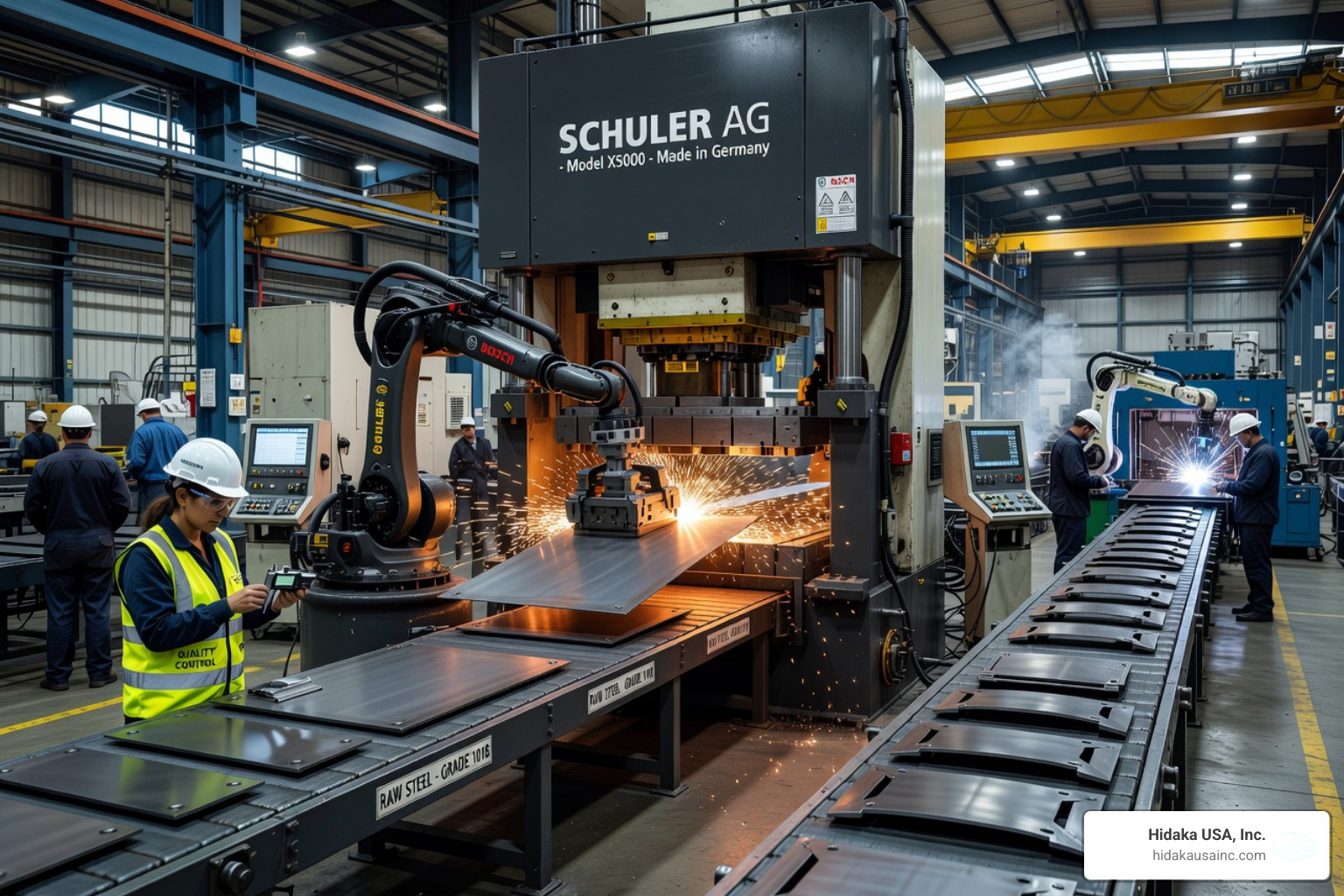
At Hidaka USA, we specialize in serving the automotive, mass-transit railcar, and motorsports industries. These fields demand strict adherence to industries cetrifications to ensure passenger safety. For transit railcars, we apply robust structural steel and aluminum codes, while motorsports applications often leverage AWS D17.1 fusion welding for lightweight chromoly and titanium chassis components.
Prototype vs. Production Welding: Key Differences
While both prototyping and production require high-quality welds, the execution methods differ significantly:

During prototype development, we work with low-volume runs, often producing between 1 and 50 parts. Because the design is still evolving, hard production tooling is rarely cost-effective. Instead, we rely on modular, adjustable fixtures and prototype machining to hold tight tolerances. This flexibility allows us to accommodate rapid engineering changes without the massive expenses associated with modifying permanent production dies.
Qualifying WPS and PQR for AWS Certified Prototype Welding Projects
To legally perform certified welding, a facility must possess three core documents:
- Procedure Qualification Record (PQR): A record of the welding variables used to produce an initial test weldment, along with the destructive testing results (such as tensile and bend tests) that prove the weld is structurally sound.
- Weld Procedure Specification (WPS): The "recipe" derived from the PQR. It provides the welder with the exact parameters (voltage, amperage, travel speed, shielding gas, and filler metal) required to perform the weld safely and consistently.
- Welder Performance Qualification (WPQ): The document proving that an individual welder has the physical skill to perform the weld in accordance with the WPS.
In prototype environments, qualifying a new WPS for every minor design change can become incredibly expensive. Fortunately, codes like AWS D17.1 allow for alternative qualification pathways, such as welding a "prototype structural test weldment" or a "simulated weld joint sample." This allows us to validate the procedure on a representative part without undergoing full-scale production testing.
To maintain these high standards, we align our personnel training with the Guide for the Training and Qualification of Welding Personnel: Level II—Advanced Welders , ensuring our manual welders possess the advanced technical knowledge required for complex, low-tolerance prototype geometries.
Quality Assurance, Traceability, and the Role of CWIs
In a certified prototype program, a weld is only as good as its documentation. Traceability is the foundation of quality assurance. Every piece of metal used in your prototype must be accompanied by a Certified Material Test Report (MTR) to verify its chemical and physical properties.

This is where the Certified Welding Inspector (CWI) | AWS Certification Program becomes indispensable. A CWI is responsible for verifying that the correct WPS is being followed, inspecting the joint preparation, and performing visual and non-destructive testing (NDT) on the completed weld. Having a CWI oversee your prototype fabrication ensures that the parts are fully compliant with the governing codes before they leave our shop.
Overcoming Common Prototyping Challenges
Prototype welding presents unique physical challenges, particularly regarding heat distortion and residual stress. Because prototype parts are often welded using temporary or minimal fixturing, the localized heat from the welding arc can easily warp thin-gauge metals.
We overcome these challenges through smart engineering and precise thermal management. By utilizing advanced fixture designs and techniques like back-stepping, tack-welding sequences, and heat sinks, we control the heat input. Additionally, we integrate our welding workflows with strict quality control iso standards to measure and correct dimensional deviations immediately, ensuring that final assemblies remain within your exact tolerances.
Frequently Asked Questions about Prototype Welding
How long do AWS welder certifications remain valid?
An AWS Certified Welder credential remains valid indefinitely, provided that the welder maintains continuity in the specific welding process (e.g., GTAW, GMAW). To prove this, the welder's employer must submit maintenance documentation to the AWS every six months to verify that the welder has remained active in that process without a break in employment exceeding two years.
Can robotic welding be certified for prototype parts?
Yes. While robotic welding is typically associated with high-volume production, it can be highly effective for low-volume prototype runs that require extreme geometric consistency. To do this legally and safely, the system must be managed by certified personnel.
The Certified Robotic Arc Welding (CRAW) Program | American Welding Society qualifies individuals as either Operators (CRAW-O) or Technicians (CRAW-T). A CRAW-T is responsible for weld quality and programming logic, and they must hold an active CWI certification to qualify. Utilizing certified robotic welding for prototypes streamlines the transition to mass production by establishing the automated program parameters early.
How does ISO 9001 integrate with AWS welding standards?
While AWS codes govern the technical execution of individual welds, ISO 9001:2015 governs the overarching quality management system of the entire manufacturing facility.
The iso 9001 prototyping benefits include robust document control, structured process workflows, and a commitment to continuous improvement. Together, ISO 9001 and AWS certifications ensure that your prototype is not only welded correctly but that its entire manufacturing journey—from raw material procurement to final inspection—is fully documented and repeatable.
Conclusion
Selecting the right manufacturing partner for your prototype is a critical decision. When evaluating potential suppliers, look for a partner that combines technical AWS welding expertise with precision fabrication capabilities under one roof.
For regional resources and localized support, we highly encourage engineers to connect with local welding networks like the AWS Membership District 7 - Your Welding Community Hub , which serves our home state of Ohio. Whether you are looking for general reference standards or specialized CWI Training in Cleveland, OH , staying connected to the AWS community ensures your projects remain compliant with the latest industry advancements.
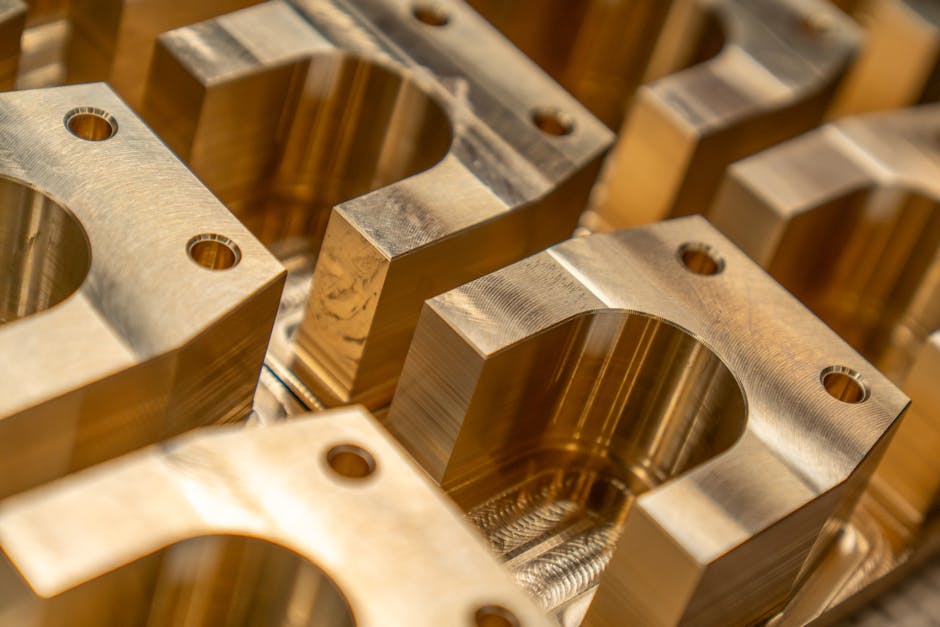
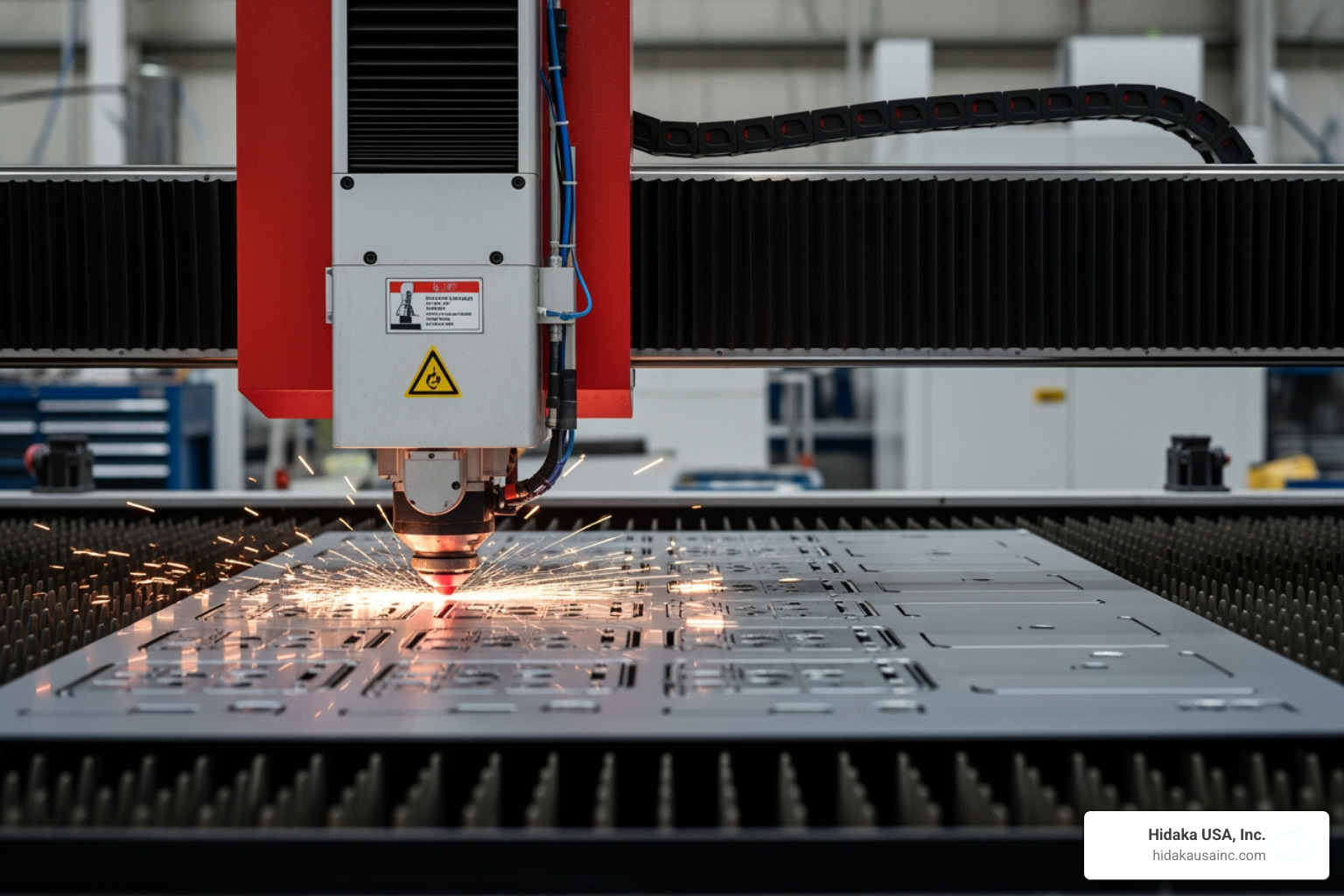
At Hidaka USA, Inc., in Dublin, Ohio, we offer a comprehensive, 95,000-square-foot facility designed to take your project from initial design to physical reality. By combining our AWS-certified welding capabilities with prototype laser cutting services, prototype laser cutting, and rapid prototyping cnc machining, we eliminate supply chain fragmentation. We manage the entire workflow in-house, ensuring total accountability, absolute traceability, and uncompromised quality.
Ready to ensure your next prototype meets the highest structural and safety standards?
- Explore our prototyping capabilities: Visit our Hidaka USA Prototyping Services Page to see how we can bring your designs to life.
- Plan for the future: Learn how we transition prototypes into high-volume manufacturing on our Hidaka USA Mass Production Page.
- Get in touch: Contact our Dublin, Ohio engineering team today at Hidaka USA to request a quote or discuss your project's technical specifications.